Introduction
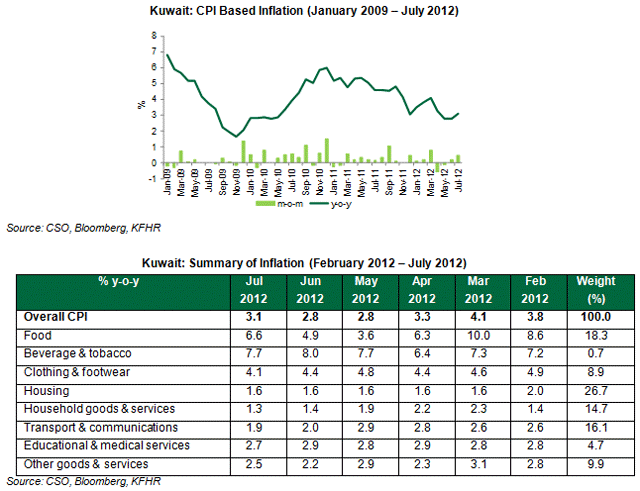
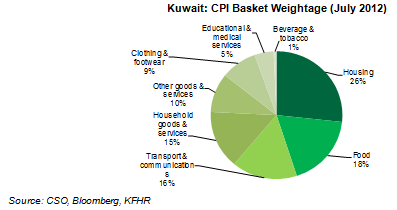
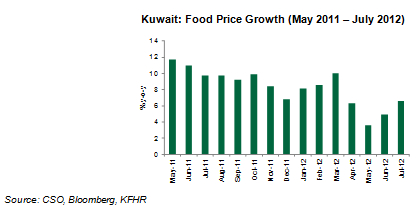
Kuwait's consumer price index (CPI) based inflation inched up to 3.1% y-o-y in July 2012 from 2.8% y-o-y in June 2012 as food prices (the second largest contributor of Kuwait's CPI basket at 18.3%) rose to 6.6% y-o-y in July 2012 from 4.9% y-o-y in June 2012. On a monthly basis, the overall inflation rose to 0.5% in July 2012 from 0.2% in June 2012.
Soaring Global Food Prices
Like other GCC countries, the rise in Kuwait's overall inflation is mainly driven by higher food prices. The rise in Kuwait's food prices is in line with the soaring global food prices. Kuwait imports most of its food items (approximately 90.0%) for domestic consumption which leads to imported food price pressure. The rising global food prices pass through local value chains in Kuwait and this leads to high inflation. Food and beverage producers are now looking to push higher commodity prices up the value chain where ultimately the cost will be borne by the consumer.
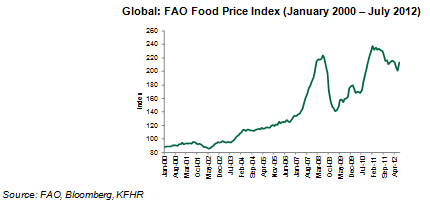
The FAO Food Price Index rose to 213.2 points in July 2012, as much as 13 points (6.0% m-o-m) up from 200.8 points in June 2012. The July 2012 surge of the Index followed three months of decline. The sharp rebound was mostly driven by a jump in grain and sugar prices. The severe deterioration of maize crop prospects in the US, following drought conditions and excessive heat during critical stages of the crop development, pushed up maize prices by almost 23.0% m-o-m in July 2012. Meanwhile, the rise in sugar price was triggered by untimely rains in Brazil, the world's largest sugar exporter, which hampered sugarcane harvesting in July 2012.
Kuwait's Housing Price outlook
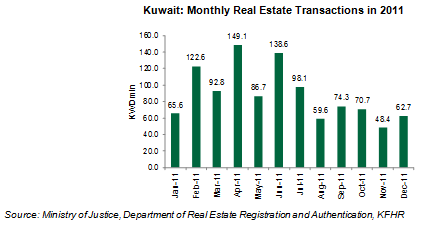
On the other hand, housing segment prices (the largest component of Kuwait's CPI basket) remained unchanged at 1.6% y-o-y in July 2012 (June 2012: 1.6% y-o-y). Nonetheless, a strong recovery of the real estate sector in Kuwait is anticipated to continue given the latest transaction volumes recorded at KWD318.1mln, KWD255.0mln and KWD246.0mln in January, February and March 2012.In general, real estate transactions continue to be supported by strong demands for residential and investment properties, but are somewhat being affected by a sluggish commercial real estate sector. The improved confidence and sentiment in the real estate market are supported by regulatory tightening and the government's spending plans. The KWD37.0bn Kuwait Development Plan (KDP) is expected to stimulate growth in the residential sector, while the Kuwait Investment Authority (KIA) plans to invest KWD1.0bln in the investment and commercial real estate sectors. Consequently, we opine that the real estate market in Kuwait especially for residential real estate would remain bullish for the remaining of 2012.
Mixed Inflationary Pressure in the GCC
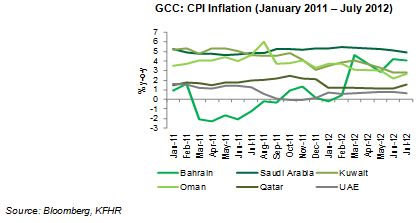
Inflation across the GCC remains controlled. Prices remain stabilized, helped by a tightening of subsidies by most economies and a stronger USD, to which all GCC countries (except Kuwait) peg their currencies. Higher food prices pushed up inflation in Kuwait and Saudi. However, falling rents curb inflation in Qatar, UAE (particularly Dubai) and Oman from rising above uncomfortable level.
Conclusion
Kuwait's inflation rate is expected to remain low in a range of 3.0%-4.0% y-o-y in 2H12 (YTD: 3.3% y-o-y) and 4.0% y-o-y on average in 2012 (2011: 4.7% y-o-y) as the government's price control measures on fuel and food items through extensive subsidy system will prevent higher inflation in the future.
© Press Release 2012