PHOTO
• Emirate's RORO volumes grow by 18.8% in 2014
• Abu Dhabi Ports hits 100,000-benchmark and handlesall-time high of 106,071 vehicle unitsin 2014
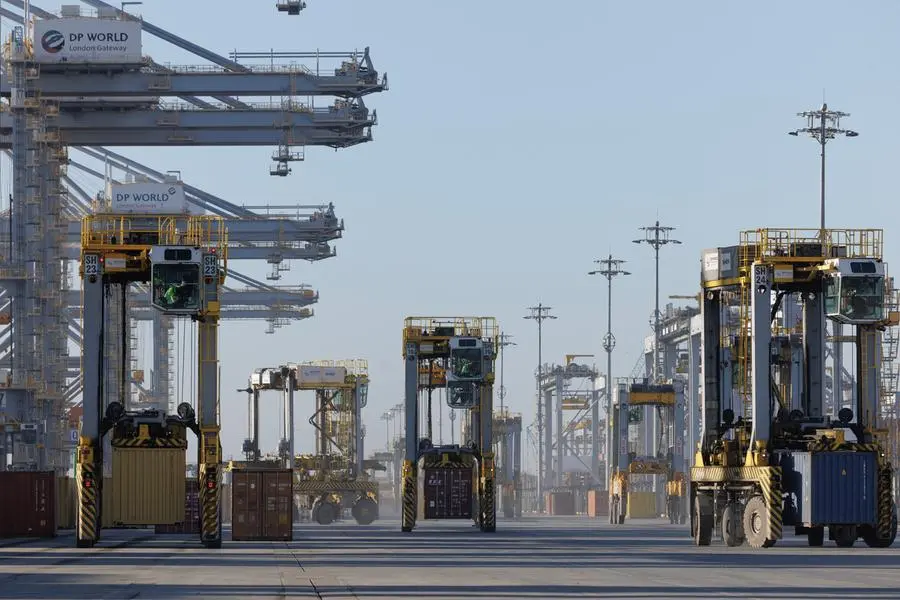
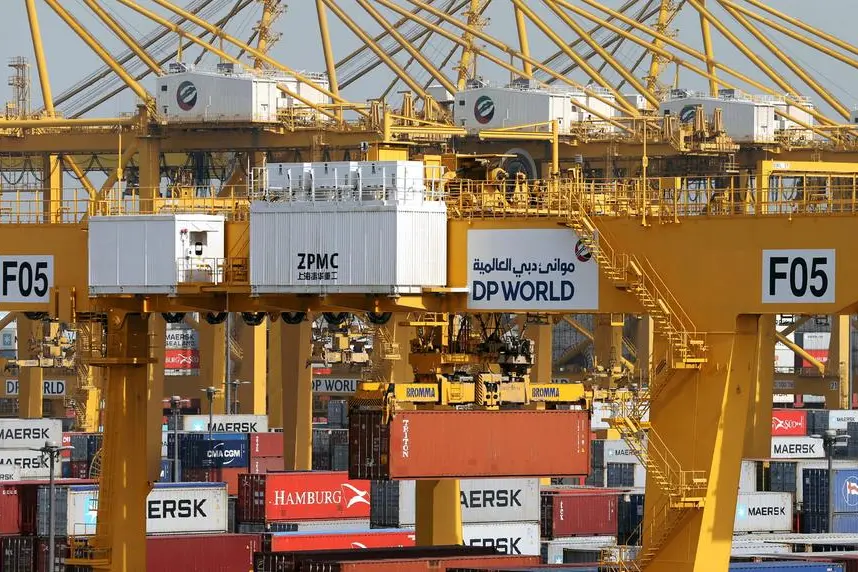
Abu Dhabi - As part of itscommitment to facilitate development and trade, Abu Dhabi Ports has enhanced its customer service offering by moving all of Abu Dhabi's RORO cargo to the new Khalifa Port RORO hub.
RORO is an abbreviation for roll-on/roll-off and refers to cargo that is moved on wheels, on and off ships, as opposed to cargo which is lifted using cranes. Heavy vehicles like tractors or bulldozers,as well as private and commercial automobiles like cars, buses and trucks are termed RORO cargo.
In 2014, for the first time ever, Abu Dhabi handled more than 100,000 units in a single year, recording an all-time high of 106,071 units. The RORO volumes grew by 18.8% compared to 2013.
"Over recent years, Abu Dhabi's RORO business has increased significantly, today it forms an important element of the Emirate'sstrategic vision to diversify the economy.As the UAE is a growing market for the automotive sector, our business strategy is to support this growth by developing and enhancing Abu Dhabi's port infrastructure,to build this sustainable industry for the Emirate's futureprosperity," saysCapt. Mohamed Juma Al Shamisi, CEO, Abu Dhabi Ports.
As a facilitator and accelerator of trade and development, Khalifa Port has been designed to cater for Abu Dhabi'sand the UAE's growing population and thriving economy.
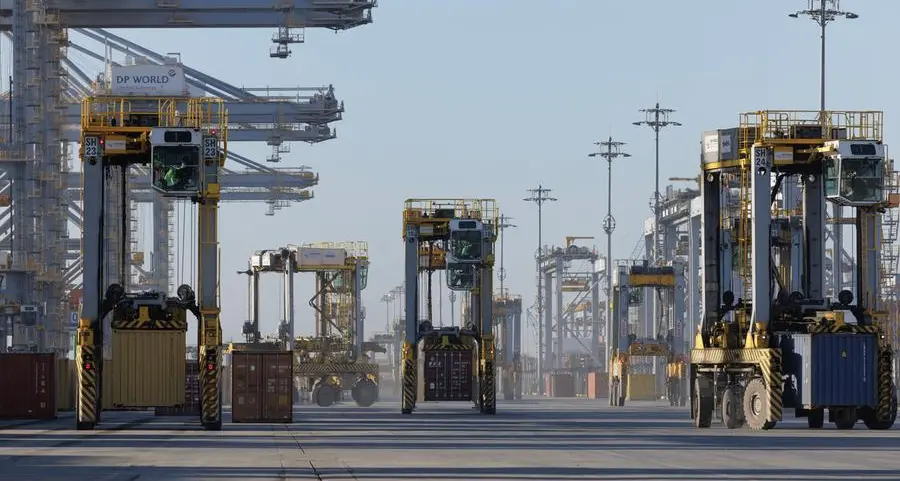
Khalifa Port offers additional berthing facilities and an increased throughput capacity, the port's RORO hubhas the potential to cater to the wider regional RORO markets of the GCC region, Africa and the Indian Sub-continent, and to serve and develop this important sector for the future.
While Zayed Port provided a capacity for 132,000 vehicle units per year, Khalifa Port's current annual capacity is nearly three times as much (360,000), with plans to extend the capacity to accommodate over 500,000 units per year in the future.
Furthermore, Khalifa Port is capable of handling up to four of the largest RORO vessels at a time, double the number that Zayed Port could handle, significantly boostingturnaround times and increasing the supply chain efficiencies for the shipping lines. This is a major advantage for RORO carriers looking to reduce voyage times and enhance their overall network coverage in the region using hub and spoke model.
Another advantage that the Khalifa Port RORO hub offers, is its strategic location right next to the Khalifa Industrial Zone (Kizad),halfway between the cities of Abu Dhabi and Dubai. The availability of land within the logistics and distribution area of the industrial zone, which enjoys excellent transport connectivity,will enable automobile dealers to establish distribution centres capable of serving the entire UAE.Furthermore, the availability of land within the industrial zone offers the potential to provide covered storage facilities for importers.
"With Khalifa Port, we are now able to offer a consolidated full service RORO hub supported by the adjacent Kizad. Moving forward, the extended space and capacity at the port will cater for the Emirate's import, export and transshipment volumes and enable us to offer economies of scale to our customers while strengthening the port's position both nationally and internationally," Al Shamisiconcludes. 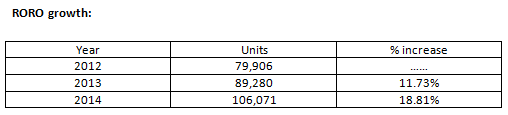
-Ends-
Abu Dhabi Ports
Established in 2006, Abu Dhabi Ports' core objective is to facilitate the diversification of the economy by stimulating trade and development. This is done by delivering high quality maritime services, supporting partners' infrastructure projects and setting up new companies and joint ventures in the ports and logistics sectors.
The flagship state-of-the -art Khalifa Port and Khalifa Industrial Zone play a big role, supporting the diversification of the economy. Khalifa Port was inaugurated on 12/12/12 by UAE President HH Sheikh Khalifa bin Zayed Al Nahyan. The port's semi-automated container terminal handles all of Abu Dhabi's container traffic, after its transfer from Zayed Port, the historic port in the city center.
Phase One of Khalifa Port has a capacity of 2.5 million TEUs and 12 million tons of general cargo. Further phases of development will occur as market demand requires. When all phases are complete, Khalifa Port will be able to handle 15 million TEUs and 35 million tons of general cargo per year.
Abu Dhabi Ports manages nine commercial, logistics, community and leisure ports, and Khalifa Industrial Zone which is serving a range of logistics and manufacturing investors.Abu Dhabi Ports is boosting Abu Dhabi's economic growth and diversification, following Abu Dhabi's Economic Vision 2030.
Follow us on twitter: @AbuDhabiPorts
© Press Release 2015