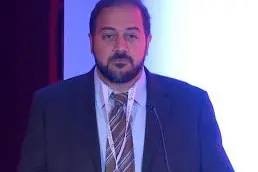
PHOTO
Dubai, United Arab Emirates - The HIV Summit in the Middle East sponsored by Gilead Sciences has seen over 100 global and regional experts convene in Dubai this week to discuss clinical challenges and unmet medical needs in the management of HIV in the Middle East as well as strategies to reduce the prevalence of HIV in the region.
Dr. Samer El-Ali, Medical Director, Gilead Sciences Middle East stated: This Summit evidences how important the treatment and management of HIV is for the healthcare community in the Middle East. Our ambition is to establish a strong consensus to drive progress and better support people living with HIV across the region particularly through treatment simplification.
Rates of new HIV infections and AIDS-related deaths are rising faster in the Middle East and North Africa (MENA) than anywhere else globally. According to the latest data available from the Joint UN Programme on HIV and AIDS (UNAIDS), there are 230,000 people living with HIV in MENA and there were an estimated 15,000 AIDS-related deaths in 2013, an increase of 66% in the number of annual deaths since 2005.<!--[if !supportFootnotes]-->[i]<!--[endif]-->
The experts at the HIV Summit also aimed to explore the challenges to reach the UNAIDS target 90-90-90<!--[if !supportFootnotes]-->[ii]<!--[endif]--> and discuss the efficacy and safety of antiretroviral therapeutic strategies. A special focus was on optimising the management of HIV aging patients with one or more additional diseases and taking a number of medications.
HIV healthcare leaders at the Summit shared insights and experience for optimising the management of patients living with HIV chaired by well-recognised scientific committee including Jacques Mokhbat MD, Professor of Medicine, Division of Infectious Diseases, Lebanese American University, School of Medicine and Sanjay Bhagani, BSc FRCP, a consultant physician in Infectious Diseases / HIV Medicine and General (Internal) Medicine at the Royal Free Hospital, London and Anton Pozniak, Consultant Physician and Honorary Senior Lecturer, Director of HIV Services, Chelsea and Westminster Hospital, NHS Foundation Trust and Imperial College of London.
Jacques Mokhbat MD, Professor of Medicine, Division of Infectious Diseases, Lebanese American University, School of Medicine said: There are a number of challenges in treating HIV in the Middle East and its prevalence is rising across the region. This Summit, coupled with co-ordinated action from government in the Arab States, signals our intent to answer these challenges and turn the tide on the spread of HIV.
Other topics under discussion at the Summit included HIV and epidemiology challenges in the Middle East, living with HIV as a chronic condition and recent advances in HIV treatments as well as national perspectives of HIV management in KSA, UAE, Kuwait, Qatar, Oman and Lebanon. A patient case forum was also held where representatives from KSA, UAE, Kuwait, Qatar, UK and Germany discussed the treatment of HIV in real-world settings.
Dr. Abdullah Al Ustadi, Consultant Physician, Infectious Disease Department at Rashid Hospital stated: UAE offers universal access to free and comprehensive HIV treatment, care and support for all UAE nationals, including antiretroviral therapy. In Dubai we have approximately 250 registered patients with HIV, out of which 140 are undergoing the treatment.
However, clinical practice has identified that problems with follow-up or adherence exist among some patients, primarily due to disease related stigmatization. Creating and implementing specific, culturally suitable programmes that could appropriately address the denial and stigma in the region are the key to a timely and appropriate response to ending HIV epidemic.
The Summit inception follows endorsement by the Council of Arab Ministers of Health of the Arab Strategic Framework for the Response to HIV and AIDS (20142020) as well as national initiatives within HIV Programmes across the region. All governments in the region have endorsed the 2011 Political Declaration on HIV/AIDS, which provides a roadmap toward achieving the vision of zero new HIV infections, zero discrimination, and zero AIDS-related deaths. In addition, a progressive, new and actionable Political Declaration on Ending AIDS has been adopted in June 2016 by Member States at the United Nations General Assembly High-Level Meeting on Ending AIDS.
About Gilead Sciences
Gilead Sciences is a biopharmaceutical company that discovers, develops and commercializes innovative therapeutics in areas of unmet medical need. The companys mission is to advance the care of patients suffering from life-threatening diseases. Gilead has operations in more than 30 countries worldwide, with headquarters in Foster City, California.
[i] http://www.unaids.org/sites/default/files/media_asset/UNAIDS_Gap_report_en.pdf
<!--[if !supportFootnotes]-->[ii]<!--[endif]--> UNAIDS treatment target to help end the AIDS epidemic By 2020, 90% of all people living with HIV will know their HIV status. By 2020, 90% of all people with diagnosed HIV infection will receive sustained antiretroviral therapy. By 2020, 90% of all people receiving antiretroviral therapy will have viral suppression.
Press Release 2016