Doha, 2 May 2011:The Gulf Organisation for ResearchDevelopment (GO for RD) and the Qatar Olympic Committee (QOC) signed a Memorandumof Understanding today that would see both organizations cooperate onestablishing environmentally sustainable sporting venues using the QatarSustainability Assessment System (QSAS) standards.
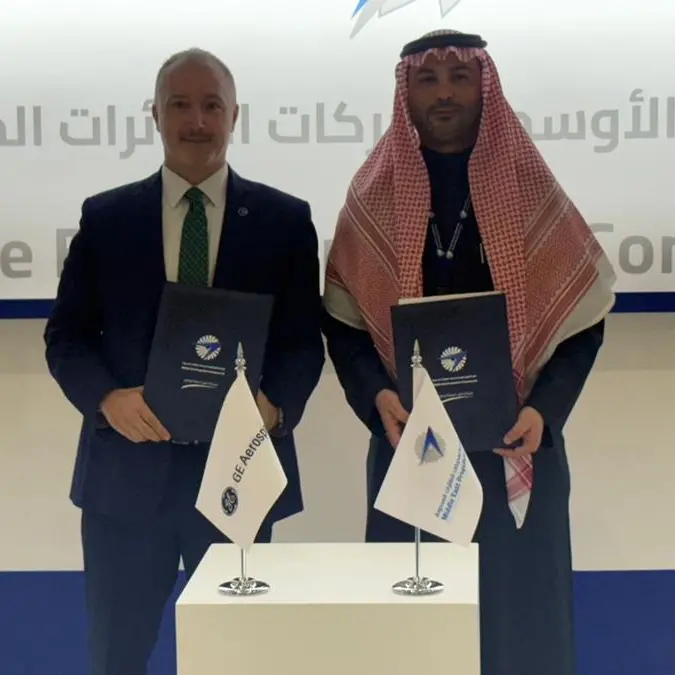
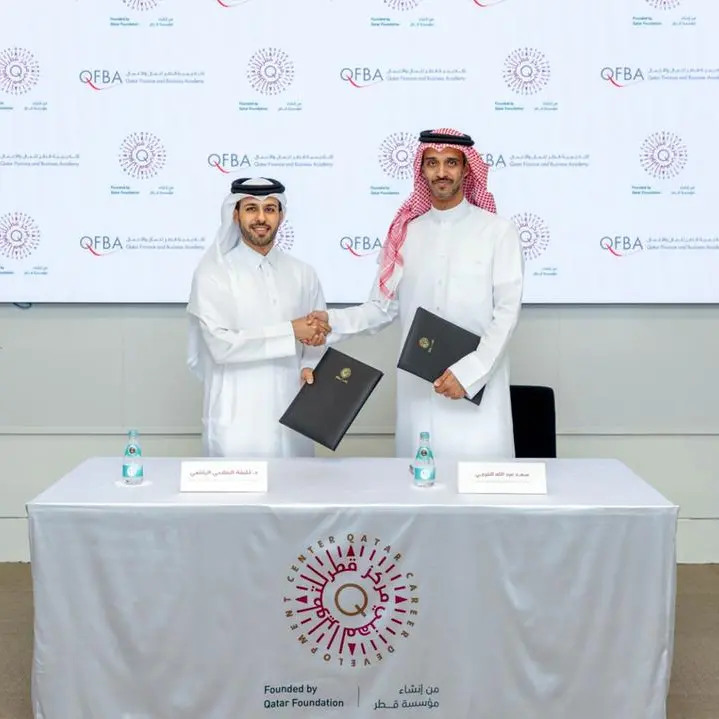
The MOU was signed by Sheikh Saud bin Abdul Rahman al-Thani, Secretary-Generalof the Qatar Olympic Committee, and by Dr. Youssef Al-Horr, co-founder andChairman of the Gulf Organization for Research and Development. The event was a highlight on the sidelines ofthe 9th World Congress on Sport and the Environment, currentlytaking place in Doha.
"The Qatar OlympicCommittee has always recognized the importance of establishing a balancebetween environmental and economic needs when it comes to sports," said Sheikh Saud bin Abdul Rahman al-Thani, Secretary-General of QOC. "This agreement will allow for theassessment and evaluation of sustainability of pre-existing sporting venues, aswell as setting a foundation for all future facilities to be built in Qatar."
"There is absolutely no reason for the QatarOlympic Committee's dedication to enhancing sports in the country to compromisethe environment for future generations to come. Our partnership with the Gulf Organisation for Research and Developmentis testament to our firm commitment to improve Qatar's sporting environment,while not sacrificing our natural environment."
The agreement has GO for RD and QOC cooperate in the field ofsustainability in sports venues by employing QSAS standards, and by establishingprograms that minimize energy expenditure and CO2 emissions in theconstruction of new facilities. Furthermore, both GORD and the QOC are committed to develop and researchsustainability issues that are of importance to the sporting field.
"When QSAS wasdeveloped, it was envisioned that all aspects of urban development would beencompassed by these standards," said Dr. Youssef Al-Horr. "WithQatar already investing heavily in athletics and sports, it was only naturalthat future venues would be built under stringent sustainabilitystandards. We are therefore honoured,and privileged, to be signing this agreement today with the forward-thinkingQatar Olympic Committee."
The Qatar Sustainability Assessment System (QSAS) standards focus onlocal and immediate needs and implements the best sustainability practicestaking into consideration the region's social, economic, environmental andcultural conditions, that are of course unique to that specific region
Founded on pre-existing and proven green building guidelines, a rigoroussustainability rating system and rigid water and energy standards, QSASintegrates best practices from forty global assessment systems to create thehighest standard possible sustainable construction for a multitude of buildings- from residential towers, to villas, and to football stadiums.
"When the QatarOlympic Committee committed itself to environmental sustainability, we knewthat only the most stringent and regionally relevant standards would work forus. The QSAS criterion were by far themost applicable standards, and our strategic partnership with the GulfOrganisation for Research and Development ensures that wecarry out these stringent standards thoroughly," continued Sheikh Saud bin Abdul Rahman al-Thani.
Dr.Youssef Al-Horr added "Wehave set our sights on Qatar being at the forefront of environmentalsustainability in the GCC near future, and we will continue to pursue strategicpartnerships with local and regional entities to fulfill that goal. With key partners like the Qatar OlympicCommittee, we will see that vision become reality sooner than later."
Overview on QSAS Regarding SportsFacilities
Purpose of QSAS
QSAS assesses different kinds of sportfacilities throughout various stages of the venue project, starting fromdesign, building, and to operations, ensuring that project meets environmentalaspects of QSAS at all stages. QSAS was designed in a way that it is able to assessall components of the project specialized to host sport competitions, such asfield, spectator and crew , training facilities and other spaces for logisticsupport.
QSAS takes into consideration the privacyof sport facilities related to operation, which differs according to the sportevent. There are some times where these facilities host a big number ofcompetitions and functions when organizing local or international events, andthis period is known as a climax period where there is high demand andconsumption of resources and high pressure on services. On the other hand,there are periods where no events are at all or some low-key, low-attendance events.Other facilities are built for hosting global event once in its entire life,such as FIFA World Cup or Olympic Games, which urges the need to find a way forusing this facility after the events are done. All those make using sportfacilities of a special nature which is different from other usages of othercivil facilities. According to this, QSAS was designed in a scientific way,taking into consideration all factors related to thenature of the usage and operation as well as issues related to the size andcapacity.
Kinds of Sports Facilities Covered by QSAS
QSAS treats a huge number ofsport facilities which other assessments systems in the world do not cover.Sport facilities which can implement QSAS can be divided into three major types:
1. Outdoor fields orsemi-closed: include partially covered fields or those capable to be mostlycovered. Those are designed as open air fields and are different in size andcapacity according to the kind of the game and activity. Some examples are:football stadiums, athletics, American football, baseball, rugby, tennis. volleyball,hockey, cricket, etc.
2. Indoor/ covered stadiums: stadiums which arefully covered, air-conditioned and isolated from the outside climate, rangingfrom small to large venues; some examples include basketball, handball, andgymnastics facilities.
3. Open fieldsor spaces: the open tracks; their sizes are considered small in comparison tothe size of the track, and they contain some buildings to offer some supportingservices. Some examples include horse tracks, camel tracks, ski, bicycle, golf,etc.
QSAS Objective Components to Asses Sports Facilities
Assessing any sporting facility accordingto QSAS includes many requirements in design, execution or operation. Theserequirements are measured according to objective performance standards by usingcomputer programs especially designed for the system. These requirements dependon studying eight major fields. They are as follows:
1) Urbanplanning of the site of facility, including studying the facility impact onsite traffic and the design of facility areas and the impact of noise on thesurrounding and public and private transportation tracks, as well as releasingsewage water and treating solid and liquid garbage, in addition to availabilityof parking.
2) Studying thelocation: it includes the ideal location of trees in the facility surroundings,and reducing the heat released from the facility and upgrading the ecologicalvalue of the site.
3) Energyconsumption: it includes the architecture design assessment and how much itsuits the climate conditions of the country, as well as system efficiency inthe building such as AC systems, lighting, and other supporting devices, aswell as encouraging clean resources to generate energy.
4) Reduction ofwater consumption through using water systems which save water, such as electronicpulse systems, and recycling water for other uses such as the irrigation oftraining pitches.
5) QSAS assesmaterials used from different origins, such as locally made materials, and reusingthe existing materials in the facilities, and reducing the use of newmaterials.
6) Indoorenvironment for sport: it contains the assessing of inside temperature and itsdistribution in the building for sporting events, also reducing the harmfulmaterials and fostering natural aeration and lighting. Also takes intoconsideration the light levels so it is neither too bright nor too dark, aswell as reducing the internal noise levels.
7) Urban andeconomic heritage: QSAS encourages the national economy through forcing theproject to benefit from the local manufacturers and importers, and itencourages implementing the local urban heritage but in a modern andcontemporary way.
8) Managementand operation: QSAS focuses on finding a professional operational plan toguarantee the ideal performance of the facility, as well as plans to divertwater and treat organic leftovers and recycling them. In addition, an event management plan tofurther exploit the venues after an international event, and a plan forenvironmental awareness and using smart control systems to reduce theconsumption of water and energy.
International effort beforeQSAS
Before launching QSAS to assetsustainability in sport facilities, some countries have made attempts in thisfield, but they were not as comprehensive, scientific and professional as QSAS.Here are some examples:
BREAM (UK): This system was used inassessing OlympicGames 2012. Officials announced that it was not satisfactorily meet therequirements, as he this system was not especially designed for sportfacilities, and this resulted in many failures. Authorities announced in 2008 theirintention of developing a special systemdedicated to sporting facilities, but nothing new has transpired since.
LEED (USA): Used limitedly in assessingsustainability in sport facilities in USA, but it is also not designed forsport facilities. Usually this system is adjusted to adapt to sporting venues.
Canadian system: Developed to be used atVancouver 2010 Olympic Games, the system set guidelines for organizers andmanagers of the event, aiming to create an environmentally sustainable event,but it is not considered an objective engineering system.
International Olympic committee: itpublished the guidelines IOC21, a general guideline for organizing sustainablesport event to reduce the environmental impacts for such activities. They mustbe followed at the levels of planning, execution and support, but this system doesn'thave an accurate assessment methods.
South African system: Thissystem was specifically designed to assess the 2010 World Cup in South Africa.It included sustainability assessments based on three pillars: environmental,economic and social. At the environmental side, it was implemented on a world cup stadium but itdidn't include objective standards.
All those previous initiatives are consideredincomprehensive and lacked scientific objectivity when compared to QSAS methodin assessing sports facilities. Forexample, QSAS adopts the highest engineering standards in building according tostrict requirements, so the building will accomplish the purpose for which itwas built.
- Ends -
About TheGORD
Go Green with GORD
The Gulf Organizationfor Research & Development (GORD) is a semi-government Qatari organizationleading the fight to transform the way buildings are designed, built andoperated by promoting healthy, energy- and resource-efficient buildingpractices.
A subsidiary ofQatari Diar, the GORD aims to build and strengthen a strong and vibrant local,regional and global consortium and network of respected research institutions,consulting and technology companies, real estate and construction companies,governmental and professional organizations that have genuine interest andcommitment to support the strategic objectives of the Organization to addressthe environmental challenges and empower the construction society to applysustainable applications and practices.
Our vision is for Qatar tobe a leader in the field of sustainable development, design and construction,and for the GORD to be one of the driving forces behind this transformation.
Our Objectives
§ Knowledge Creation - GORD engages in research relates to thedevelopment of knowledge and processes whose applications range from thebuilding to the urban scale.
§ Research-based Consultancy - GORD offers research basedconsultancy services on existing buildings and new construction projects aswell as testing simulations and system integration.
§ Information Dissemination - GORD provides educationalopportunities for professionals through teaching & Research, training &workshops and publications.
§ Business Development - GORDpartners with local, regional and international organizations to developstrategic and innovative solutions in the fields of renewable materials & productmanufacturing, recycling and transportation.
www.gord.org.qa
For further information, kindly contact:
Salah Al Ayoubi - Marketing & Business DevelopmentManager
Telephone: +974 4499 2099
Email: salah.alayoubi@barwa.com.qa
© Press Release 2011