PHOTO
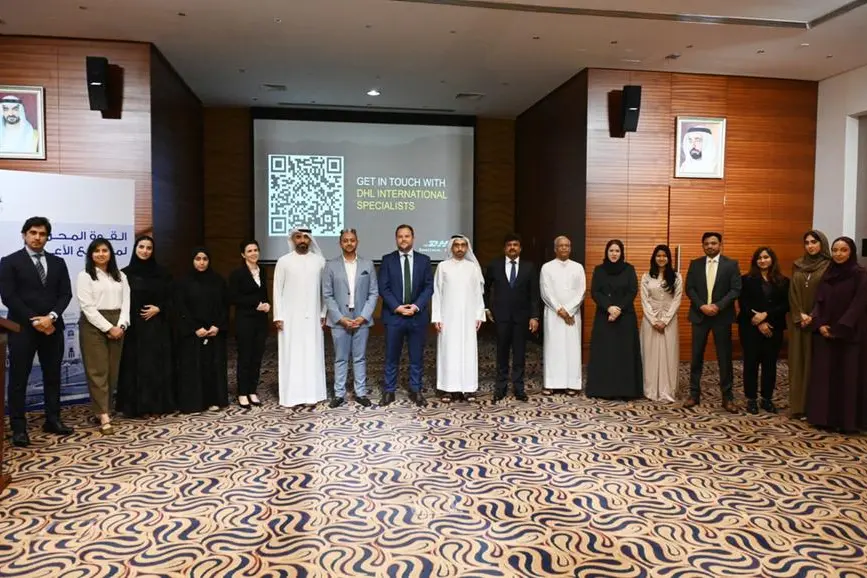
Sharjah, The Sharjah Chamber of Commerce and Industry (SCCI), in collaboration with the Indian Business and Professional Council in Sharjah (IBPC), hosted an intensive and expert-led workshop providing valuable insights into the investment opportunities unlocked by the UAE’s Comprehensive Economic Partnership Agreements (CEPAs).
Titled “CEPAs and Trade Facilitation”, the workshop featured representatives from the UAE Ministry of Foreign Trade and DHL Group, the world's leading logistics company, bringing together government representatives, industry experts, and the business community to explore practical strategies for helping businesses leverage the benefits of CEPAs and better understand their role in facilitating trade and boosting investment.
The workshop was attended by Abdul Aziz Al Shamsi, Assistant Director-General for Communication and Business Sector at SCCI; Lalu Samuel, Chairman of the Indian Business and Professional Council–Sharjah, which operates under SCCI’s umbrella, alongside several IBPC members; and Dr. Fatima Khalifa Al Muqarrab, Director of the International Relations Department at SCCI.
The event also attracted a large audience of government officials, investors, entrepreneurs, and representatives of local and international companies seeking to expand their investment and export activities between the UAE and India.
The workshop featured interactive panel discussions, expert presentations, and moderated dialogue sessions, providing participants with practical insights and opportunities for direct engagement with keynote speakers and industry specialists on key trade and investment topics.
A Strategic Pillar for Foreign Trade
In his opening remarks, Abdul Aziz Al Shamsi welcomed the attendees, emphasising that the Comprehensive Economic Partnership Agreements programme has become a cornerstone of the UAE’s foreign trade strategy, driven by the forward-looking vision of the country’s wise leadership.
He explained that the CEPA programme has successfully strengthened international trade ties, expanded market access for UAE businesses, and created new growth opportunities for small and medium-sized enterprises (SMEs), enabling them to diversify their export destinations and compete more effectively in high-growth global markets.
“The UAE and India share a longstanding and deeply rooted relationship that is built on decades of friendship, mutual respect, and productive cooperation. Under the directives of His Highness Sheikh Dr Sultan bin Mohammed Al Qasimi, Supreme Council Member and Ruler of Sharjah, may Allah preserve and protect him, the emirate has successfully positioned itself as a preferred investment destination and a strategic gateway for Indian companies seeking regional and international expansion,” Al Shamsi said.
He added that the number of active Indian companies registered with the Sharjah Chamber has exceeded 20,000, recording an annual growth rate of 30 percent. This growth is complemented by vibrant trade activity, with the value of Sharjah's domestic exports to the Indian market, based on Certificates of Origin issued by the Chamber, reaching approximately AED 576 million.
Indicators of Strong Economic Relations
For his part, Lalu Samuel highlighted the strong growth in UAE–India trade relations, describing it as a clear reflection of the strategic economic partnership between the two countries and a catalyst for pursuing even more ambitious bilateral trade goals.
He stressed that achieving these objectives will require businesses to move beyond conventional trading models and embrace a more competitive approach centred on innovation, quality, and value-added products and services.
Samuel noted that the UAE–India Comprehensive Economic Partnership Agreement provides a strategic economic platform through which local businesses can fully capitalise on Sharjah’s competitive advantages, including its strategic geographic location, world-class free zones, and Khorfakkan Port, which offers direct access to the Indian Ocean and serves as a vital logistics gateway linking local businesses to Asian and African markets.
He encouraged the business community to adopt a growth-oriented mindset by transforming knowledge into action, opportunities into investment, investment into innovation, and innovation into export growth, thereby maximising the long-term commercial value of the agreement.
Logistics Solutions and Business Opportunities
The workshop also featured a presentation on the CEPA programme and Rules of Origin, delivered by a representative of the Ministry of Foreign Trade.
The session provided participants with an overview of CEPAs’ strategic objectives, regulatory framework, and the investment opportunities it unlocks, while offering practical guidance on how exporters can maximise the CEPAs’ preferential market access, customs incentives, and trade facilitation measures.
Moreover, Ben McLean, Director of Commercial Programmes at DHL, presented an overview of the company’s integrated logistics solutions designed to support businesses engaged in international trade. The presentation highlighted strategies for optimising cross-border shipping, utilising advanced warehousing capabilities, and accelerating customs clearance processes to improve supply chain efficiency, reduce operational costs, and ensure the seamless movement of goods across global markets.
Participants underscored the significant advantages offered by the UAE’s Comprehensive Economic Partnership Agreements (CEPAs) and their strategic role in opening new markets for private-sector companies.
They noted that these agreements enhance global market access by reducing or eliminating customs tariffs, removing trade barriers, and creating more favourable conditions for exporters of goods and services, enabling businesses to strengthen their international competitiveness and accelerate cross-border growth.
The workshop outlined the broad spectrum of private-sector industries positioned to benefit from the UAE’s CEPAs, including logistics, clean and renewable energy, technology, financial services, green manufacturing, advanced materials, and sustainable agriculture and food systems.
Discussions further addressed the role of the UAE’s CEPAs in expanding market access for Emirati service providers across multiple sectors, reducing technical barriers to trade for exporters, and providing preferential advantages for UAE companies participating in government procurement tenders both domestically and in partner countries.
The Comprehensive Economic Partnership Agreements are a key pillar of the UAE’s strategy to reinforce its role as a leading global trade and investment hub and form an integral part of its vision to diversify the national economy through cross-continental strategic partnerships.
Beginning with the landmark agreement signed with the Republic of India and subsequently expanding to encompass a growing network of strategic markets worldwide, the CEPA programme covers trade facilitation, tariff reduction and elimination, intellectual property protection, and foreign direct investment promotion.
This integrated framework creates significant growth opportunities for the private sector, enhances international market access, and further strengthens the competitive position of the UAE’s emirates as preferred regional platforms for businesses seeking to expand into global markets.
For further information, please contact:
Ali Elgendy
Misbar Communications
ali@misbar-me.com
Ahmad Aldwairi
Misbar Communications
ahmad.aldwairi@misbar-me.co