PHOTO
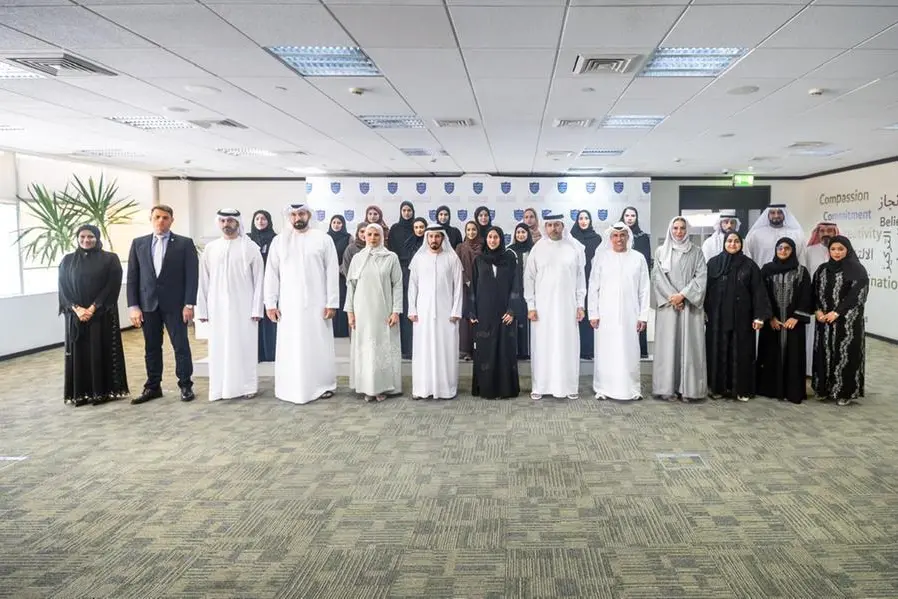
Dubai, UAE – The ‘Empowering Future Leaders’ programme has launched its second cohort, organised as a partnership between the Community Development Authority in Dubai (CDA) and the Mohammed Bin Rashid School of Government (MBRSG).
The initiative aligns with national efforts to empower government leaders who are better equipped to navigate rapid transformations, adhere to global best practices, and support the UAE’s vision for a flexible, proactive, innovation‑driven, and knowledge‑based government.
Her Excellency Hessa Bint Essa Buhumaid, Director General of the Community Development Authority in Dubai, attended the launch, along with His Excellency Dr. Ali bin Sebaa Al Marri, Executive President of MBRSG, along with a distinguished group of leaders from both entities.
The programme aims to develop participants’ leadership skills, strengthen their ability to make data‑driven decisions, and enable them to anticipate future challenges and design innovative solutions. It also seeks to reinforce a culture of institutional innovation, enhance government performance, and improve the quality of services delivered to the community.
Launching the second cohort builds on the strategic partnership between MBRSG and CDA. It reflects a shared vision to empower leaders who can drive positive transformation and adopt global best practices in management and leadership. The initiative supports sustainable development goals and enhances the competitiveness of government systems.
The programme’s first cohort concluded with 22 leaders from CDA graduating – including both men and women – having successfully acquired advanced leadership and practical skills. This enabled them to contribute effectively towards improving institutional performance, launching impactful initiatives in their respective departments, enhancing efficiency across government operations, and expanding the impact of the services provided on the community.
‘Empowering Future Leaders’ was developed as a result of effective institutional collaboration and a firm commitment from participants and partner entities, in addition to the pivotal role MBRSG’s Executive Education programmes play in that regard.
The School continuously supports efforts to design and develop specialised leadership education programmes tailored to meet the needs of government entities. To that end, it employs advanced learning methods that align with future transformations and deliver tangible, sustainable improvements in government performance.
Her Excellency Hessa bint Essa Buhumaid, Director General of the Community Development Authority in Dubai (CDA), affirmed that the “Empowering Future Leaders’” programme represents an advanced model for investing in Emirati talent. It reflects Dubai’s belief that building leadership begins with shaping mindsets, strengthening decision-making capabilities, and empowering talent to translate vision into tangible impact that benefits individuals, families, and society aligned with the objectives of the "Year of the Family" and reinforcing the family’s role as a cornerstone of sustainable development.
Her Excellency added: “Through our partnership with the Mohammed Bin Rashid School of Government, we continue to prepare government leaders who are future aware, capable of anticipating change, and able to design solutions that are closely aligned with community needs contributing to family stability and cohesion. We believe that true leadership is measured by the impact it creates in people’s lives, and by its ability to enhance quality of life and achieve the goals of the “Dubai Social Agenda 33”, while further strengthening policies and initiatives that support families across society.”
His Excellency Dr. Ali bin Sebaa Al Marri, Executive President of MBRSG, said: “Launching the second cohort of the ‘Empowering Future Leaders’ programme reflects our commitment at the Mohammed Bin Rashid School of Government to creating advanced executive programmes that meet the requirements of the future and empower a generation of government leaders who can anticipate the future and steer strategic transformations with skill and confidence.”
“The programme embodies the School’s vision to arm national leaders with advanced knowledge and tools that enable them to address future challenges,” H.E. Al Marri added. “The emphasis on institutional innovation, strategic planning, and digital leadership aligns with national priorities to build an integrated government ecosystem founded on sustainability and innovation.”
The ‘Empowering Future Leaders’ programme provides a comprehensive training experience that combines in‑person courses, e‑learning, and applied projects. It includes introductory sessions and specialised workshops on leadership and influence, followed by 50 hours of training, covering institutional management, future foresight, and strategic planning aligned with national priorities. Additionally, the programme addresses concepts of digital leadership and institutional innovation.
Participants also benefit from self‑learning modules in future foresight and organisational agility, as well as applied projects that enable them to develop practical solutions to real challenges facing their organisations. They present these solutions to specialised committees, ensuring that the knowledge gained leads to measurable impacts that support government development.
Moreover, the programme provides opportunities for direct engagement with executive leaders through inspiring ‘Meet a Leader’ sessions, in addition to field visits where participants observe government best practices firsthand. These experiences serve to expand participants’ perspectives and enhance their practical understanding of real‑world work environments.
The programme also adopts advanced educational methods focused on interactive and applied learning, enabling participants to translate knowledge into practical outcomes that align with national agenda objectives. It contributes to developing government leaders who can sustain development and create long‑term impact across government sectors.