PHOTO
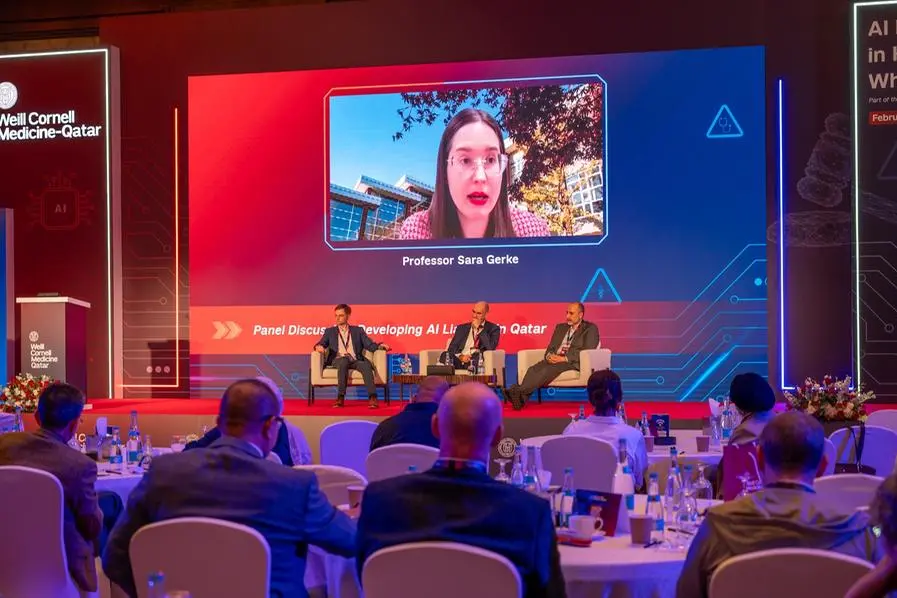
Doha – A panel of experts discussed the legal and ethical implications arising from harm caused to patients by the use of AI in healthcare in the latest installment of Weill Cornell Medicine-Qatar’s (WCM-Q) Intersection of Law & Medicine series.
Expert speakers at the day-long symposium explored the law, policies, and ethical considerations surrounding the use of AI in healthcare, with particular reference to where liability lies when AI causes harm to patients.
“AI is already being used in patient care and it is clear the technology can provide many benefits to patients,” said Dr. Thurayya Arayssi, vice dean for academic and curricular affairs, and professor of clinical medicine at WCM–Q. “But when things go wrong and AI causes harm to patients, it is important to know who is liable. Is it the doctor, the hospital, the developer of the AI, a combination of all three, or someone else? This event sought to provide participants with a practical understanding of the laws, policies and questions to consider, in order to protect patients, reduce risk and support safe innovation.”
Exert speakers at the event included Dr. Arayssi; Dr. Barry Solaiman, affiliate at Harvard Medical School Center for Bioethics, and adjunct assistant professor of medical ethics in clinical medicine at WCM-Q; Dr. Paul Cambell, chief regulatory officer at HealthAI; Professor Sara Gerke, associate professor of law at the University of Illinois College of Law; and Dr. Mohammed Ghaly, professor of Islam and biomedical ethics at Hamad Bin Khalifa University.
Topics covered by the speakers included the governance of AI in healthcare and the role of liability in both local and global contexts, liability and AI from the perspective of Islamic bioethics, liability for doctors using AI in healthcare and best practices for safe use of AI, regulations, and liability for developers of AI-based medical devices. The event concluded with a panel discussion among all four expert speakers on the development of AI liability regulations in Qatar to allow for safe innovation and protection of patients against AI harms.
The series is delivered by WCM-Q’s Division of Continuing Professional Development and is aimed at physicians, dentists, nurses, pharmacists, allied health practitioners, students, researchers, educators and administrators. The event was accredited locally by the Ministry of Public Health’s Department of Healthcare Professions – Accreditation Section and internationally by the Accreditation Council for Continuing Medical Education (ACCME).
About Weill Cornell Medicine-Qatar
Weill Cornell Medicine-Qatar is a partnership between Cornell University and Qatar Foundation. It offers a comprehensive Six-Year Medical Program leading to the Cornell University M.D. degree with teaching by Cornell and Weill Cornell faculty and by physicians at Hamad Medical Corporation (HMC), Sidra Medicine, the Primary Health Care Corporation, and Aspetar Orthopedic and Sports Medicine Hospital, who hold Weill Cornell appointments. Through its biomedical research program, WCM-Q is building a sustainable research community in Qatar while advancing basic science and clinical research. Through its medical college, WCM-Q seeks to provide the finest education possible for medical students, to improve health care both now and for future generations, and to provide high quality health care to the Qatari population.
For more info, please contact:
Hanan Lakkis
Associate Director, Media and Publications
Weill Cornell Medicine - Qatar
hyl2004@qatar-med.cornell.edu