PHOTO
- UAE to lead the meetings of the International Charter “Space and Major Disasters” virtually on 22–23 June 2026
- The UAE is the first Arab country to assume the leadership of the International Charter: Space and Major Disasters, reflecting international confidence
- National participation led by the UAE Space Agency to strengthen international disaster response through space technologies
- More than 1,168 activation missions carried out by the Charter to support 146 countries
- Meetings to discuss developing disaster response mechanisms and expanding international cooperation in sharing space data
- Mohammed Bin Rashid Space Centre and Space42 support the Charter’s work through satellite data and imagery
Abu Dhabi, UAE: The UAE, represented by the UAE Space Agency, will lead the meetings of the International Charter: Space and Major Disasters, which will be held virtually on 22 and 23 June 2026. This comes as part of the UAE’s leadership of the Charter, which runs from April to October 2026.
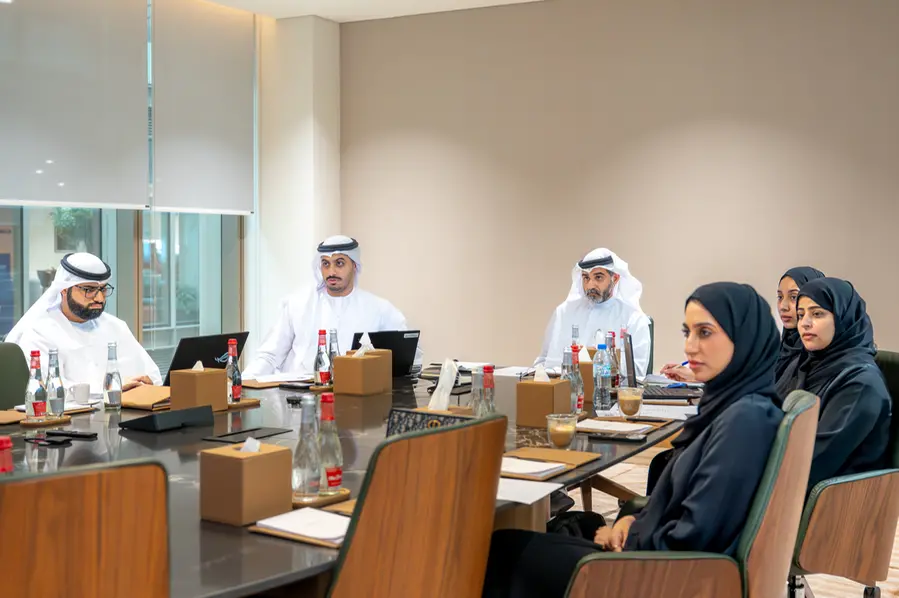
The UAE Space Agency will lead the meeting in coordination with national partner entities, bringing together the country's space and emergency response capabilities to support effective disaster management. The National Emergency Crisis and Disaster Management Authority (NCEMA) will facilitate coordination efforts, while the Mohammed Bin Rashid Space Centre (MBRSC) will provide satellite imagery and space-based data to enhance situational awareness. Complementing these efforts, Space42 will deliver advanced geospatial analysis and insights, supporting timely decision-making and strengthening disaster response and recovery operations.
His Excellency Salem Butti Al Qubaisi, Director-General of the UAE Space Agency, said: “Leading these meetings in the UAE reaffirms its commitment to strengthening international cooperation in employing space technologies to serve humanity and support communities affected by disasters and crises.”
Al Qubaisi added: “The UAE’s leadership of the Charter marks a significant milestone that reflects the advanced position the country has achieved in the space sector. It also demonstrates the international community’s confidence in the UAE’s role as an active partner in developing innovative solutions that contribute to enhancing countries’ preparedness and response to disasters and emergencies.”
His Excellency Salem Al Marri said: “Space technologies have become an important part of how nations understand, respond to and recover from major crises. Their true impact is seen when satellite imagery, geospatial analysis and emergency response expertise come together to give decision-makers a clearer view of rapidly evolving situations. The UAE leading this meeting reflects the depth of capability being built across the national space sector, as well as the growing contribution of the region to global efforts in disaster management.”
His Excellency Ali Rashid Al Neyadi, Director General of NCEMA, said: “Today, space technologies and data contribute to bolstering the speed and efficiency of crisis and disaster response, supporting the protection of lives and property, and improving the readiness of relevant entities. Leading these meetings in the UAE underscores the importance of integration between national and international entities in developing more efficient proactive systems for emergency and crisis management.”
An Arab Achievement Reflecting Global Confidence
The UAE is the first Arab country and the first in the Middle East to assume the leadership of the International Charter: Space and Major Disasters. This achievement reflects international confidence in the country’s advanced position in the space sector, as well as its growing role as an effective international partner in employing space technologies to support humanitarian efforts and disaster response worldwide.
As part of international cooperation efforts to support disaster response, the Charter team highlighted a number of initiatives and national contributions that helped strengthen disaster monitoring and response operations worldwide during June 2026. These included supporting the monitoring of wildfires in Kazakhstan, assessing the landslide in the Issyk-Kul Region of Kyrgyzstan, identifying areas potentially affected by flooding in Jalal-Abad, Kyrgyzstan, as well as monitoring the impacts of the Mayon Volcano eruption in the Philippines in May 2026.
The team emphasised that these efforts reflect the strength of collaboration among Charter members and the importance of international partnerships in leveraging satellite technologies and space-based data to support disaster response. Through shared expertise and geospatial insights, members helped deliver timely and reliable information that enhances decision-making, strengthens risk management, and supports affected communities worldwide.
The Charter’s Role in Supporting Disaster Response
The International Charter: Space and Major Disasters is one of the leading international initiatives dedicated to harnessing space technologies to serve communities affected by natural and humanitarian disasters. Its membership includes 17 countries, and it works to provide satellite imagery and data rapidly and free of charge to competent authorities and disaster management entities worldwide, supporting response operations, damage assessment, and decision-making.
Since its establishment, the Charter has carried out more than 1,168 activation missions to support countries affected by disasters, benefiting 146 countries through a system comprising more than 270 satellites provided by member states and several major global space companies and institutions.
Fostering International Cooperation
The Charter meetings will address strategic and technical topics related to developing international disaster response mechanisms, enhancing the exchange of space data, reviewing previous activation operations and lessons learned, and exploring opportunities to develop international cooperation and partnerships to improve the international community’s preparedness for disasters and crises.
Leading these meetings reflects the UAE’s commitment to strengthening international cooperation and unifying global efforts in employing space technologies to support disaster and humanitarian crisis response around the world.