PHOTO
Abu Dhabi, UAE – The Global Institute for Disease Elimination (GLIDE), based in Abu Dhabi, concluded its participation in the 79th World Health Assembly (WHA79) in Geneva. Through organizing and participating in a number of strategic sessions, the Institute sought to contribute to international efforts aimed at accelerating the elimination of preventable infectious diseases, bridging the gap between global strategies and field implementation.
Discussions Highlighting Health Systems Integration in Collaboration with Devex
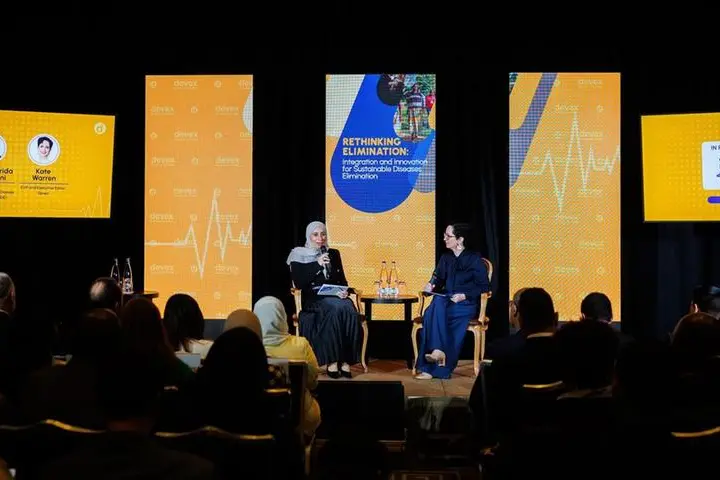
GLIDE partnered with "Devex" in launching a session aimed at addressing a number of challenges facing the public health sector. Titled "Rethinking Disease Elimination: Integration and Innovation for Sustainable Impact," the panel focused on the importance of integrating disease control programs into primary healthcare systems to avoid working in isolated silos and ensure the sustainability of results.
The panel featured H.E. Dr. Farida Al Hosani, CEO, Global Institute for Disease Elimination (GLIDE), Dr. Nada Al Marzouqi, Director of the Public Health and Prevention Department at the Ministry of Health and Prevention (MoHAP); Tala Al-Ramahi, Spokesperson, Mohamed Bin Zayed Foundation for Humanity, Dr. Alain Labrique, Director of data, digital health, analytics, and AI, World Health Organization (WHO) and Peter Ward, Cofounder, Enaiblers. Speakers shared insightful viewpoints, where the conversation moved beyond high-level theory to showcase how artificial intelligence and data-driven tools are solving complex demographic challenges, strengthening surveillance, and empowering the health workforce.
This was then followed by a DevexImpactHouse session, featuring H.E. Dr. Farida Al Hosani, in conversation with Kate Warren, executive vice president & executive editor at Devex. The talk highlighted how AI, advanced data systems, and stronger primary health care can improve targeting, accelerate elimination efforts, and help countries turn global commitments into durable local impact.
AI in Service of Health: Continuing the Joint Dialogue
The Institute also held the third edition of its panel session, "Artificial Intelligence for Health and Disease Elimination: Cross-Sector Action for Impact," which builds upon previous discussions initiated during Abu Dhabi Global Health Week 2025 and the UN General Assembly. This edition focused on ways to transition AI from theoretical frameworks to practical application.
The session was designed to enhance cross-sector collaboration by reviewing smart solutions that integrate environmental and epidemiological data to ensure the sustainability of disease elimination efforts. The discussions, which included a group of technical experts, touched upon the importance of establishing ethical governance frameworks to ensure these technologies are adopted equitably and responsibly within health systems. By bringing together policymakers, technologists, and investors, the session aimed to catalyze the partnerships and pathways needed to scale AI innovations from limited pilots into effective, expandable implementation across global health systems.
Economic Resilience: A Third Convening of Global Experts
Reflecting a commitment to the financial dimensions of public health, the Institute organized the third meeting of the "International Working Group on the Economics of Disease Elimination and Integration", which seeks to bridge economic analysis with the requirements of health policy formulation.
The meeting included a presentation on the "Thanzi Labwino" research program regarding decision-making mechanisms in the face of resource scarcity. Participants discussed research methodologies focused on financial protection and the use of advanced analytics to prioritize investments, contributing to safeguarding targeted health gains against global economic fluctuations.
Commenting on the achievements of the week, H.E. Dr. Farida Al Hosani, CEO of the Global Institute for Disease Elimination (GLIDE), stated:"Working toward disease elimination requires sustained commitment and close coordination across different sectors. The Geneva meetings provided us with an important opportunity to discuss how precise economic tools and digital solutions like AI can support health systems. We look forward to translating these discussions into practical collaboration that empowers local communities to tackle infectious diseases and ensures health services reach everyone."
For further information, please contact:
Orient Planet Group (OPG)
Email: media@orientplanet.com
Website: www.orientplanet.com