PHOTO
Ajman Chamber organized the “Artificial Intelligence and Its Role in Service Development – Agentic AI” Forum, reaffirming its strategic commitment to supporting the objectives of the Ajman Government’s AI Program, which aims to leverage artificial intelligence technologies to enhance government services and improve institutional performance efficiency. The forum aligns with the goals of Ajman Vision 2030, “Ajman for People.”
The forum was attended by H.E. Salem Al-Suwaidi, General Manager of the Chamber; Mohammed Ali Al Janahi, Executive Officer of the Member Support Services Sector; and Ali Rashid Al Kaitoub, Executive Officer of the Studies and Investment Development Sector, alongside department directors and Chamber employees. The event was held at the Fairmont Ajman.
At the opening of the forum, H.E. Salem Al-Suwaidi welcomed the participants and highlighted the significance of the event and its specialized panel discussions in showcasing the role of AI agents in enhancing operational efficiency, improving service quality, and raising productivity levels. He also underscored their importance in empowering human capital, supporting institutional decision-making, and advancing monitoring and analytical processes by providing proactive recommendations.
He explained that the forum aligns with Ajman Chamber’s vision and strategic objectives to leverage artificial intelligence as an enabler of human potential and a catalyst for enhancing capabilities. It also reflects the Government of Ajman's broader direction, which places people at the heart of its priorities. Through this approach, Ajman Chamber aims to develop smarter, more innovative, efficient, and agile services that meet the aspirations of the emirate’s business community, while strengthening the competitiveness and sustainable growth of Ajman’s business environment.
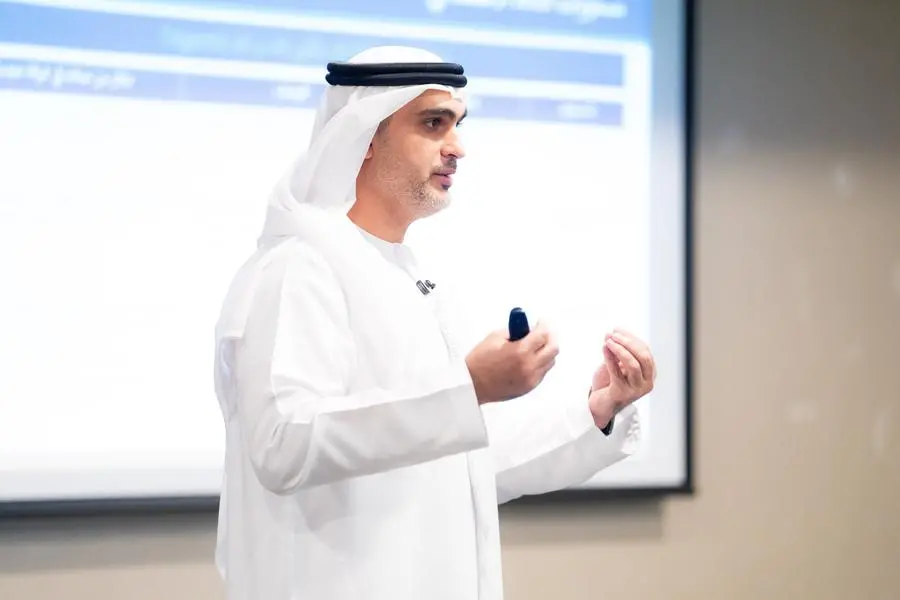
The forum was moderated by Faisal Ismail Al Khouri, Director of Strategy and Future Department, who shed light on the concept of the “AI Agent” and its role in automating services, monitoring performance, analysing data, and streamlining workflows, thereby enhancing operational efficiency and boosting employee productivity. He also reviewed the mechanisms for designing and developing AI agents, along with the methodologies used to identify the tasks and specialisations most suited for effective and efficient implementation, in line with institutional operational requirements.
The forum featured interactive sessions with the participation of the Chamber’s departments, highlighting practical opportunities to leverage artificial intelligence and AI agents to enhance service quality, streamline day-to-day workplace operations, improve operational efficiency, and accelerate business delivery.
The sessions identified over 30 initiatives that can be integrated with AI agent technologies to further enhance ease of doing business, stimulate investment growth and attraction, and improve operational efficiency. Covering member services, investment environment development, and internal institutional performance, these initiatives form part of an integrated technology ecosystem supported by the Chamber’s advanced digital infrastructure, contributing to higher service quality and greater operational effectiveness.