HH Sheikh Mohammed Has Reshaped the Global Financial Map, Says Omar Bin Sulaiman
The business cluster in the financial district registers annual growth rate of 127%
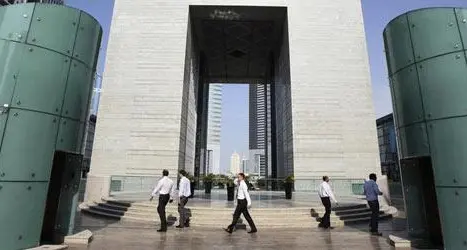
Dubai, 9 November, 2009: The Dubai International Financial Centre celebrated its fifth anniversary, capping a period of rapid growth during which it established itself as a leading global hub for institutional finance and a gateway for capital and investment in a vast region between Europe and East Asia.
Launched by His Highness Sheikh Mohammed Bin Rashid Al Maktoum, Vice President and Prime Minister of the UAE and Ruler of Dubai, with the vision of developing a financial centre that would be a crucial node in global finance, DIFC's achievements have helped Dubai significantly raise its global profile as a financial centre.
HE Dr. Omar Bin Sulaiman, Governor of the Dubai International Financial Centre said: "HH Sheikh Mohammed Bin Rashid Al Maktoum has reshaped the world's financial map by establishing DIFC, which today has emerged as a competitor to the world's top-ranked financial centres.
"Under the leadership of HH Sheikh Maktoum Bin Mohammed Bin Rashid Al Maktoum, Deputy Ruler of Dubai and President of DIFC, the organisation has come a long way in fulfilling its founding vision and objectives. The rapid growth of DIFC's business community demonstrates the confidence of the global financial industry in DIFC. Most of the world's top-ranked banks and asset managers have established a presence in the financial district. DIFC has grown not just in size but also in the breadth and depth of financial activity conducted out of it, making it a powerful catalyst for industry development." He added.
David Eldon, Chairman of the DIFC Authority said: "The vision behind DIFC and its development over the last five years represent Dubai's economic dynamism at its best. DIFC's experience in developing the high-quality infrastructure and environment as well as the critical mass of financial institutions necessary for rapid industry growth provides valuable lessons for emerging economies. As the world economy goes through fundamental change and realignment, DIFC is poised to emerge as a major global player in the coming years."
Abdullah M Saleh, Chairman of the Dubai Financial Services Authority (DFSA) said: "The DIFC journey began with an idea, a vision and a dream. The dream to create a vibrant environment that will promote local and international investment in the region, to foster economic growth and to make a real difference to the lives of many people. We owe our gratitude to His Highness Sheikh Mohammed Bin Rashid Al Maktoum, without whose wisdom and vision, none of this would have been possible."
Sir Anthony Evans, Chief Justice of the DIFC Courts said: "Within a short time DIFC has positioned itself as a world-leading financial centre. This is evident in the nature of the businesses and talent it has attracted to the region, bringing with it the highest professional standards and innovation the Centre has become known for. The regulatory structure and judicial system at the Centre empowers this commerce and creativity within a transparent and sound environment, defined in Dubai and DIFC Laws' transparent and sound framework."
Abdulla Mohammed Al Awar, CEO of the DIFC Authority said: "In its first five years, DIFC has underlined not only its capacity for rapid growth but also its ability to offer a stable and secure base for financial institutions. By providing a platform for institutions to deliver a wider range of services and nurturing the development of new niche sectors, DIFC has become a powerful catalyst for the development of the region's financial industry."
Paul M Koster, Chief Executive, Dubai Financial Services Authority said: "HH Sheikh Mohammed bin Rashid Al Maktoum's bold vision and historic decision to establish a financial centre similar in regulatory structure and quality to the main global capital markets was truly remarkable. The DIFC has become a powerful engine in attracting business from the world's leading banks and financial institutions. Similarly, the DFSA has been successful in developing, administering and enforcing regulations of genuine world-class quality. We are optimistic about the future, as a result of this strong foundation laid over the last five years."
Over the past five years, DIFC has seen a rapid expansion of its industry cluster. The number of registered companies in DIFC has grown at a compound annual growth rate (CAGR) of 127%. The impact of the global financial crisis did not dampen its growth. In 2008, the year in which the world was hit by an economic crisis, DIFC recorded the largest absolute annual increase in its business community with a total of 256 companies being registered. By the end of August 2009, there were over 850 registered companies in DIFC, several of which chose the financial district as the base for their regional headquarters.
DIFC's Achievements:
Evolving Industry Ecosystem
One of DIFC's greatest achievements was the creation of the fundamental building blocks necessary for the region's financial industry to grow. DIFC invested significantly in building an independent regulatory framework and judicial system, a financial exchange and a world-class physical infrastructure. All these provided a secure, stable and growth-oriented platform for financial institutions.
The Dubai Financial Services Authority (DFSA), DIFC's independent risk-based regulator, established a credible and globally acclaimed track record of regulation. The DFSA's standards and implementation of international best practices were rated highly by the International Monetary Fund (IMF) and World Bank in their in the Financial System Stability Assessment Programme (FSAP) report on the UAE for the year 2007.
Over the last five years, the DFSA promulgated several innovative regulations, years in response to industry needs. An example of such innovation was the Hedge Funds Code of Practice, the first such code developed by a regulator anywhere in the world. In 2008, the DFSA implemented a number of policy programmes, including new rules to facilitate the growth of various sectors including retail, funds management and Islamic finance. The DFSA also established a vast international network of regulatory co-operation by signing more than 45 bilateral MoU's with regulatory counterparts in addition to several Multilateral Memoranda of Understanding (MMoUs).
DIFC's legislative framework constitutes a key pillar of its efforts to develop itself into one of the world's leading global financial centres. Since its inception, DIFC has seen the enactment of 27 laws and 17 sets of regulations. DIFC was the first regime to establish and operate a Data Protection Law in the region. The DFSA's Collective Investment Law, introduced in 2006, provides a comprehensive framework for regulating various types of collective investment funds in DIFC including property funds, Islamic funds, hedge funds, fund of funds and private equity funds. In 2008, DIFC introduced its Single Family Offices (SFO) platform to encourage ultra-wealthy families to establish SFOs at the financial district. A Payment Systems Settlement Finality (PSSF) law was enacted in 2009 to facilitate the creation of a regional transactions processing hub in DIFC for the provision of payment systems and other ancillary services.
The DIFC Courts, the independent judicial system created by DIFC built a strong reputation for excellence within the international legal community. It developed a panel of eminent international and local judges consisting of renowned commercial and civil law judges. In 2007, the DIFC Courts established the Small Claims Tribunal (SCT), a unique facility for hearing cases for claims of less than AED 100,000 in 2006. In 2009, the Courts became the first judicial system in the region to create a code of conduct for its registered lawyers.
Capital Market Infrastructure
Apart from creating world-class regulatory and judicial institutions to support the growth of financial institutions, one of DIFC's key founding objectives was to build a robust capital market infrastructure to facilitate the investment of the Middle East's vast liquidity within the region.
In 2005, DIFC launched the Dubai International Financial Exchange (DIFX) with the aim of establishing a world-class international stock exchange that could serve the region. The NASDAQ OMX Group, the world's largest exchange company, acquired a one-third stake in the DIFX in 2008. Later, the DIFX was rebranded as NASDAQ Dubai, in line with its expanding global profile. NASDAQ OMX also listed its shares on NASDAQ Dubai.
The highlights of NASDAQ Dubai's growth since its inception include the listing of the Middle East's largest initial public offering (IPO) by the global ports operator DP World. In 2008, NASDAQ Dubai became the GCC's second largest market for IPOs by value in 2008, after the Tadawul in Saudi Arabia. NASDAQ Dubai is also the largest exchange in the world for listed Sukuk (Islamic bonds) by value at $16.45 billion.
Another key capital market institution established within DIFC was the Dubai Mercantile Exchange (DME). Over the years, DME has firmly established itself as the premier international energy futures and commodities exchange in the Middle East. In 2006, the DME signed a historic Memorandum of Understanding (MoU) with Oman to develop the DME Oman Crude Oil Futures Contract, which today is the largest physically delivered crude oil futures contract in the world.
An Advocate for Industry Standards
Building on its soft and hard infrastructure, DIFC has developed an array of institutions that addressed key industry drivers like corporate governance, directorship, professional education, technology and lifestyle.
The organisation has been a powerful advocate for enhancing industry standards and values necessary for a sustainable high-growth industry in the region. The Hawkamah Institute for Corporate Governance, launched by DIFC in 2006, is working to promote institution building; corporate sector reform; good governance practices including transparency and disclosure; market development and increased investment and growth across the Middle East and North Africa region. It has assisted the private sector and many governments across the region in developing and implementing sustainable 'home grown' corporate governance strategies that are adapted to national requirements and well-integrated with international norms and practices.
Professional Education Hub
Recognising the fact that human capital investment lies at the core of financial services and innovation, DIFC has created one of the region's biggest hubs for globally-ranked executive education and training. The DIFC Centre of Excellence (CoE), launched by DIFC in 2007, has to date partnered with 11 top ranking business schools and professional development providers to provide a wide range of education and training opportunities in the region. Currently, more than 600 students are enrolled in programmes offered at the DIFC Centre of Excellence covering core business areas such as finance, law, strategy, human resources, marketing and entrepreneurship, as well as specialised fields relevant to the region such as Islamic Finance and Energy.
Global educational institutions have launched several unique programmes from the DIFC Centre of Excellence. One of them was Cass Business School, which launched the world's first Executive MBAs in Islamic Finance and Energy from DIFC. Other institutions that offer their programmes from the Centre of Excellence include London Business School; Duke University; Queen's School of Business; Schulich Executive Education Centre; SOAS - Centre for Financial and Management Studies; The Law Society of England & Wales, Securities & Investment Institute; International Compliance Association; and the International Bar Association (IBA).
Technology Initiatives
As part of its efforts to identify and fill gaps in the financial-technology infrastructure in the region, DIFC developed the Real-time Automated Payments in DIFC (RAPID), an initiative that provides payments and other ancillary transactions processing services to banks and their customers both in DIFC and in the wider Middle East and North Africa (MENA) region. RAPID, which offers an offshore Euro and US-dollar real-time gross settlement (RTGS) solution for companies, is set to boost the infrastructure for large-value high-volume payment systems and networks in the region. DIFC is also working on other strategic initiatives aimed at contributing to the development of the financial technology infrastructure in the region.
Lifestyle
One of the most distinctive features of DIFC is that it is a 'city within a city' that provides a complete range of business and lifestyle facilities for professionals. The DIFC Lifestyle Group, a division of DIFC Investments, has developed a high-end lifestyle offering that includes a rich choice of luxury retail, fashion, premium restaurants and fine art to complement DIFC's business offerings.
Global labels like Marni, Dries Van Noten, Vivienne Westwood, Nina Ricci, Issey Miyake and Tsumori Chisato established their first regional boutiques in the Gate Village in DIFC. DIFC has also attracted some of the world's most innovative and unique restaurants like Zuma, the award-winning Japanese restaurant; Florian, the historic Venetian restaurant first established in 1720; and The Edge, a restaurant where award-winning chefs create customised menus for guests.
People Development
Developing the professional skills and competencies of its people was a key prio Based on HH Sheikh Mohammed's vision for talent, DIFC has developed a human capital development programme aimed at developing its people across all levels. These include the High-Flyer Programme, which partners with top-ranked business schools like IMD and London Business School to develop the general management and leadership skills of high-potential employees. Another programme titled Future Leaders seeks to enhance the technical competencies of high-potential employees in core business areas. The Authority also developed the Associates Development Programme that aims to groom young UAE talent to take on corporate challenges. The programme develops the skills of promising fresh graduates by providing them opportunities to learn and apply conceptual knowledge in a professional setting.
In 2006, the DFSA launched Tomorrow's Regulatory Leaders (TRL), a training and development initiative created as part of its efforts to develop the regulatory talent necessary for the sustained development of high-quality regulations in the Middle East. The DIFC Courts also launched training initiatives and awards programmes for young UAE National judges aimed at honing promising young judicial talent in the UAE.
Future Growth
In the aftermath of the global financial crisis, as established financial centres grapple with issues related to regulations, government intervention and taxation, , financial centres in emerging markets have a tremendous opportunity to play a more prominent role in the international financial industry over the next decade. The robust building blocks that DIFC has created over the last few years put it in a excellent position to take advantage of new opportunities.
In order to capitalise on new opportunities, DIFC is actively seeking to partner with select emerging and established financial centres. The organisation has already launched strategic initiatives to raise its profile in the vast emerging-market region extending from North Africa to South Asia and the Caspian to East Africa.
Over the coming years, DIFC will invest further in the development of its regulatory regime and its capital market infrastructure to further diversify and deepen its financial services cluster. Working closely with the DFSA, DIFC will strive to adapt quickly to the new global financial architecture and the changing needs of the financial services industry.
Encouraging and nurturing innovation across its sectors of focus, particularly in the areas of Islamic finance, family offices, captive insurance and private equity, is another key priority. By building on its strong fundamentals, while at the same time adapting to changing global realities, DIFC is well placed to seize new opportunities and further accelerate its already remarkable growth.
-Ends-
About DIFC
The Dubai International Financial Centre (DIFC) is an onshore hub for global finance. It bridges the time gap between the financial centres of Hong Kong and London and services a region with the largest untapped emerging market for financial services. In just five years, over 850 firms have registered at DIFC. They operate in an open environment complemented with world-class regulations and standards. DIFC offers its member institutions incentives such as 100 per cent foreign ownership, zero tax on income and profits and no restrictions on foreign exchange. In addition their business benefits from modern infrastructure, operational support and business continuity facilities of uncompromisingly high standards.
DIFC Media Contacts:
Shaima Al Zarouni
Assistant PR Manager
Dubai International Financial Centre
Tel: +971 4 362 2432
E-mail: shaima.alzarouni@difc.ae
Iman Ahmad
Regional Media Relations Manager
Dubai International Financial Centre
Tel: +971 50 2058021
E-mail: iman.ahmad@difc.ae
Nova Ghadri
Media Executive
Dubai International Financial Centre
Tel: +971 4 362 2499
E-mail: nova.ghadri@difc.ae
© Press Release 2009