PHOTO
When we talk about sustainability today, we are not talking about institutional well-being, but rather an imperative necessity and a national demand. Sustainability is considered the true gateway to development, as it is the bridge that links economic prosperity with environmental protection for future generations within the Economic Modernisation Vision 2033.
This vision translates the directives of His Majesty King Abdullah II and is based on two pillars: Economic Growth and Quality of Life, which reflect the importance of sustainability as a fundamental element in shaping the future of the economy in the Kingdom.
Powerful National Vision for a Sustainable Future
In light of the significance of sustainability under the Economic Modernisation Vision, Jordan seeks to achieve the 17 goals set by the United Nations for sustainable development, aligned with worldwide trends to build a green future, in addition to broadening the investment base in sustainable projects, launching impactful initiatives that provide innovative solutions, and improving export competitiveness. The Kingdom thus aspires to be a low-carbon country, effective in resource management, ensure social inclusion, and a regional hub for innovative and environmentally safe entrepreneurship.
The Kingdom's plans in this regard revolve around developing the future of sustainability through implementing 20 key initiatives that focus on several main areas, including enhancing the quality of life, relying on renewable energy, rationalizing water consumption, and investing in green projects to achieve sustainable economic growth.
This underscores the essential value of sustainability, as it contributes to achieving two of the vision's pillar goals.
The first objective is to apply economic growth sustainability guidelines to enable green economic growth, increase reliance on renewable energy sources, reduce energy use, promote an environmentally friendly culture, facilitate green investments, and reduce overall consumption of primary energy sources. Meanwhile, the second objective is to apply quality of life sustainability guidelines to enable environmentally friendly practices, reduce air pollution, and increase qualitative green spaces.
One of the Kingdom's most notable environmental achievements is climbing to the 71st place globally in the 2025 Sustainable Development Goals Report, based on the Sustainable Development Report, exceeding the average within the region in the Middle East and North Africa, and also scoring 58.2% in the Future of Growth Index in sustainability. It's worth noting that the agricultural sector has witnessed major improvement, thanks to the institutions responsible for implementing comprehensive development programs. This has led to achieving more than 61% self-sufficiency rate for total crops, contributing to enhancing the quality of life and empowering all individuals in the Kingdom.
One of the exemplary corporate models that translates the Kingdom's vision for sustainability and creates a substantial influence is Orange Jordan. It is a leading example that adopts the national vision as a basic framework. As Jordan’s trusted partner, the company contributes to achieving the Kingdom’s goals related to the drivers of shaping the future of sustainability. It further seeks to enhance its position in this field while keeping pace with the global trend in line with its social responsibility and strategy to serve the local environment.
Orange Jordan: Promoting Sustainability in Line with National Efforts
One of the primary goals of the national vision is to transform Jordan into a low-carbon country. In line with this, Orange Jordan is following a comprehensive strategic plan to achieve net-zero carbon emissions by 2040. It has achieved tangible results, including reducing its carbon footprint by 50% after reducing CO2 emissions by 70 kilotons since 2018.
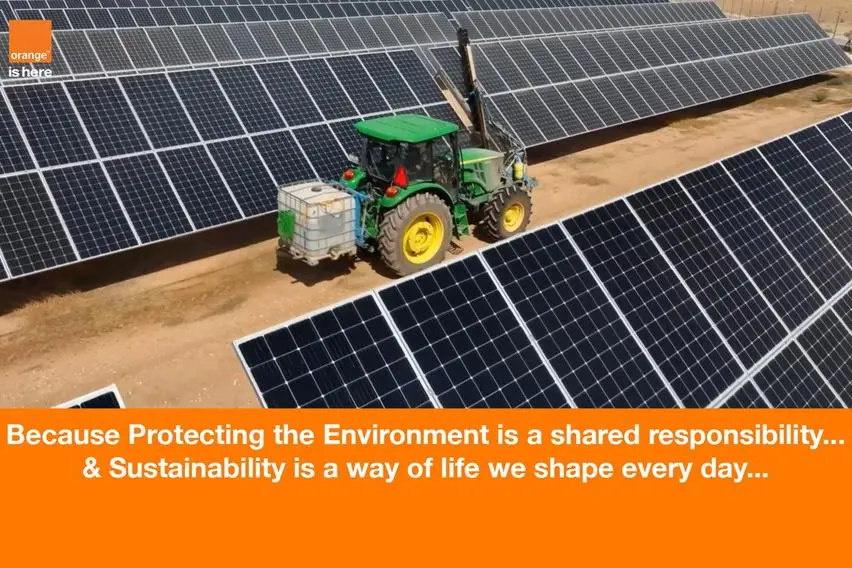
The company continues to achieve outstanding outcomes, having successfully implemented a number of green initiatives such as planting trees and cleanup campaigns. It has also been the first to adopt clean, renewable energy in the Kingdom through three major solar farms, two located in the Mafraq development area and one in Amman, covering more than 60% of the company's energy needs in 2020. In addition, Orange Jordan continues to develop and introduce solutions that support national efforts to transition towards a green, digital, and inclusive economy, and provides supportive programs that target, for example, empowering startups that offer solutions in agricultural technology, waste management, and energy efficiency.
Orange Jordan is more than just a telecommunications company; it is a true partner in supporting national efforts and keeping pace with global trends toward complete sustainability. The company's commitment goes beyond the borders of the capital, Amman, to reach all governorates of the Kingdom, believing in the necessity of providing a gateway to digital and environmental development and making it available to everyone.
The company continues to elevate its efforts to promote national innovation, invest in infrastructure for comprehensive sustainability and digital growth, and leverage technology and develop programs that serve every Jordanian individual and protect the environment, within the national vision of building a green future and achieving long-term sustainability.