PHOTO
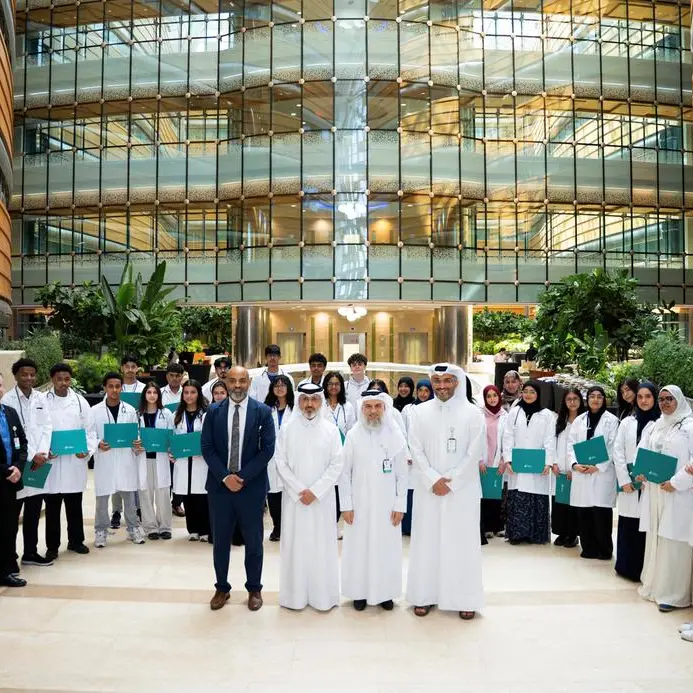
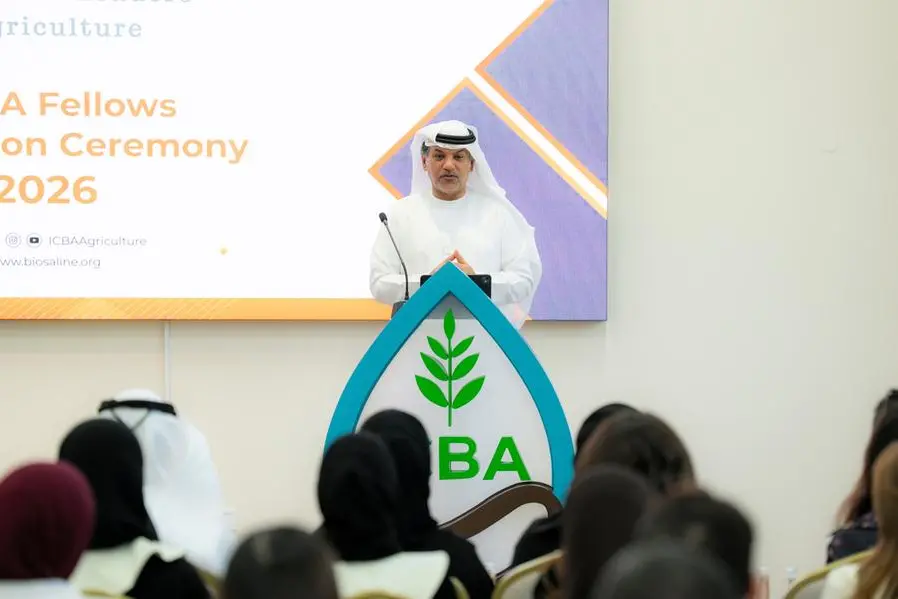
- The event brought together the Women in Science and Innovation Forum and the graduation ceremony of the fourth cohort of the Arab Women Leaders in Agriculture Fellowship Program (AWLA), in conjunction with the International Year of Women Farmers 2026
- The fourth cohort adds 21 new graduates to AWLA’s growing regional network, bringing the total number of Arab women leaders in agriculture to 79 since the program’s launch
- ICBA announced the AWLA Annual Award to recognize outstanding achievements by women in agriculture, research, and innovation
Dubai, United Arab Emirates – The International Center for Biosaline Agriculture (ICBA) marked the graduation of the fourth cohort of the Arab Women Leaders in Agriculture Fellowship Program (AWLA), as part of an event that brought together the forum “Women Shaping Sustainable Agriculture in the Arab World” and the graduation ceremony, in conjunction with the International Year of Women Farmers 2026. The new cohort included 21 fellows from across the Arab region, bringing the total number of AWLA graduates since the program’s launch to 79 Arab women leaders in agriculture, research, innovation, and food security.
The event was attended by H.E. Mohammed Saeed Sultan Al Nuaimi, Undersecretary of the Ministry of Climate Change and Environment, and Sultan Al Shamsi, Director of the National Agriculture Centre, alongside representatives of the Food and Agriculture Organization of the United Nations (FAO), the Gates Foundation, and a number of partners, experts, researchers, and graduates.
The event comes amid the global momentum surrounding the International Year of Women Farmers 2026, which serves as an important opportunity to recognize women’s contributions to agriculture and food systems, particularly across the Arab region. This comes at a time when food security challenges are increasingly linked to climate change, water scarcity, land degradation, and the need for more sustainable, science-based, and practical solutions.
H.E. Mohammed Saeed Al Nuaimi, Undersecretary of the Ministry of Climate Change and Environment, said: “Empowering female farmers, researchers, and leaders within our food security systems is critical to global progress. As key drivers of agriculture, women hold the potential to transform the sector. Equipping female farmers worldwide with the necessary resources and technologies is proven to boost agricultural yields, helping to lift millions out of hunger. In this light, we highly commend the pioneering efforts of the International Centre for Biosaline Agriculture (ICBA) and its 'AWLA' programme. Serving as both a leadership incubator and a platform for enhancing the research capabilities of Arab women, AWLA empowers them to lead the charge against climate, water, and food crises in a region already facing severe agricultural challenges.”
His Excellency added: “In the UAE, we recognise that supporting Emirati farmers and female agriculturalists is a cornerstone of our national food security. Our commitment was proudly demonstrated at the recent Emirates Agriculture Conference and Exhibition, where we dedicated a specialised pavilion to female farmers. These efforts culminated in the hosting of the inaugural ‘Emirati Women Farmers Forum’ and the launch of the ‘Empowering Women Farmers Initiative’. These milestones reaffirm our wise leadership’s commitment to placing women’s empowerment at the heart of our national sustainability agenda.
“Our journey towards food security relies on strong, strategic partnerships. Our collaboration with ICBA resulted in the ‘National Agricultural Initiative for the Adoption of Climate-Smart Crops in the UAE’, a key step towards enhancing food self-sufficiency and reducing import reliance. To every female researcher and farmer, we say: You are the guardians of our land and the nurturers of life. It is through your hands that we will secure a resilient food system, unshaken by future crises.”
Dr. Tarifa Alzaabi, Director General of ICBA, said: “The graduation of AWLA’s fourth cohort represents an important milestone in the program’s journey and reflects the value of investing in women leaders who can connect scientific knowledge with practical application, and translate research and innovation into solutions that support sustainable agriculture and food security in the region. This occasion is particularly significant in the context of the International Year of Women Farmers 2026, being marked by FAO, as it reminds us of women’s central role in agricultural and food systems, and of the need to expand their opportunities in leadership, research, and impact. With 21 new graduates joining the AWLA network, bringing the total number of program graduates to 79 Arab women leaders, AWLA continues to strengthen its position as a regional platform for capacity building, collaboration, and the advancement of a new generation of women capable of leading innovative and sustainable solutions, particularly in arid and saline environments. On this occasion, we extend our appreciation to the Government of the United Arab Emirates and the Food and Agriculture Organization of the United Nations for their collaboration, and we value the Gates Foundation’s continued support for the program, as well as the efforts of all partners, mentors, trainers, and contributors who helped make this cohort a success.”
AWLA is supported by the Gates Foundation as part of its efforts to strengthen investment in women’s leadership and research capacities in agriculture and food systems. This support enables women to access knowledge, networks, and leadership opportunities, enhancing their ability to translate scientific ideas into practical solutions that serve communities and farmers and support a more sustainable and inclusive future.
Representatives of the Food and Agriculture Organization of the United Nations (FAO) highlighted the importance of the International Year of Women Farmers 2026, noting that AWLA provides an important platform for strengthening women’s presence in agriculture, research, and innovation across the Arab region. They also emphasized the need to give greater visibility and recognition to the contributions of women farmers, and to ensure that such recognition is matched by practical support that enables women to access knowledge, tools, technologies, partnerships, and opportunities that strengthen their role in sustainable agriculture and food security.
During the forum, AWLA fellows presented a range of research projects and ideas linked to key priorities in sustainable agriculture and food security, including date palm production, soil health, agricultural by-products, water-efficient crop production, and agri-food innovation.
As part of the field success stories segment, Dr. Ameena Ali Qulaib Al Teneiji from the United Arab Emirates, a graduate of AWLA’s second cohort and third-place winner of the Sheikh Mansour bin Zayed Award for Agricultural Excellence in the Aquaculture category, shared her experience in transforming her farm into a practical model for sustainable agriculture, combining crop production, livestock, aquaculture, hydroponics, and organic practices. Her award win marked an important milestone in her journey, strengthening her commitment to innovation, research, experimentation, and knowledge transfer, and offering an inspiring example of women’s ability to turn agricultural challenges into opportunities for learning and impact.
Aysha Alshamsi from the United Arab Emirates said: “AWLA has strengthened my belief that women in agriculture are not only contributors, but leaders shaping the future of sustainable food systems. Being part of this network inspires me to innovate, collaborate, and create real impact.”
From Jordan, Abeer Saqer said: “I realized that leadership is not a title to be given, but a responsibility to be practiced and an impact to be built. Today, with AWLA, I carry a clearer vision and greater passion to be part of a generation leading towards a more resilient and sustainable future, where collaboration and knowledge are the foundation of every achievement.”
Lina Gouacem from Algeria said: “Science gave me the tools to ask the right questions, and AWLA gave me a community of extraordinary women who remind me that no question is too big when we face it together. As a researcher in agriculture, I do not only carry data and discoveries; I carry the hopes of farmers, families, and future generations.”
The event also witnessed the announcement of the AWLA Annual Award, which aims to recognize outstanding achievements by women in agriculture, research, and innovation, and to highlight influential women role models who contribute to advancing food security and sustainability across the Arab region.
Through its partnerships and programs, ICBA continues to strengthen AWLA’s position as a regional platform for building women’s capacities in agriculture and enhancing their role in developing science- and innovation-based solutions to food security and sustainability challenges, particularly in arid and saline environments.
About ICBA
Established by the Government of the United Arab Emirates and the Islamic Development Bank, the International Center for Biosaline Agriculture (ICBA) is a unique international not-for-profit applied research-for-development center. The center’s approach integrates strategic alliances, technical expertise, and knowledge empowerment to co-create innovative solutions for sustainable livelihoods and food security in saline and arid environments. The center’s research is at the nexus of soil, water, crops, and climate to prevent, manage and recover from salinity in agricultural lands. Through this holistic and integrated approach, ICBA strives to make a lasting positive impact on the lives and livelihoods of farming communities, ensuring their resilience and contributing to a more sustainable future for all. www.biosaline.org