PHOTO
Middle East — For decades, full-size SUVs and pickups have been at the heart of how customers across the Middle East define confidence on the road, accounting for almost half of General Motors (GM) Middle East’s sales, exactly 44% between 2000 and 2025, reflecting a deep, enduring preference for capability, space, presence and safety.
As GM marks 100 years in the region, that connection also speaks to a legacy built over generations, shaped by iconic vehicles, and how strength, safety and confidence have evolved. For many Middle Eastern car enthusiasts, GM’s classic vehicles had the kind of visual character that felt timeless and, during their era they were at the forefront of the industry, representing strength and safety — built from thick metal, heavy materials and a visibly sturdier form. Yet, vehicle safety is more nuanced, shaped by physics, efficiency and a far deeper understanding of how to protect people in the moments that matter most.
As automotive engineering advanced, so did the vehicles by managing crash forces more intelligently and protecting the people inside more effectively. This shift matters at a time when road crashes continue to claim approximately 1.19 million lives globally each year and impose significant economic costs. Against that backdrop, modern vehicle engineering is increasingly focused on avoiding collisions, managing impact energy and protecting occupants when incidents occur.
In fact, GM Africa & Middle East’s 2024 YouGov survey across the UAE, Saudi Arabia and Egypt found that safety features were the most important factors in vehicle purchase decisions for 89% of respondents, ahead of affordability and overall aesthetics. This is a clear regional signal that safety is prioritized at the point of purchase.
Speaking about this transformation, Jorge Plata – President & Managing Director of GM Africa and Middle East said, “Decades ago, just as today, drivers wanted vehicles that inspired confidence on every journey. What has changed is how we deliver that confidence. Today, strength isn’t just about heavy metal; it’s engineered through advanced safety systems, smarter structures, and technology that helps reduce the risk of crashes before they happen. That is the fundamental evolution of the modern vehicle.”
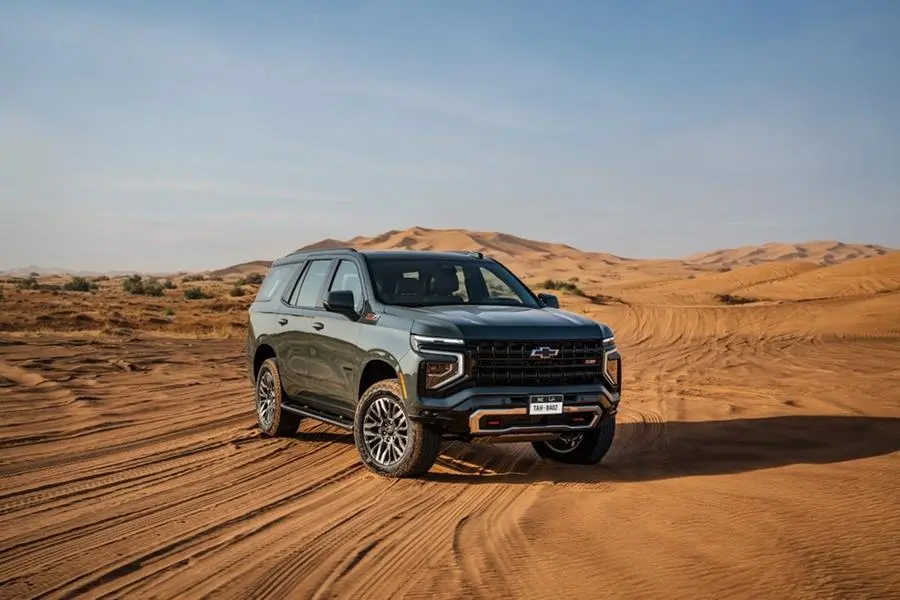
From the earliest Chevrolet and GMC trucks and Cadillac sedans to today’s SUVs and pickups, GM’s legendary vehicles have continued to shape what confidence on the road looks like. Across GM’s portfolio — including the Chevrolet Tahoe and Suburban, Chevrolet Silverado, GMC Yukon and Sierra, and Cadillac Escalade — this evolution is especially visible. Over the last 25 years, GM Middle East has sold around 1 million full-size SUVs and pickups alone, underlining the region’s enduring affinity for these flagship nameplates. These vehicles continue to deliver the presence, space and capability customers expect, while integrating sophisticated safety, driver-assistance and connected solutions that support driver awareness and rapid response.
Jorge Plata continued, “Modern vehicle design now prioritizes aerodynamics to improve stability and efficiency, lighter yet stronger materials to enhance responsiveness, and carefully engineered deformation zones that absorb crash forces before they reach occupants. What may appear less rigid externally often reflects a far more complex and effective approach to safety.”
That progress is also being independently recognized. The 2025 Chevrolet Traverse and GMC Acadia earned IIHS Top Safety Pick designations, while the 2026 Chevrolet Traverse offers more than 20 standard safety and driver assistance features and a 5-star NHTSA rating — underscoring how modern family vehicles are redefining expectations in the segment. Cadillac’s all-electric Escalade IQ has also earned broader product recognition, including Autotrader’s Best New Car of 2025 and MotorTrend’s 2026 SUV of the Year, reflecting how excellence today is increasingly judged through a combination of engineering, innovation, design and the overall in-vehicle experience.
In the Middle East, these vehicles come equipped with OnStar, GM’s pioneering connected services. Globally, for more than 30 years, OnStar helps keep drivers stay focused and supported through features such as Automatic Crash Response, Emergency Services and voice-connected assistance, alongside broader connectivity, convenience and driver-assistance offerings. Today, OnStar is available across the UAE, Kuwait, Saudi Arabia and Bahrain, with more than 42,000 members and counting.
Beyond OnStar, GM’s accountability within the ownership cycle encompasses issues that may be identified in a vehicle after its purchase. When such issues arise, recalls remain an important part of the modern safety ecosystem. At many times it can also be a proactive measure undertaken out of a manufacturer’s commitment toward safety. In the Middle East, this is always rolled out in close coordination with authorities to protect customers and strengthen trust.
For GM, this represents a broader shift in how vehicles are engineered and evaluated.
Strength is no longer measured by how much a body panel can resist in isolation. It is assessed by how effectively the entire system — structure, restraints, sensors, software, braking and key partners — works together to protect occupants and support the driver.
Regional sales data shows that customer affinity for full-size SUVs and pickups remains strong. What is changing is the technology behind that appeal. Today’s vehicles are expected to deliver capability, efficiency, safety and intelligence simultaneously — a complex mandate compared to previous decades.
Classic vehicles will always hold emotional power. They remind people of family histories, first drives, formative journeys and the start of a new era. Modern vehicles stir desire, while also answering to far tougher expectations around safety, sustainability, performance and technology.
About General Motors Africa & Middle East Operations
General Motors (NYSE:GM) is driving the future of transportation, leveraging advanced technology to build safer, smarter, and lower emission cars, trucks, and SUVs. GM’s Buick, Cadillac, Chevrolet, and GMC brands offer a broad portfolio of innovative gasoline-powered vehicles and the industry’s widest range of EVs, as we move to an all-electric future.
The GM Africa & Middle East operations have been in the region for close to 100 years, now headquartered in Dubai, UAE with a manufacturing plant in Egypt. In the region, GM represents Chevrolet, GMC and Cadillac. With a network of 17 distributors serving 29 countries, the organization has over 203 customer-facing rooftops to cater to countries in Africa, Levant, the GCC and other Middle Eastern countries. For more information, please visit www.gmarabia.com.
CONTACT:
Diana Al Shafie
Corporate Communications Lead
GM Africa & Middle East
Email: diana.alshafie@gm.com