PHOTO
Fixed income and income-oriented strategies are regaining prominence in a changing rate environment
Private markets are moving firmly to the core of portfolios, supported by growing regional demand
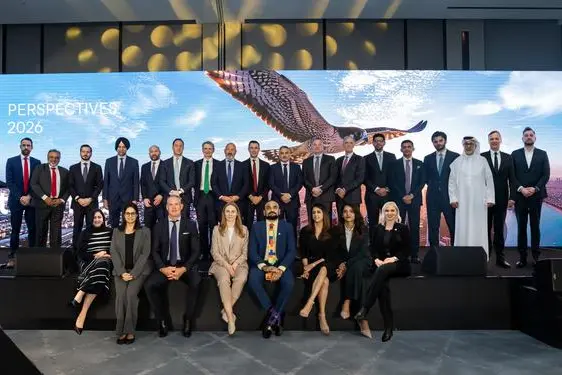
Dubai, UAE: Franklin Templeton, one of the world’s largest global asset managers, said investors should expect a prolonged period of more divergent investment outcomes across markets, with increasingly uneven performance across asset classes and strategies, as global markets adapt to structural shifts in interest rates, capital allocation and technology adoption. The views were shared at the Franklin Templeton Perspectives 2026 Conference held in Dubai, which brought together clients from more than eight countries across the Middle East, South Africa and Central and Eastern Europe, alongside senior Franklin Templeton investment professionals from the United States, the United Kingdom, India and the UAE. Participants included chief investment officers overseeing approximately $300 billion in assets.
Against a backdrop of ongoing economic diversification, capital market development and rising institutional sophistication across the GCC, the discussions highlighted how global structural changes are increasingly intersecting with regional investment priorities.
Income Regains a Central Role Across Global and GCC Markets
Franklin Templeton reported that shifting interest-rate dynamics are reshaping income opportunities across global markets and within the GCC. Easing short-term rates alongside resilient long-term yields mark a departure from the investment environment of the past decade and are bringing income back to the centre of portfolio construction.
For investors in the Middle East, this environment is reinforcing the importance of diversified and actively managed fixed income strategies, as portfolios are repositioned following several years of higher rates. The firm highlighted renewed opportunities across both government and corporate credit, with a focus on balancing income generation, duration management and risk resilience as market conditions evolve. In the GCC, rapid market development and growth will not come at the expense of credit quality, continuing to attract both regional and international investors.
Regional Market Development
Over the past several years, GCC equity and debt capital markets have shifted from episodic issuance to a more continuous, institutional-grade ecosystem. Equity markets have maintained an active IPO pipeline across the region, broadening sector representation and expanding the investable universe, while debt markets have deepened through more regular sovereign, quasi-sovereign and corporate issuance, with sukuk increasingly mainstream. This evolution is being reinforced by ongoing market-access reforms, most notably the expected easing of foreign ownership limits in Saudi Arabia, which should support stronger secondary-market liquidity and, by improving investability, potentially increase Saudi Arabia’s weight in major emerging-market equity indexes over time.
Franklin Templeton notes that the GCC is increasingly being assessed by global investors as a distinct strategic allocation rather than a peripheral emerging-market exposure. This shift reflects clearer policy direction, sustained investment programmes and strengthening earnings momentum. Across the region, governments continue to pursue counter-cyclical investment agendas underpinned by robust balance sheets, low sovereign leverage and ample fiscal buffers. At the same time, favourable demographics and rising expatriate inflows are reinforcing the medium- to long-term growth outlook. Together, these forces are supporting durable, through-cycle opportunities across key sectors including financials, infrastructure, logistics, real estate, retail, healthcare and education.
Structural changes in retirement and savings systems are also underway. The UAE’s transition away from traditional end-of-service gratuity arrangements toward defined-contribution frameworks, alongside Saudi Arabia’s introduction of voluntary pension initiatives, are expected to support the gradual build-up of long-term savings pools and influence portfolio construction over time.
Emerging Markets and the GCC Growth Outlook
Franklin Templeton highlighted that emerging markets now account for the majority of global growth, supported by stronger balance sheets and more resilient policy frameworks. Within this context, the GCC offers a differentiated combination of stability and expansion and is increasingly attracting greater attention from global investors, with Saudi Arabia and the UAE benefiting from low sovereign debt, investment-led growth and ongoing economic diversification. Despite these fundamentals, the firm noted that global emerging-market allocations remain underweight the region, suggesting potential for a catch-up with underlying economic and earnings trends
Private Markets Move to the Core of Portfolios
Franklin Templeton highlighted that client demand for private market exposure continues to rise globally and across the UAE and wider GCC, driven by a desire for greater diversification, more resilient income and access to long-term structural opportunities aligned with regional growth agendas.
The firm’s highest-conviction areas within private markets for 2026 include private equity secondaries, private credit and select real estate and infrastructure strategies. Private equity secondaries are viewed as an important source of diversification and liquidity.
Within private credit, commercial real estate debt is an attractive opportunity as bank lending has significantly pulled back and in particular Multifamily valuations offer highly compelling valuations. In private real estate sectors such as industrial, multi-family, senior living and necessity retail are favoured following valuation resets that have brought pricing below replacement cost, while the office sector continues to face structural challenges. Infrastructure investment remains supported by long-term drivers linked to digital infrastructure, decarbonisation, de-globalisation and demographic trends, many of which align closely with national development priorities across the Middle East.
Artificial Intelligence as a Structural Investment Theme
Franklin Templeton highlighted that artificial intelligence is moving beyond experimentation to become a significant driver of capital investment across the global economy. The firm noted that these trends are increasingly relevant for the Middle East, where governments and corporates are accelerating investment in digital infrastructure, data and innovation ecosystems. Governance, regulation and data considerations are expected to shape long-term outcomes.
Generational Shifts in Wealth and Retirement
Franklin Templeton’s Future of Investing research highlights how demographic change and rapid technology adoption are reshaping investor behaviour and long-term savings models. Traditional retirement frameworks built around stable employment are increasingly misaligned with more flexible and less predictable income patterns.
In the GCC, these shifts are unfolding alongside rapid economic transformation and the growing consumerisation of finance. Franklin Templeton is focused on supporting clients through this transition by delivering the investment capabilities and innovation needed to meet the evolving wealth and retirement needs of future generations.