PHOTO
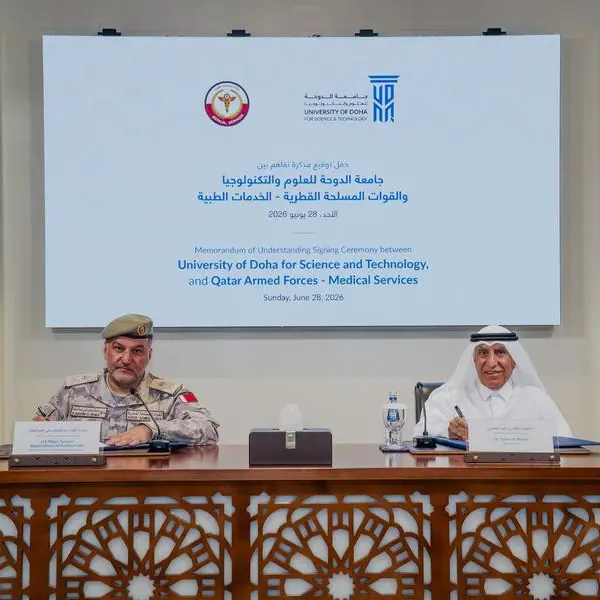
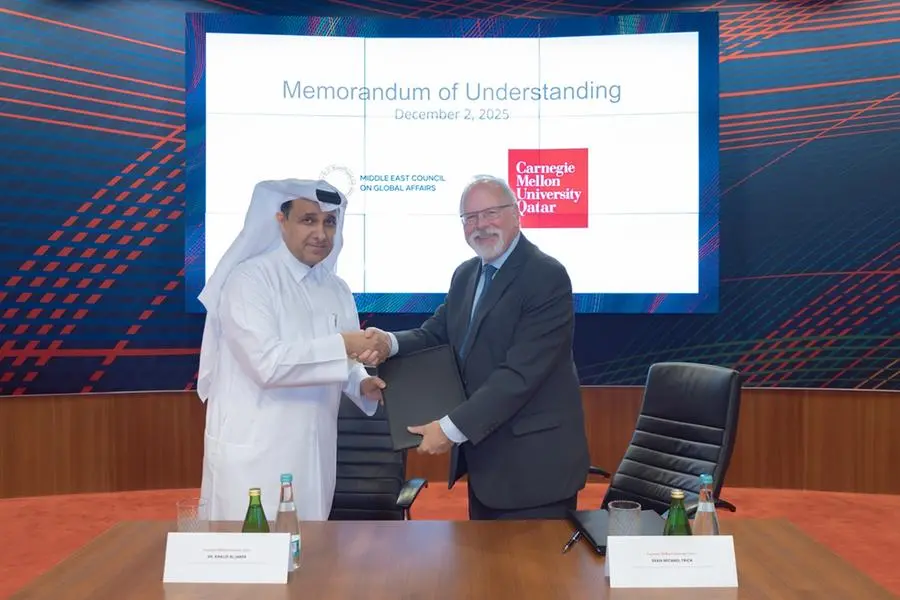
Doha, Qatar: Carnegie Mellon University in Qatar (CMU-Q) and the Middle East Council on Global Affairs (ME Council) signed a Memorandum of Understanding (MoU) to establish a comprehensive framework for cooperation in research, education, and professional development across the region.
The agreement was signed by CMU-Q’s Dean Michael Trick, Dean of CMU-Q, and Dr. Khalid Al-Jaber, Executive Director of the ME Council, alongside representatives from both institutions.
The collaboration underscores the shared commitment of both organizations to advance knowledge exchange, support strategic research, and build capacity to address key regional policy challenges. The partnership will leverage CMU-Q's world-class expertise in Artificial Intelligence, Business Administration, Computer Science, and Information Systems, as well as resources from Carnegie Mellon's campuses and research institutes in the United States.
Dean Trick emphasized the significance of the partnership: "Our collaboration creates meaningful opportunities for our students and researchers to engage with critical policy questions facing the region. By combining our academic strengths with the Council's deep understanding of regional dynamics, we can contribute to evidence-based analysis and solutions that support the development of Qatar and the entire Middle East region."
Dr. Khalid Al-Jaber, Executive Director, ME Council, stressed that this partnership marks an important step toward strengthening a research and educational environment capable of addressing the rapidly evolving challenges facing the region. He added that collaborating with Carnegie Mellon University in Qatar, with its global expertise and academic excellence, opens new horizons for advancing knowledge and developing innovative, research-driven solutions. He expressed his confidence that this collaboration will help build the capacities of future generations and empower them to drive positive change in Qatar and the wider Middle East.
Under the agreement, CMU-Q will provide education and training programs to the ME Council on Global Affairs, while both organizations will exchange expertise among their academic and research teams. They will also jointly organize conferences, seminars, and workshops to promote knowledge sharing and professional development.
The Middle East Council on Global Affairs will offer internship and employment opportunities for CMU-Q students who will also be encouraged to participate in voluntary activities supporting the Council's community service initiatives in Qatar.
This partnership reflects CMU-Q’s ongoing effort to create meaningful learning experiences for students and support research that contributes to the community. Through this collaboration, both institutions aim to encourage thoughtful exchange and a deeper understanding of the region.
About Carnegie Mellon University in Qatar
For 125 years, Carnegie Mellon University has forged a path of innovation and collaboration. A private and top-ranked university, Carnegie Mellon looks beyond the traditional campus borders to have a transformative, global impact.
In 2004, CMU and Qatar Foundation began a partnership to bring this unique educational experience to the Middle East. Today, more than 450 students pursue undergraduate degrees in the growing fields of artificial intelligence, biological sciences, business administration, computer science and information systems.
As the CMU-Q alumni network grows, so does the impact of our graduates. They work at top organizations and innovative startups. They are researchers, creators, entrepreneurs, analysts and educators, and they are working to improve the world around them
The Middle East Council on Global Affairs
The Middle East Council on Global Affairs (ME Council) is an independent, non-profit policy research institution based in Doha, Qatar. It conducts policy-relevant research, convenes meetings and dialogues, and engages policy actors on geopolitical and socioeconomic issues specific to the Middle East and North Africa (MENA) region. Serving as a bridge between the MENA region and the rest of the world, the ME Council provides a regional perspective on global policy issues. It also establishes partnerships with other leading research institutions and development organizations across the MENA region and the world.