PHOTO
LONDON, UNITED KINGDOM — Capital.com, a global fintech building online trading platforms to systematically improve the quality of user decision-making under pressure, has published its Q1 2026 trading platform update, reporting $1.27 trillion in client trading volumes for the period January to March 2026, up 11.2% from $1.14 trillion in Q4 2025.
The total number of trades executed rose 81% year-on-year compared with Q1 2025. January was the most active month across the six-month observation window, reaching approximately $502 billion, up 11.5% on October 2025, the next highest month in the same period, driven by sustained gold price increases and central bank purchasing at a 25-year high. Average monthly active traders increased by 10.9% compared with Q4 2025. Trading volumes are influenced by prevailing market conditions and do not indicate future activity levels. Leveraged products carry risk and are not suitable for all individuals.
Q1 2026 was defined by three distinct market events, each of which placed different pressures on trader decision-making. Gold prices reached successive record highs in January, driven by central bank purchasing at a 25-year high, a weakening US dollar and sustained geopolitical tension, with the precious metal accounting for 59% of January’s total platform volume. Cryptocurrency markets experienced significant volatility in February as regulatory changes across major jurisdictions created structural uncertainty for participants. In March, sustained conflict involving Iran and continued supply risk across the Middle East, compounded by a surprise OPEC+ production cut, drove oil volatility to its highest level in the observation window, producing the largest single-day volume increase of the quarter. In each case, elevated market conditions tested the quality of decisions made under pressure, a pattern Capital.com’s platform is built to help clients navigate.
The Middle East accounted for a significant share of total trading volume during the quarter, with the UAE among the top three markets alongside Germany and the United Kingdom, consistent with Q4 2025 regional patterns. Regional distribution reflected participation across the jurisdictions in which Capital.com holds regulatory authorisation.
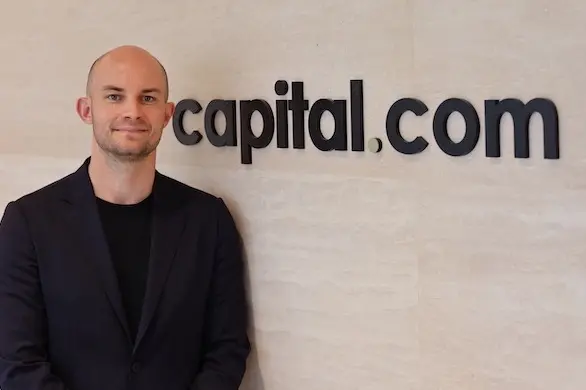
Tarik Chebib, CEO Middle East, Capital.com, commenting on the Q1 2026 platform data, said:
“Q1 2026 brought three significant market events — gold at successive record highs in January, crypto volatility in February, and sustained Middle East conflict that drove two distinct waves of oil trading activity in March. Each event created a different kind of decision pressure for participants. Trading volumes of $1.27 trillion reflect those conditions. Capital.com exists to help people make better decisions under exactly these kinds of circumstances — not by predicting markets, but by giving clients the tools, context, and structure to manage their own behaviour when conditions are most demanding. That remains the focus.”
Most traded instruments
Gold Spot was the most actively traded instrument in Q1 2026, accounting for approximately 59% of January’s platform volume as prices reached successive highs throughout the month. The US Tech 100 and Germany 40 featured among the most active instruments by trade frequency, with Germany 40 volumes rising 40% in January before falling sharply in March as European equities repriced geopolitical risk. Silver Spot volumes increased fivefold in January as traders extended commodity exposure beyond gold, before returning to prior levels in February and March.
Oil markets and Middle East activity
US Crude Oil was among the most actively traded instruments of the quarter, with Middle East tensions driving two distinct waves of activity. The first came on 2 March, when escalating conflict in the region drove a 275% increase in active oil traders on the Capital.com platform compared with the prior Friday, with total oil trading volumes up 649% and trades executed up 414% in a single session, making oil the second most-traded instrument by volume on the platform within that trading day. The second wave came in late March, as sustained conflict involving Iran and continued supply risk from the broader Middle East kept energy markets on edge. By 24 March, oil trading volumes on the platform were up 134% compared with the previous Monday, with the number of traders entering oil for the first time rising 420% on that Tuesday alone, indicating the sustained news cycle was drawing in participants who had not previously engaged with energy markets. Bullish positioning in oil stood at 56% long as of 24 March, easing slightly from 59% at the start of the week, suggesting some traders chose to reduce their positive view on crude. For March overall, oil volatility reached 36.1%, the highest in the six-month observation window.
Stop-loss adoption and risk management
Globally, 22.4% of all positions carried a stop-loss in Q1 2026, up from 22.1% in Q4 2025, with adoption highest among Millennial and Gen Z traders. Stop-loss usage varied considerably by market among clients with significant trading activity: Sweden recorded the highest voluntary adoption rate at 37.0%, followed by Germany at 32.3%, reflecting a pattern in which Northern and Central European traders showed greater use of structured risk parameters than the global average.
The data consistently shows that stop-losses do what they are designed to do: positions protected by a stop-loss incurred materially smaller losses than those without one across every month of the quarter. In January, average losses on unprotected positions were approximately two times higher than on protected ones, with the gap widening through February and March as volatility increased. Stop-loss adoption is one of the primary metrics Capital.com tracks as an indicator of structured risk management and the kind of disciplined decision-making the platform is built to support.
Of the positions that carried a stop-loss, more than half were ultimately closed by that stop-loss being triggered rather than by the trader choosing to exit manually. This trigger rate averaged 54.7% across Q1, up from 53.7% in Q4 2025, meaning that in a volatile quarter, the majority of stop-loss orders ended up doing the work they were set to do.In March, oil’s 36.1% volatility produced intraday price swings wider than many stop-loss orders had been set to accommodate, increasing trigger costs. Stop-losses bounded losses that would otherwise have run further, but in highly volatile conditions the placement of orders matters as much as having them. (Not all stop-loss orders are guaranteed, and in volatile market conditions they may not fully limit losses. Guaranteed stop-loss orders may incur additional costs.)
Christoforos Soutzis, CEO Europe, Capital.com, said:
“The Q1 data reinforces the value of stop-loss tools, particularly in volatile markets. Positions with a stop-loss consistently incurred smaller losses than those without one across every month of the quarter. In extreme conditions like March’s oil spike, the placement of stops matters — orders set too close to current price were triggered by normal market noise rather than a genuine change in conditions.Getting that calibration right is important. Capital.com publishes video guides and explainers on YouTube covering how to set and calibrate stop-loss orders, giving clients the context to make that judgement for themselves.”
Press Contact:
Shamillia Sivathambu, Head of PR, Capital.com
Shamillia.sivathambu@capital.com
Notes to editors
All trading volume and activity data cited in this release is sourced from Capital.com platform data for Q4 2025 (October–December 2025) and Q1 2026 (January–March 2026). All figures are historical. They do not indicate future activity levels, performance outcomes, or the suitability of any product for any individual. The six-month observation window referenced reflects the comparison period used in Capital.com’s internal platform reporting.
About Capital.com
Capital.com is a global, regulated financial company established in 2016. It operates a technology-led platform providing access to financial markets, designed to support deliberate and informed decision-making.
The company’s operating model is structured around regulatory compliance, governance, and operational discipline. Platform design emphasises clarity, information sequencing, and risk awareness, with features intended to limit unnecessary urgency and support considered market participation.
Capital.com operates across multiple jurisdictions under established regulatory frameworks. The company’s focus is on long-term consistency, resilience, and stability across market conditions, including periods of heightened volatility.
Capital.com maintains operational offices in major financial and business centres, including London, Dubai, Warsaw, Milan, Nassau, Sofia, Limassol, and Melbourne. Capital Com (UK) Limited is authorised and regulated by the Financial Conduct Authority (FCA) under registration number 793714. Capital Com SV Investments Limited is authorised and regulated by the Cyprus Securities and Exchange Commission (CySEC), under licence number 319/17. Capital Com Group Ltd is authorised and regulated by the Cyprus Securities and Exchange Commission, under license 463/25. Capital Com Australia Pty Ltd is authorised and regulated by the Australian Securities and Investments Commission (ASIC) under AFSL Number 513393. Capital Com Online Investments Ltd is a Company registered in the Commonwealth of The Bahamas and authorised to carry out Securities Business by the Securities Commission of The Bahamas with licence number SIA-F245. Capital Com Mena Securities Trading LLC is authorised and regulated by the Securities and Commodities Authority (SCA), under license number 20200000176. CC Kenya Securities Limited trading as Capital.com is regulated by the Capital Markets Authority of Kenya under license number 244.
To find out more, please visit: www.capital.com
This press release is for media use only. It’s not intended for individual investors and doesn’t include personal advice or recommendations.
DISCLAIMER
CFDs are complex instruments and come with a high risk of losing money rapidly due to leverage. Depending on the company, between 62% - 81.31% of retail investor accounts lose money when trading CFDs with Capital.com Group. You should consider whether you understand how CFDs work and whether you can afford to take the high risk of losing your money.
Crypto Derivatives are not available to Retail clients registered with Capital Com (UK) Ltd. Spread bets are available only to UK clients.
The value of shares and ETFs bought through a share dealing account can fall as well as rise, which could mean getting back less than you originally put in. Past performance is no guarantee of future results.
Transactions in non-deliverable over-the-counter instruments, such as knock-out options and CFDs are complex financial products that carry a high risk of losing all invested capital. Such products are not suitable for all investors, as they may lead to both gains and significant losses.
Capital Com (UK) Limited (“CCUK”) is registered in England and Wales with company registration number 10506220. CCUK is authorised and regulated by the Financial Conduct Authority (“FCA”), under registration number 793714. Capital Com SV Investments Limited (“CCSV”) is registered in Cyprus with company registration number 354252. CCSV is regulated by Cyprus Securities and Exchange Commission (CySEC) under licence number 319/17. Capital Com Group Ltd is incorporated in the Republic of Cyprus with registration number ΗΕ 446198 and is authorised and regulated by the Cyprus Securities and Exchange Commission (License Number 463/25). Capital Com Australia Pty Ltd is authorised and regulated by the Australian Securities and Investments Commission (ASIC) under AFSL Number 513393. Capital Com Online Investments Ltd is a limited liability company (company number 209236B) registered in the Commonwealth of The Bahamas and authorised to carry on Securities Business by the Securities by the Securities Commission of The Bahamas (“SCB”) with licence number SIA-F245. Capital Com Mena Securities Trading LLC is authorised and regulated by the Securities and Commodities Authority (SCA), under licence number 20200000176.
Capital.com is an execution-only brokerage platform and the content provided on the Capital.com website is intended for informational purposes only and should not be regarded as an offer to sell or a solicitation of an offer to buy the products or securities to which it applies. No representation or warranty is given as to the accuracy or completeness of the information provided.
The information provided does not constitute investment advice nor take into account the individual financial circumstances or objectives of any investor. Any information that may be provided relating to past performance is not a reliable indicator of future results or performance.
To the extent permitted by law, in no event shall Capital.com (or any affiliate or employee) have any liability for any loss arising from the use of the information provided. Any person acting on the information does so entirely at their own risk.
Any information which could be construed as “investment research” has not been prepared in accordance with legal requirements designed to promote the independence of investment research and as such is considered to be a marketing communication.