PHOTO
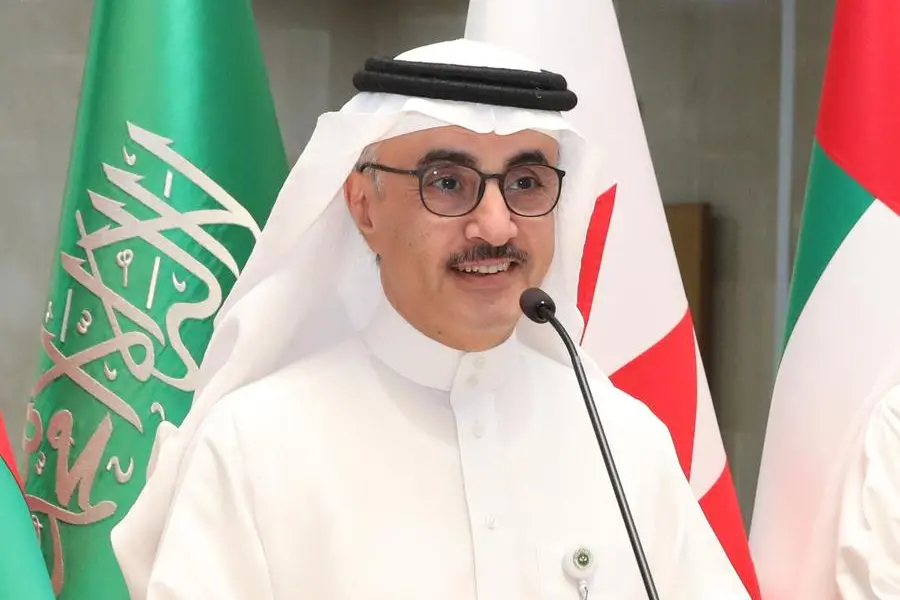
Manama – His Excellency Dr. Saad bin Saud Al-Fuhaid, President of the Arabian Gulf University, affirmed that the university continues to develop its academic and research roles in the fields of innovation and digital transformation, thereby contributing to the Gulf Cooperation Council countries’ shift toward a knowledge-based economy.
Coinciding with World Creativity and Innovation Day, he explained that investing in the development of students’ and researchers’ capabilities is a fundamental element in promoting economic sustainability and building innovation-based development models, noting that the university’s strategic plan has given special importance to innovation and human resource development, in line with its vision to be an academic beacon for human development and shaping the future.
He added that innovation is one of the university’s core institutional values, noting that for decades it has worked to expand its academic and research programs focused on nurturing talent and managing innovation, with the aim of preparing Gulf professionals capable of transforming research ideas into practical applications and initiatives with economic and social impact.
In a global context where interest in creativity is growing as a key driver of development, the experience of the Arabian Gulf University stands out as an academic model that underscores the evolving role of universities in the region—from traditional educational institutions to platforms that contribute to the production of knowledge and its application in supporting digital transformation and the knowledge economy.
As one of the first educational institutions in the Gulf to adopt specializations in the fields of creativity, innovation management, and gifted education, the university continues to implement academic programs aimed at combining theoretical foundations with practical applications, including master’s and doctoral programs in “Innovation Management,” and master’s and doctoral programs in “Gifted Education,” thereby promoting the application of creative ideas in projects with sustainable developmental outcomes.
For his part, Prof. Dr. Ahmed Mohammed Al-Abbasi, Professor of Gifted and Creative Education and Vice Dean of the College of Education, Administrative and Technical Sciences at Arabian Gulf University, explained that the university has implemented a number of significant initiatives in recent years, most notably the launch of programs to support gifted students in the fields of medical and health sciences, as well as the development of a digital system for managing scientific research, which has contributed to enhancing the efficiency of research output and linking it to practical applications. He added that the university’s graduates participate in implementing innovative initiatives within government and private institutions, thereby supporting national development trajectories, and aligning with the visions of the GCC countries.
For her part, Prof. Dr. Fairouz Musleh Al-Dhamour, Head of the Department of Innovation and Technology Management and Professor of Management Information Systems at the College of Education, Administrative and Technical Sciences, noted that the university has recently launched a series of initiatives and workshops addressing the concepts of the “flexible university” and its responses to global transformations. She explained that these initiatives focused on leveraging artificial intelligence and cybersecurity technologies to enhance institutional innovation, particularly in the context of crisis management, emphasizing that the university seeks to consolidate its role as a partner in building national capacity and empowering Gulf youth to face the challenges of the future.