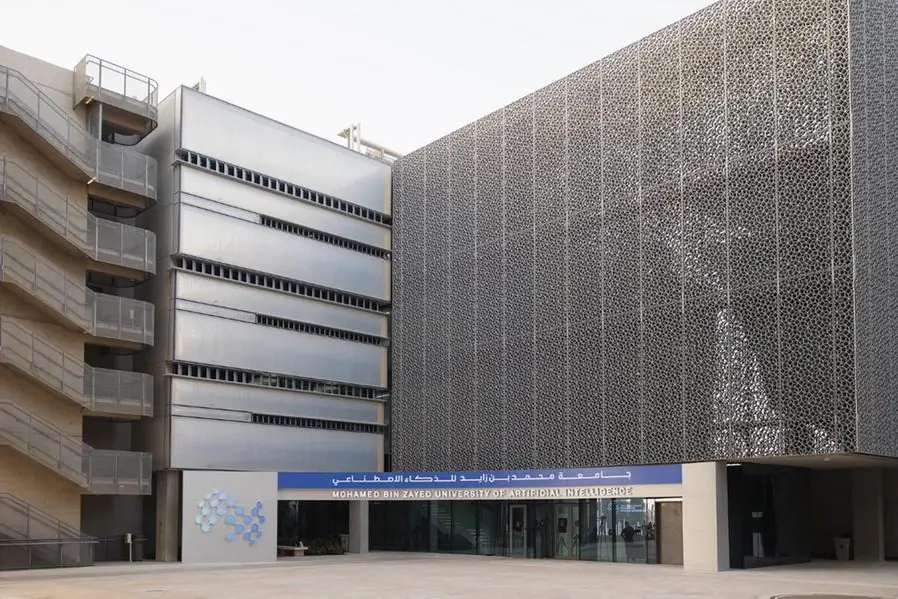
PHOTO
Artificial intelligence is changing what is possible in medicine. On World Health Day 2026, under the global theme "Together for health. Stand with science," researchers at MBZUAI in Abu Dhabi are demonstrating what that means in practice.
The race to detect Alzheimer’s early
According to the World Health Organization (WHO), a new case of dementia arises somewhere in the world every three seconds. There is still no cure. But there may soon be something nearly as valuable: early warning to act.
Researchers at Mohamed bin Zayed University of Artificial Intelligence (MBZUAI) in Abu Dhabi have developed an AI system called MAGNET-AD that can predict the onset of Alzheimer's disease up to two decades before a patient shows any symptoms. A significant advance in early detection, it uses a spatiotemporal graph neural network to identify biological patterns that are difficult to detect through conventional clinical assessment, and it arrives as dementia cases are projected to reach 152 million globally by 2050, accroding to a landmark study published in The Lancet Public Health.
"Early detection is everything in a disease with no cure," said Ph.D. researcher Salma Hassan, whose team also developed ClinGRAD, a companion system that analyses brain MRIs, genomic data, and clinical records simultaneously to classify dementia subtypes with 98.75% accuracy; the work has been peer-reviewed and published at MICCAI 2025, a top-tier medical imaging conference, and was evaluated on the multicentric, multimodal ANMerge dataset to demonstrate robustness across diverse patient populations. In a field where a dementia diagnosis can reduce life expectancy by anywhere from 3 to 30 years depending on age of onset, according to a January 2025 systematic review of more than five million patients published in the BMJ, that level of precision matters.
The Alzheimer's work is one of five areas where MBZUAI, the world's first university dedicated entirely to AI research, is pushing the boundaries of what medicine can do. This World Health Day, that body of work offers a striking illustration of how quickly AI is moving from research paper to real-world impact.
The retina as a window to whole-body health
One of the most counterintuitive findings in modern medicine is that some of the body's most revealing signals are visible through the retina.
MBZUAI researchers demonstrated at Cleveland Clinic Abu Dhabi last year that a simple eye scan can flag early signs of diabetes, hypertension, Alzheimer's, and heart disease, non-invasively and before a patient feels anything is wrong. In the UAE, where the International Diabetes Federation estimates diabetes affects approximately 16% of the adult population, among the highest rates in the world, the implications for population health screening are significant.
Alongside this, the team is developing AI systems that combine retinal vascular imaging with ECG data to detect early heart failure, acting, as researchers describe it, designed not to replace doctors, but to act as a digital second opinion that catches what might otherwise be missed.
Healthcare in your language
For millions of people across the Middle East and Africa, access to quality healthcare is often limited not just by distance, but also by language and health literacy, which remain largely unaddressed barriers. MBZUAI’s AI Arabic Doctor, powered by its in-house BiMediX family of medical AI models developed by Dr. Hisham Cholakkal and his team, is designed to address this gap. The project has received multiple international recognitions, including the Meta Llama Impact Innovation Award 2024 and the NVIDIA Academic Grant 2025.
At its foundation is BiMediX, an Arabic–English medical large language model (LLM) that enables reliable medical understanding and communication across languages, and has been downloaded over 140,000 times on Hugging Face. Building on this, BiMediX2 extends the system’s capabilities to understand medical images such as X-rays, MRIs, and CT scans, alongside Arabic and English language support. The system has since been further enhanced through MediX-R1 and MedAgentSim, improving clinical reasoning and enabling more interactive patient engagement across diverse healthcare scenarios. More recently, in an ongoing project, the model’s linguistic capabilities have been further extended to support Hindi, a language spoken by over 600 million people worldwide, supported by the MBZUAI-IIT joint research seed grant.
The team has published its research at leading AI and medical conferences, including EMNLP and MICCAI, and has open-sourced its models, data, and code, aligning with MBZUAI’s commitment to advancing AI research within the middle east region and across the globe. By integrating to platforms such as Telegram and mobile apps, and supporting both text- and voice-based interactions, the system is designed to reach users with limited health literacy in remote and underserved communities, delivering preliminary medical guidance in their own language, around the clock.
Six million reasons to look harder at ultrasounds
According to the WHO, congenital anomalies affect approximately one in every 33 babies born worldwide, an estimated six million births each year. Associate Professor Mohammad Yaqub has spent his career narrowing that gap. His ScanNav technology, the world's first regulated AI fetal anomaly scan assessment system, went from an Oxford laboratory to FDA approval to deployment across GE Healthcare's global network, and now supports the care of millions of women each year. At MBZUAI, that work has expanded into FetalCLIP, an AI model trained on more than 210,000 ultrasound images, the largest dataset of its kind, capable of detecting fetal heart defects and delivering precise anatomical measurements faster and more accurately than was previously possible. The team has since developed MobileFetalCLIP, which delivers the same capabilities as FetalCLIP in a lightweight model designed to run on edge devices, extending its reach to low-resource settings where reliable fetal screening is most critically needed.
Simulating life itself
In November 2025, MBZUAI and GenBio AI won the UAE Artificial Intelligence Award in the Scientific Research category for their work on an AI-Driven Digital Organism (AIDO), a large-scale simulation of human biology, from gene activity and protein behavior to cellular function and organ systems. The project's DNA, RNA, Protein and Cell foundation models can predict the properties of molecules and cells, and General Expression Transformer (GET) can predict how genes behave under specific conditions before a single laboratory experiment is run. The goal extends well beyond the laboratory. It is to make drug discovery faster, safer, and cheaper, and ultimately, to build a fundamentally different understanding of what drives disease in the first place.
Together, these breakthroughs illustrate what it means to stand with science in practice, not just in principle. In Abu Dhabi, with MBZUAI, that future is already beginning to take shape.