Under the framework of the EU-funded Africa Trade Competitiveness and Market Access (ATCMA) programme, the Economic Community of West African States (ECOWAS), in partnership with the United Nations Industrial Development Organization (UNIDO), held a regional media training in Abuja from 11 to 12 December 2025, aimed at strengthening journalists’ capacity to effectively report on Quality Infrastructure across West Africa.
The ATCMA ECOWAS programme is funded by the European Union (EU) in the amount of €50 million and is jointly implemented by the United Nations Industrial Development Organization (UNIDO) and the International Trade Centre (ITC), with the overall objective to increase sustainable intra-African and EU-Africa trade by enhancing market access and export competitiveness for SMEs in selected value chains.
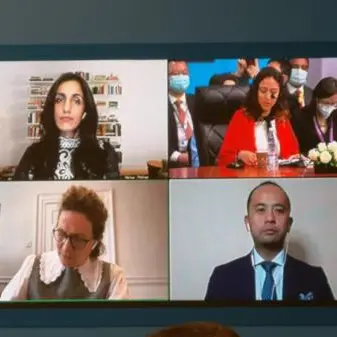
The two-day hybrid training brought together journalists and communication officers from ECOWAS Member States to deepen their understanding of standards, metrology, accreditation, and conformity assessment. Participants were equipped to translate these technical systems into accessible, people-centred narratives that reflect their tangible impact on citizens, enterprises, and regional integration.
Opening the training, the ECOWAS Commissioner for Economic Affairs and Agriculture, Dr. Kalilou Sylla, represented by Mr. Koissi Midaye, Principal Programme Officer, reaffirmed that quality is no longer optional, but a strategic necessity for accessing and sustaining presence in reference markets, strengthening regional value chains, and improving the quality of life of citizens across the Community. He underscored that Quality Infrastructure lies at the heart of economic transformation, public health, market confidence, and cross-border trade, in line with the aspirations of ECOWAS Vision 2050.
Representing the European Union, Mr. Massimo De Luca, Head of Cooperation at the European Union Delegation to Nigeria and ECOWAS, highlighted the importance of harmonised quality rules in safeguarding consumers while enabling manufacturers, traders, and investors to operate confidently across borders. He emphasised that clear and predictable standards, particularly in sensitive sectors such as pharmaceuticals and food fortification, are essential to ensure safety, effectiveness, and trust, and are central to the EU’s Global Gateway strategy, which seeks to support catalytic, sustainable, and transformative investments in West Africa.
Mr. Bernard Bau, Project Manager of the ATCMA ECOWAS programme under the UNIDO, noted that the project presents a major opportunity for the region. “This is a great opportunity for the region, for consumers, manufacturers, producers, investors, and everybody to really make the most of this technical cooperation,” he said, reiterating the dire need for a strong quality culture in the ECOWAS region and emphasizing that the role of the media in this endeavour cannot be overemphasized.
Technical sessions led by Prof. Dr. Adalberto Vieira, UNIDO International Expert in Quality Infrastructure, provided participants with practical insights into how metrology, standardisation, and conformity assessment underpin consumer protection, fair trade, and industrial credibility.
A key feature of the training was a series of practical exercises and pitching sessions, during which participants applied the knowledge acquired to assess real-world scenarios. These exercises reinforced the role of the media not only in reporting events, but also in interrogating systems, clarifying responsibilities, and shaping informed public debate around quality, competitiveness, and accountability.
Throughout the engagement, emphasis was placed on the media as a critical bridge between technical institutions and society, ensuring that Quality Infrastructure is understood not as an abstract framework, but as a public good that directly affects livelihoods, safety, and economic opportunity.
The training was moderated by Mr. Saikou Suwareh Jabai, UNIDO Consultant, and convened in close coordination with the ECOWAS Communication Directorate, reflecting the Community’s commitment to strategic communication as a driver of regional integration and development.
This media engagement forms part of ECOWAS’ broader efforts to strengthen regional integration, enhance economic competitiveness, and advance the aspirations of Vision 2050. By reinforcing informed, responsible, and people-centred media coverage, ECOWAS and its partners aim to ensure that Quality Infrastructure becomes a shared culture that supports sustainable development and inclusive growth across West Africa.
Distributed by APO Group on behalf of Economic Community of West African States (ECOWAS).