PHOTO
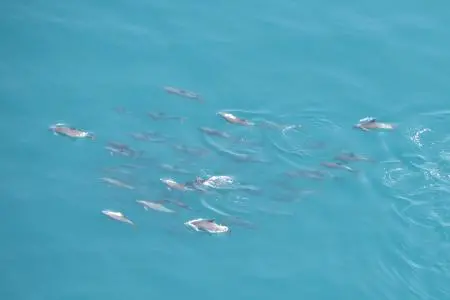
Abu Dhabi - Through its ‘Dolphin Survey’, the Environment Agency - Abu Dhabi (EAD) estimated that 701 Indian Ocean humpback dolphins and 1,834 Indo-Pacific bottlenose dolphins inhabit Abu Dhabi’s coastal waters, with the Indian Ocean humpback dolphin population being the largest ever reported for this species in the world! The next largest population (466) is found in South Africa and other populations that have been estimated are typically very small; Mozambique (105), Kenya (104) and Tanzania (63).
HE Razan Khalifa Al Mubarak, Secretary General of EAD comments: ‘Dolphins are apex predators that bio-accumulate marine toxins, consequently, they are good indicators of marine environmental quality. As very little was known about the ecology and conservation status of dolphin species in Abu Dhabi waters, EAD started a dolphin survey in 2014. This has provided population size estimates and information on the main threats, which is required as a basis for the assessment, monitoring and conservation of these charismatic species.’
To date, 64 days of vessel-based surveys have been completed covering 5,592 km of survey track. A total of 403 Indian Ocean humpback dolphins (Sousa plumbea), 693 Indo-Pacific bottlenose dolphins (Tursiops aduncus), and 52 finless porpoises (Neophocaena phocaenoides) were recorded. Population sizes were established using the ‘mark-recapture’ method, which relies on individual dolphins being identified, using the unique pattern of notches, cuts and nicks on the trailing edge of their dorsal fins.
Dr. Shaikha Al Dhaheri, Executive Director of the Terrestrial and Marine Biodiversity Sector of EAD described the importance of the results; ‘We are very excited to have identified the presence of the world’s largest population of Indian Ocean humpback dolphins in Abu Dhabi’s waters. This further demonstrates the international value of Abu Dhabi’s marine biodiversity and it is our responsibility to ensure the conservation of this important resource. It also highlights the need of carrying out further research and monitoring activities in order to learn more about the ecology and habitat use of dolphins so that specific conservation measures can be implemented, and we are reaching out to corporate partners to support us in this.’
The results of the surveys demonstrated that the Indian Ocean humpback dolphin is a shallow-water species that occurs mostly in the channels and near-shore waters of the Abu Dhabi mainland and islands. The habitat of the Indo-Pacific bottlenose dolphin included both near-shore and deeper off-shore waters. Finless porpoises have a narrow habitat preference, restricted distribution and are very rare.
A large proportion of dolphins (13% of the Indo-Pacific bottlenose dolphins and 12% of the Indian Ocean humpback dolphins) had cuts and scars on their dorsal fins and/or body, which were derived from propeller strikes or entanglement in fishing gear. Other threats to Abu Dhabi’s dolphins included habitat loss from dredging, land reclamation, port and harbour construction, noise pollution and other development activities, which are concentrated in the shallow coastal waters and channels.
Edwin Grandcourt, Manager of the Marine Assessment & Conservation Section at EAD described EAD’s plans for the future; ‘Additional research will help to improve our capacity to define relevant management actions for the conservation of dolphins in Abu Dhabi’s coastal waters. We need to understand how specific areas are used by dolphins and what factors affect their distribution and abundance. Genetic studies over a larger area will help in defining the population structure and connectivity. In addition to improving the accuracy of population size estimates through additional surveys, future activities include the development of a conservation management plan.
Bruno Díaz López, the Chief biologist and Director of The Bottlenose Dolphin Research Institute (BDRI) in Spain, explained the international significance of the findings. ‘The discovery that Abu Dhabi has the largest population of Indian Ocean humpback dolphins has evoked scientific interest worldwide. It has also given Abu Dhabi an opportunity to become a global reference for the conservation of coastal dolphins. However, this opportunity may not last long. Abu Dhabi’s humpback dolphins are threatened by a variety of factors, some of which are plainly evident and others of which are poorly understood. Many of the dolphins bear evidence of serious injuries, at least some of which were caused by human activities. Without a doubt, future research studies and action is urgently needed to protect these vulnerable animals and their habitat."
The results of EAD’s dolphin studies are published in the latest edition of the Journal of the Marine Biological Association of the United Kingdom.
-Ends-
About Environment Agency – Abu Dhabi (EAD)
Established in 1996, the Environment Agency – Abu Dhabi (EAD) is committed to protecting and enhancing air quality, groundwater as well as the biodiversity of our desert and marine ecosystem. By partnering with other government entities, the private sector, NGOs and global environmental agencies, we embrace international best practice, innovation and hard work to institute effective policy measures. We seek to raise environmental awareness, facilitate sustainable development and ensure environmental issues remain a top priority on the national agenda.
© Press Release 2017