PHOTO
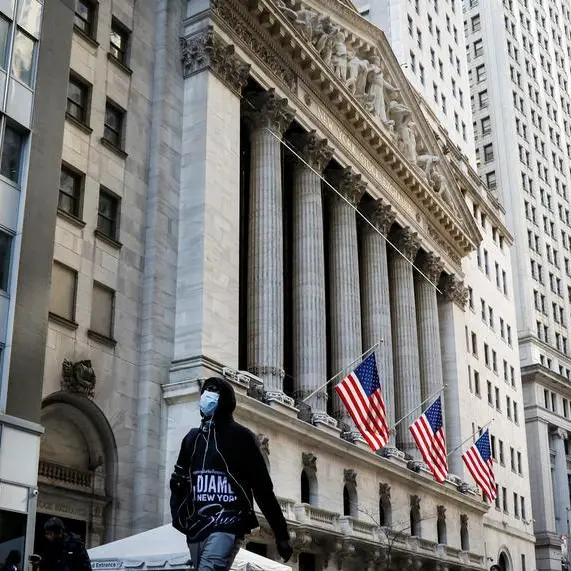
LONDON - Global stocks were mixed on Monday as the tech rout rippled through Asia while signs of an easing of tensions between Iran and Israel supported European stocks and U.S. futures rebounded following Friday's selloff.
Renewed air strikes in the Middle East had pushed up oil prices and weighed on European stocks in early trading. But Tehran said it had ended its military operation against Israel, calming investors' worries that a flurry of weekend attacks threatened efforts to broker a peace deal to end the Iran war.
Brent crude futures, which had been up about 5% in the European morning, were now up 1.5%.
Europe's STOXX 600 was little changed. Major bourses in Frankfurt, Paris and London were down 0.4% to up 0.1%, but had all been sharply lower in early trade.
Europe's relative lack of a technology hardware sector and greater exposure to energy prices have meant its major markets have largely taken a back seat in the rally that has gripped Wall Street, Tokyo and Seoul, but it also makes the region more insulated than other markets to a sharp selloff in the tech space.
The twin triggers for the recent tech rout were last week's disappointing outlook at chipmaker Broadcom and a surprisingly strong U.S. jobs report on Friday that has traders pricing in a rate hike from the Federal Reserve this year.
"The market has gone a long way without a correction," said Lars Skovgaard, senior investment strategist at Danske Bank. "The big surprise is not that we had a selloff, but that we didn't have it before."
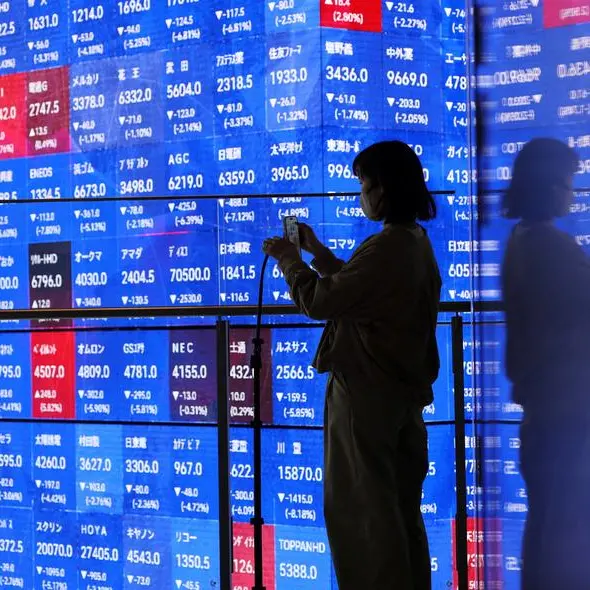
In Asia, the decline in equity markets was stark. South Korea's chip-heavy KOSPI, the world's best-performing market this year, led losses with an 8.3% slide that has the benchmark down over 16% from last week's record high.
Japan's Nikkei fell almost 4% with market darlings across the computer-chip production supply chain falling furthest, while Taiwan's benchmark sank 3.5%.
Nasdaq futures were up 1.2%, showing signs of recovery following a sharp selloff on Friday when the index dropped 4.2%. S&P 500 futures were up 0.6%.
"I see this as a healthy correction, and I'm not that worried," Danske Bank's Skovgaard said. "Remember, the reason for yields to move higher was due to a very strong labour market, and that's good for the U.S. economy."
In bonds, the 2-year Treasury yield rose more than 11 basis points on Friday after the robust jobs report had markets betting that the Fed will hike rates this year. It was down about 1.5 bps on Monday to 4.149%. The benchmark 10-year yield was little changed on Monday at 4.538%, after rising 6 bps on Friday.
INFLATION AND ECB AHEAD
The week ahead is headlined by the giant SpaceX listing, expected to price on Thursday and trade on Friday, but inflation will also be in focus with U.S. consumer price data due on Wednesday and central bank meetings in Canada and Europe.
Last week, bitcoin notched its heaviest weekly drop since the collapse of crypto exchange FTX in late 2022, falling about 16%. It was up slightly on Monday, hovering above $63,000.
SpaceX's debut is expected to be followed by other major IPOs in the coming months from Anthropic and OpenAI, raising so much money that brokers are nervous it could draw down other assets.
"The market regime has potentially shifted from moderate inflation and rate cuts to potential 'overheating' contributing to higher Treasury yields, a higher path of short-term interest rates and tighter liquidity," said Nick Ferres, CIO of Vantage Point Asset Management in Singapore.
In currency trading, the dollar edged back after a strong jump on Friday. The U.S. currency was holding at about 160 yen , keeping investors on watch for intervention from Japanese authorities, while against the euro it stood at $1.1533.