PHOTO
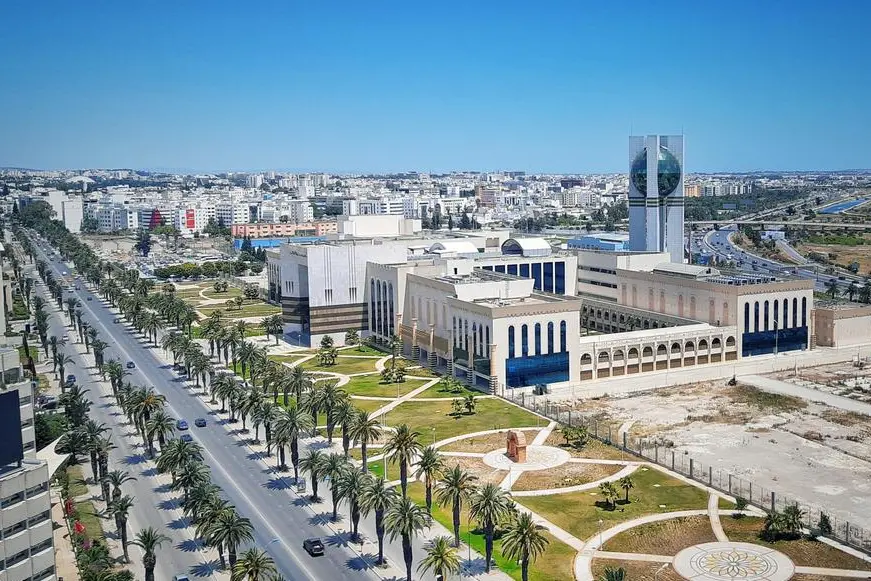
Tunis – Tunisia is entering its economic year amid cautious anticipation and high ambition, following the release of the economic balance document and parliamentary discussions that outline a comprehensive strategy to improve the business climate through 2030.
The country positions 2026 as the starting point for implementing deep structural reforms aimed at boosting the national economy and strengthening its appeal as a preferred investment destination.
With the launch of the National Strategy to Improve the Business Climate 2026-2030, the government is shaping a new phase centered on digitalization, easier access to financing, and improved investor services, measures designed to enhance investor confidence and boost national competitiveness. Investment is expected to grow by 12%, with approximately 4,000 million dinars mobilised in foreign direct investment (FDI).
Logistics and alternative financing: Four pillars of five-year Business Climate Plan 2026-2030
The state plans to further improve the business environment and the economy’s attractiveness by reviewing the legal and institutional investment framework, simplifying procedures, and digitising investor services to ensure transparency and efficiency, according to the 2026 economic balance.
Efforts will also focus on supporting entrepreneurs, improving marketing of promising investment opportunities, and promoting partnerships in line with national development priorities.
The 2026-2030 strategy is built around four main pillars: digitalization of administrative procedures for investors, development of the logistics system and port infrastructure, facilitating access to financing and alternative guarantee mechanisms and
strengthening investor support and guidance services.
The strategy also emphasises reviewing and simplifying business regulations, reducing licensing requirements to encourage entrepreneurs and collective initiatives, and fully digitizing all investor services through the National Investor Portal, covering all stages of a business’s lifecycle and processing investor requests.
Focus on SMEs and major projects
In 2026, efforts will target the growth of small and medium-sized enterprises (SMEs) through implementation of the National Strategy for SME Promotion and new financing lines.
Large, structured projects will also be supported as drivers of regional economic development, alongside the digitisation of the national investment map.
Tunisian authorities will intensify efforts to position Tunisia as a preferred investment destination by promoting its advantages, developing a renewed communications strategy, and creating unified, region-specific value propositions to strengthen the country’s investment brand, especially in tourism and investment.
Investment in “sovereignty”: water, energy and digital infrastructure
Investment is expected to rise by 12% in current prices in 2026, reaching TND 29,978.5 million, equivalent to 16% of GDP, supported by approximately TND 4,000 million in FDI compared with 3,400 million dinars expected in 2025.
Sectoral investment highlights include agriculture and Fisheries: Investment to rise 54.5% to TND 2,019.5 million in 2026 from TND 1,307.4 million in 2025.
Plans include expanding desalination stations to 18 with a total capacity of 310,000 m³/day and renewing 400 km of water distribution networks (vs. 300 km in 2025).
Industrial Zones: Investment in manufacturing industries expected to rise 15.3% in 2026.
Work will begin on five new industrial zones (Mahres 2, Kondar 2, Ras El-Marj, Stiftimi and Ben Guerdane covering 169 hectares, along with upgrading four stalled zones ( Sbikha 2, Oum El Adham, El Ertiah 2, El Kef) over 180 hectares, and completing studies for redeveloping four zones in Goubellat, Sidi Bouzid, Beja–Tabarka, and Beja–Amdoun Road.
Non-Manufacturing Industries: Expected to increase 28.5%, including completion of the Tataouine gas project, drilling three development wells in the “Eastern” concession, and resuming production at the Didon field.
Electricity: Construction of a 50 MW photovoltaic plant with storage in Tataouine will start, alongside progress on the Tunisia–Italy electricity interconnection and transmission projects under the 13th electricity plan.
Services Sector: Expected to grow 4.6%, led by transport investment (up 24%) through fleet upgrades for public transport, acquisition of 14 new metro cars for the TGM line, and rail projects including the Tunis–Kasserine line, Mahdia–Moknine metro, and phosphate railway upgrades in the mining basin.
Infrastructure: Works will continue on the Tunis–Jelma highway (186 km), permanent link construction in Bizerte, doubling of National Road 13 (Sfax–Sidi Bouzid–Kasserine) and National Road 2 (Sousse–Kairouan).
Despite these ambitious plans, financial and economic experts stress the need for strong monitoring and control mechanisms to track progress on projects and programmes. Reports also note that improving the business climate still depends on deeper reforms, particularly in market competition indicators.
© Tap 2025 Provided by SyndiGate Media Inc. (Syndigate.info).