PHOTO
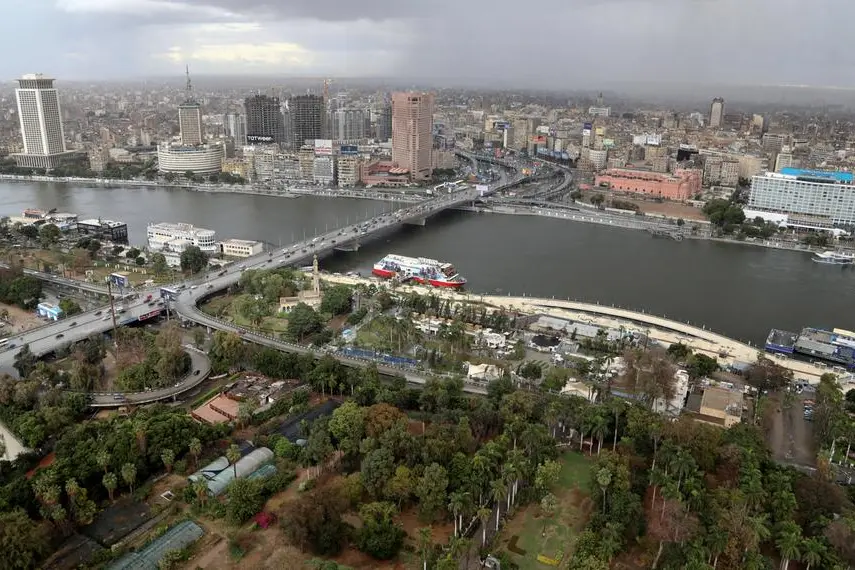
The U.S.-Israeli assault on Iran is piling pressure on Egypt’s precarious finances by hiking energy costs, hindering exports and pushing foreign investors to sell off treasuries, interviews with analysts and a review of official data show.
The shock of the conflict is particularly acute for Egypt, a country of nearly 120 million that many Western powers view as a linchpin of regional stability, and where previous upheavals had knock-on effects on migration flows, Suez Canal trade and security along the Gaza border.
The most populous Arab country was already grappling with high debt – interest payments alone have eaten up about half of government spending this fiscal year – and inflation stuck in the double digits after peaking at 38% in September 2023.
Egypt uses short-term foreign purchases of Egyptian pound treasuries, often known as "hot money", to help plug its large budget deficit. The dollars provided also help it pay for crucial imports such as gas and wheat.
Foreign customers held about $45.7 billion in Egyptian pound treasury bills as of the end of September, the most recent figure available in the central bank's monthly statistical bulletin. The central bank does not provide data for instruments with maturities of more than one year.
OUTFLOWS STILL LAG UKRAINE WAR TURMOIL
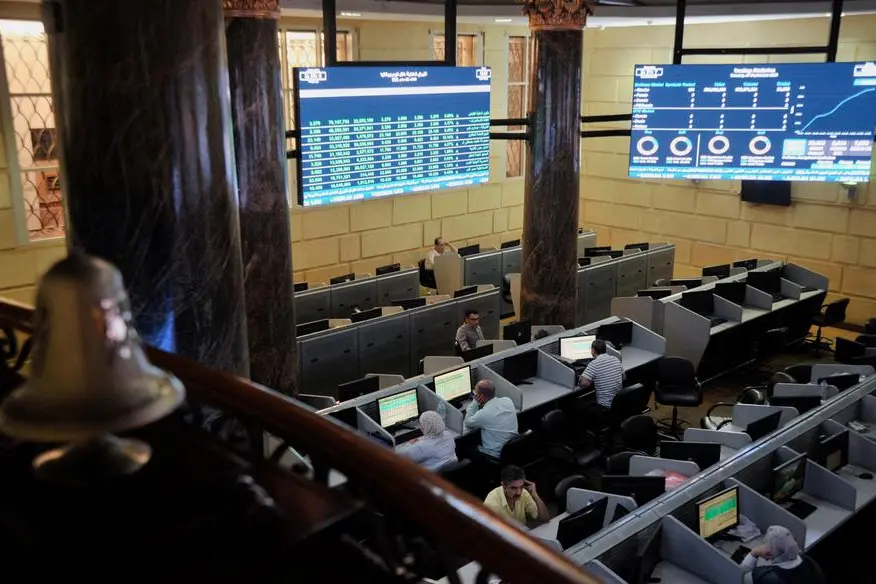
Total portfolio divestments since the war started on Feb. 28 have likely totalled between $5 billion and $8 billion, according to estimates by four bankers. Stock exchange data shows foreigners became net sellers of treasuries on secondary markets in the first week of March but does not capture total divestments. Those outflows are still a long way off from the estimated $20 billion lost at the start of the COVID-19 pandemic in 2020 and again when Russia invaded Ukraine two years later.
But the pressure has already helped push the Egyptian pound to more than 52 to the dollar from around 47 before the war, analysts said.
A record $29.5 billion of net foreign assets, which includes holdings at both commercial banks and the central bank, should bolster Egypt’s ability to absorb the shock, said Hany Aboul Fotouh, a banking analyst and founder of Alraya Consulting.
Foreign reserves stood at a similarly healthy $53 billion as of February 2026.
But a prolonged conflict could spur inflation by raising shipping, insurance and energy costs, and would potentially push the pound above 55 per dollar, Aboul Fotouh said.
Egypt’s finance ministry declined to comment on the figures and the central bank did not immediately respond to requests for comment.
NO RETURN TO SUMMER BLACKOUTS, SAYS PRIME MINISTER
On March 10, Prime Minister Mostafa Madbouly sought to reassure the public, saying Egypt was securing its energy needs to avoid disrupting manufacturing or returning to the summer blackouts that plagued the country two and a half years ago.
Finance Minister Ahmed Kouchouk said more than half of Egypt’s needs for petroleum products were covered under "hedging" contracts which helped keep prices stable.
But the disruption of Israeli gas supplies and surging energy prices have already forced Egypt to hike domestic fuel prices for the second time in less than half a year. NematAllah Choucri, head of research at HC Securities, estimated that higher costs could double Egypt’s petroleum subsidies bill for this fiscal year, which is budgeted at around 75 billion pounds, or about $1.4 billion at current rates, while the exchange rate ranged between 47.2 to 47.8 per dollar – both below current levels.
Madbouly said that despite rising energy prices, diesel, which is commonly used in transport, and liquefied petroleum gas, used for cooking, are still subsidised. It was unclear if gasoline was still subsidised.
In a March 1 research note, Morgan Stanley, an investment bank, estimated that "prolonged confrontation and transit impairment" could raise Egypt's energy import bill by as much as $1 billion to $2.4 billion over the rest of this fiscal year.
EXPORTS HINDERED BY COSTLIER FREIGHT, INSURANCE
Disruptions including higher freight and insurance costs began hindering Egypt’s exports within days of the conflict, Mohamed Fouad, an economist and member of the parliament's economic committee, said.
An internal finance ministry briefing seen by Reuters bolstered that assessment, showing that in the first two to three days of the war, export declarations were down by 77% compared with the same period the previous year.
Export declarations for Saudi Arabia and the United Arab Emirates – which together account for more than a third of Egypt’s exports – were down by 83% and 90% respectively, the briefing said.
Egypt’s Ministry of Investment and Foreign Trade, which handles export figures, did not immediately respond to requests for comment.
Other key sources of hard currency could take hits from a long war, including tourism, Suez Canal transit fees and remittances – especially from workers in Gulf Arab countries – though the extent of the impact is not yet clear, the analysts interviewed by Reuters said.
The Egyptian pound has already been heavily devalued in recent years, particularly after a flight of dollars from treasury markets sparked by Russia’s 2022 invasion of Ukraine. External support including an $8 billion loan deal with the International Monetary Fund and a $35 billion investment by the UAE into a development on the Mediterranean coast have helped Egypt buy some stability since then.
But the longer the conflict lasts, the more it risks a self-reinforcing cycle of capital outflows and investor caution toward Egypt and other emerging markets, Fouad said.
"Usually the Gulf are the main backers, even for agreements with the IMF. Now, they're in their own troubles – and so, economically, all we can do now is just buy ourselves more time," he said.
(Additional reporting and writing by Alexander Dziadosz, Editing by William Maclean)