PHOTO
Bilateral trade volume between Egypt and Switzerland recorded $2.3 billion in 2025, Minister of Trade and Investment Hassan El-Khatib noted during the Swiss–Egyptian Economic Forum.
El-Khatib affirmed that Egypt can help European countries achieve their goals to enhance competitiveness and reposition supply chains, given its strategic geographic location and growing production capabilities.
The Egyptian market hosts more than 100 Swiss companies operating in advanced industrial and technological sectors, representing highly efficient production and export platforms, the minister stated.
This reflects great confidence in the Egyptian economy and opens the door to closer partnerships to expand local manufacturing and technology transfer.
He indicated that the government has implemented significant investments in infrastructure projects, including road networks, ports, and energy, in addition to developing more than 22 new cities.
Citing the state’s package of economic reforms, El-Khatib outlined the government’s strategy to improve the business environment and drive economic stability.
On the monetary policy front, the government has adopted an approach to reduce inflation rates rather than target the exchange rate.
The minister indicated that this policy resulted in lowering inflation from levels approaching 40% to about 12.3% within a year and a half, with the Central Bank of Egypt (CBE) expecting rates to reach between 7% and 9%.
Other financial indicators reflect the success of the reform program, with foreign assets rising from $18 billion to nearly $30 billion, while foreign currency reserves crossed $51 billion.
El-Khatib asserted that the fiscal policy has resulted in a qualitative shift, as the Ministry of Finance drew up a strategy and cut burdens on investors.
Meanwhile, the tax revenue rose by 35% in one year, the highest increase since 2005, reflecting improved efficiency in tax administration and a broader tax base.
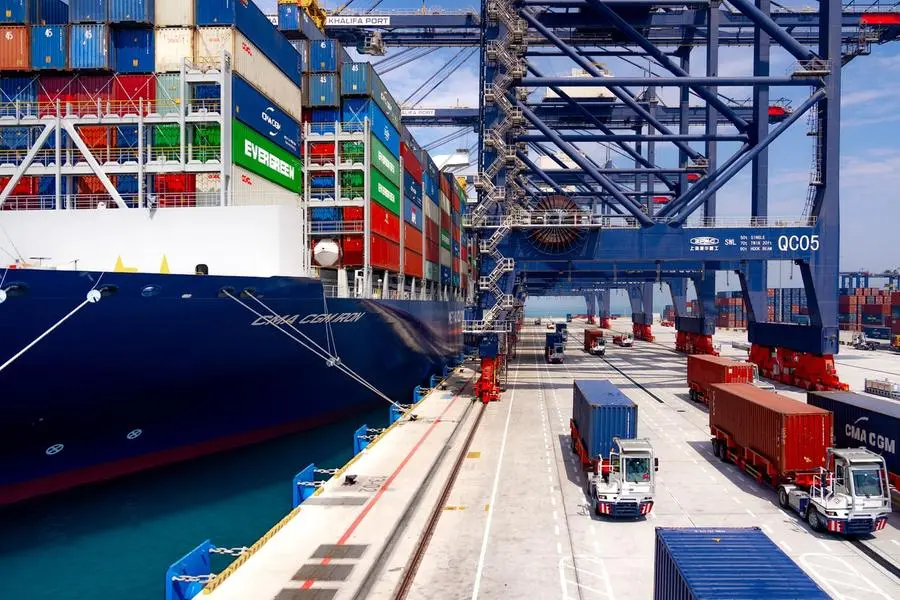
Regarding trade facilitation, the minister said Egypt aims to join the top 50 countries globally in trade competitiveness, specifically in terms of reducing the cost and time required for customs clearance.
The government managed to lower customs time and costs by 65% within one year. This improvement resulted in direct savings estimated at $1.5 billion.
© 2026 All Rights Reserved Arab Finance For Information Technology Provided by SyndiGate Media Inc. (Syndigate.info).