PHOTO
Tunis - The war declared on Iran since late February 2026 has reignited concerns not only in energy markets but also over water security in the Arab world, a region structurally water-scarce and increasingly dependent on desalination infrastructure.
The militarisation of drinking water and any expansion of the conflict to this vital resource could have devastating consequences for millions of people, experts warn.
Water has often been linked to conflict. In 2024, according to the Water Conflict Chronology database of the Pacific Institute, around 61% of water-related incidents involved targeted attacks on water infrastructure.
Houcine Rhili, a development and resource management expert pointed out that “It is entirely normal for war to have a direct impact on this resource in a naturally arid region already facing severe water shortages. All Gulf countries are concerned.”
“If the conflict were to expand and desalination facilities in Saudi Arabia, the leading supplier of bottled water to several Gulf countries, were targeted, the consequences would be particularly severe,” Rhili told TAP news agency.
“Saudi Arabia is the world’s largest producer of desalinated water, with output of about 5.6 million cubic meters per day. Other countries such as Bahrain, Kuwait and Qatar also rely heavily on desalination technology.
Targeting water infrastructure would therefore have a devastating impact on water resources in general, and especially on access to drinking water,” the expert stressed.
Desalination: a pillar of water security
The Middle East and North Africa (MENA) is among the most water-scarce regions in the world. While it is home to around 6% of the global population, it holds less than 2% of renewable water resources, according to the World Bank.
Twelve countries in the region rank among the most water-limited globally, including Algeria, Jordan, Libya, Oman, Qatar, Saudi Arabia Tunisia, and the United Arab Emirates.
In the MENA region, water availability is about 1,200 cubic metres per person per year, nearly six times lower than the global average of around 7,000 cubic meters.
According to World Bank projections, the situation is expected to worsen in the coming decades, with per capita water availability potentially halved by 2050 due to population growth and rising demand. In this context, water infrastructure is vital for population security.
“Even if the primary focus of this war appears to be energy, it is clear that water is also central. I believe the objective goes beyond energy to reshaping the Middle East map, with water as a key strategic element,” Rhili added.
Faced with scarce natural water resources, several countries in the region have heavily invested in seawater desalination, which has become a cornerstone of their water security.
The region holds only 2% of global renewable freshwater resources, while 83% of its territory faces severe water scarcity. According to projections by the World Resources Institute (WRI), 100% of the population could be exposed to acute water stress by 2050.
A study published on January 12, 2026, in the journal Nature indicates that the MENA region accounts for 41.8% of global operational desalination capacity, with around 5,000 plants producing 28.96 million cubic metres of water per day. In some Gulf countries, dependence on this technology is nearly total, exceeding 80% to 90%.
A structurally water-scarce region
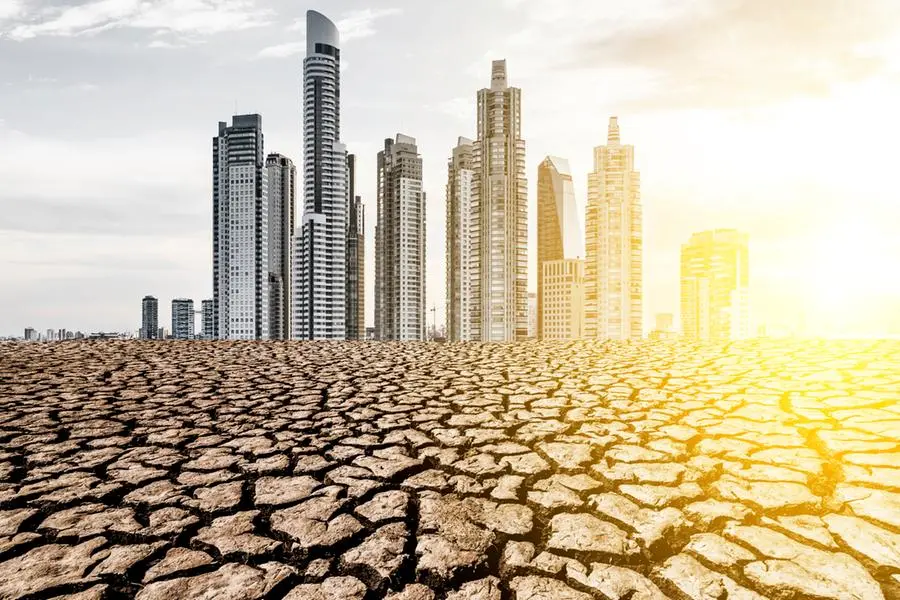
These geopolitical tensions are compounded by the effects of climate change. Experts anticipate declining rainfall across several parts of the Middle East, along with rising temperatures and evaporation rates.
According to projections by the World Resources Institute (WRI), based on the Aqueduct Water Risk Atlas, an additional one billion people worldwide are expected to live under extreme water stress by 2050. In the Middle East and North Africa, 100% of the population could face acute water stress. Such projections underscore the need to treat water security as a major pillar of regional stability.
The combination of water scarcity, population growth, climate change, and armed conflict makes the Middle East one of the most water-vulnerable regions in the world.
For many analysts, the risk is now clear: if water resources or infrastructure become direct targets, the region could face an unprecedented humanitarian crisis.
Asked about lessons for North Africa, Rhili stressed that “Arab countries are now on maximum alert regarding water resources. It is urgent to fundamentally rethink water management policies, adopt new approaches, and establish appropriate legal frameworks.”
“Governments must now treat water as a supreme asset, to be protected with the utmost vigilance, and prioritise water security more than ever. Unfortunately, outdated mindsets inherited from the 1960s and 1970s still dominate water management at the national level, and this must change,” the expert concluded.
© Tap 2026 Provided by SyndiGate Media Inc. (Syndigate.info).