PHOTO
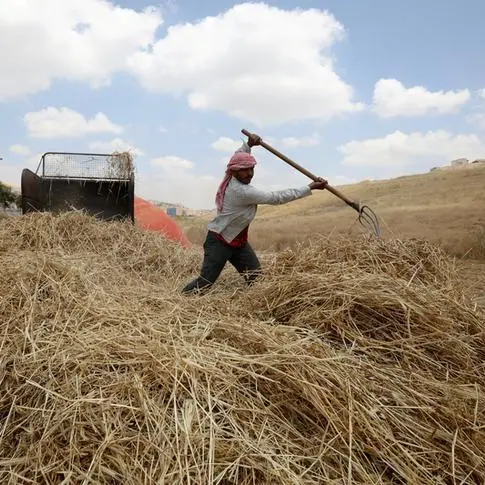
AMMAN — Agriculture consumes over 80 per cent of the Middle East’s freshwater resources, a reality that affects farmers, families, and communities across the region every single day.
In response to this pressing challenge, professionals and governmental water representatives from Iraq, Jordan, Lebanon, and Türkiye gathered in Izmir between September 23 and 25 for a leading regional study tour focused on digital solutions for sustainable water management in agriculture, according to a Blue Peace Middle East statement.
This study tour, under Blue Peace Middle East, was fully organised and implemented by the Turkish Water Institute (SUEN) through the generous support of Switzerland’s Swiss Agency for Development and Cooperation (SDC).
“With the awareness of the increasing pressures on our region’s water resources, we have set our foremost goal as enhancing efficiency in the agricultural sector, which consumes the largest share of water, said Tuğba Evrim Maden, Blue Peace ME Managing Committee Member and Policy Development Coordinator at the Turkish Water Institute (SUEN).
“Within this context, SUEN’s second project is being implemented under the theme of water efficiency, within the Blue Peace Middle East umbrella. We believe that the exchange of knowledge, practices and experiences gained through these efforts will provide valuable contributions to all our countries, Maden added.
Hosted at Türkiye’s International Agricultural Research and Training Centre (UTAEM), the three-day programme showcased how technology can make a tangible difference for farmers and communities alike.
Through keynote sessions, case studies, and immersive field visits, participants explored tools like remote sensing, satellite monitoring, IoT applications, sensors, and automation systems that can help water reach the crops that need it most.
Presentations highlighted Türkiye’s digital platforms for drought risk mapping and irrigation management, while delegates from the other Blue Peace ME countries shared experiences from their countries, fostering cross-border knowledge sharing.
“In a water-scarce country like Jordan, remote sensing ensures that the amount of water used to irrigate the land is appropriate without excessive or deficiencies. Remote sensing data can help identify areas where irrigation efficiency could be improved, guiding investments in modern irrigation infrastructure or techniques,” said Mohammed Al Roubi, Head of Contracts Department Water Users Directorate and Associations at the Jordan Valley Authority.
“It also allows for the identification of high-water-use crops or inefficient irrigation methods, suggesting opportunities for optimizing water use or transitioning to more water-efficient farming practices,” Roubi added.
The study tour went beyond theory, offering practical, on field exposure. Field visits in Izmir showcased drone-assisted crop monitoring, sensor-based irrigation systems, and smart water management solutions in action.
“Water productivity is not just a technical challenge; it is central to food security, rural livelihoods, and regional cooperation,” said experts during the opening session, setting a forward-looking tone for the discussions on data-driven governance and sustainable agriculture.
The study tour concluded with participants receiving certificates and, more importantly, a shared commitment to advance smart irrigation practices and safeguard the region’s transboundary water resources. With initiatives like this, the region is not only adapting to water challenges, but turning them into opportunities for countries and communities to come together with a shared vision toward a stronger, smarter, and more resilient future.
© Copyright The Jordan Times. All rights reserved. Provided by SyndiGate Media Inc. (Syndigate.info).