PHOTO
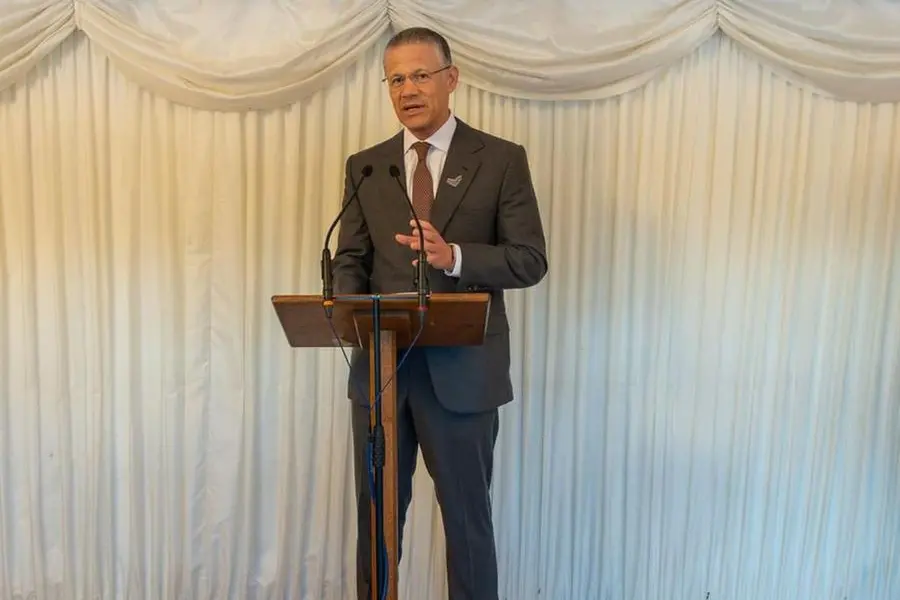
LONDON - High-level UAE and UK policymakers and leading business leaders outlined a decisive vision for the next chapter of the two countries’ economic partnership at a Parliamentary Reception in the House of Lords, emphasising the durability of investor confidence through recent regional disruption and calling for stronger collaboration across artificial intelligence, energy, life sciences, and skills.
Hosted by the UAE–UK Business Council, the event gathered more than 160 parliamentarians, diplomats, and senior business leaders from both countries. Notable attendees included Lord Stockwood, UK Minister of State for Investment, Mansoor Abulhoul, UAE Ambassador to the UK, Badr Jafar, Special Envoy of the Minister of Foreign Affairs for Business and Philanthropy, Sir Oliver Dowden, Chair of the All-Party Parliamentary Group, Lord Udny-Lister, Co-Chair of the UAE–UK Business Council, Simon Penney, Deputy CEO of Innovo, and Bradley Jones, Executive Director of the Joint Secretariat of the UAE–UK Business Council.
Jafar affirmed that global investor confidence in the UAE has been tested and has held strong.
"The UAE and the UK are two economies that believe in the same things: open markets, rules-based trade, and innovation-led growth. In a world drifting toward fragmentation, that alignment is valuable. Our Sovereign Investment Partnership has committed nearly three times its original target in under four years. That is not an accident; it is the product of deep institutional trust built deliberately over many years. The next chapter will not be defined by scale alone, but by focus – co-investment in the sectors that will shape the next decade, from AI and clean energy to life sciences and skills."
Lord Stockwood expressed solidarity with the UAE, commended its resilience, and restated the UK’s continued commitment to strengthening one of its most important bilateral trade relationships. “The UK–UAE relationship is deep and strong, and we stand firmly with our friends during these challenging times. Together, we are major trade and investment partners with strong economic ties. As the Prime Minister set out earlier this month, we are focused on safeguarding global supply chains, including ensuring the continued flow of goods through the Strait of Hormuz – which is vital for both our economic partnership and the wider region."
Despite sustained attacks on critical infrastructure and disruption to regional trade routes, the UAE has maintained full continuity across banking, telecommunications, power, and logistics. Its East Coast ports of Khor Fakkan and Fujairah were repositioned as full cargo gateways and international oil terminals, while bonded land corridors helped sustain trade flows into the wider Gulf.
The Central Bank of the UAE continued to support markets and the banking sector by injecting liquidity, while projecting 5.6 percent economic growth in 2026 and inflation of no more than 1.3 percent.
This resilience rests on robust, long-term foundations. The UAE attracted a record US$45.6 billion in inward FDI last year – a near-50 percent increase – and earlier this month entered the World Trade Organisation’s global top ten exporters for the first time, up from 17th place just five years ago. Sovereign capital reserves stand at approximately US$2.5 trillion, five times GDP, and the country has completed 35 Comprehensive Economic Partnership Agreements with markets across four continents.
“Capital has remained committed and continues to expand,” Jafar said, citing the continued presence of BlackRock and Brookfield and the recent opening of new UAE offices by Hillhouse, Barings, and Bain. “Countries that have invested in building resilience are now better equipped to navigate pressures and volatility.”
Bilateral trade between the UK and the UAE now exceeds £25 billion annually, with more than 14,000 UK exporters in the UAE market. The UAE–UK Sovereign Investment Partnership, launched in 2021 with a £10 billion five-year target, has already committed nearly £30 billion across more than 50 direct investments – almost triple its original target, in under four years. It has supported 48,000 UK jobs to date, with a further 280,000 expected by 2030.
Lord Udny-Lister highlighted the opportunity for UK and UAE businesses to “use each other’s markets as a springboard into high growth economies around the world; to co-invest in the technologies of the future, such as data, clean energy, and life sciences; and to be like-minded partners and advocates for sustaining free and fair international trade worldwide.”
The event also marked the launch of the Business Council’s new White Paper – “Opportunities for UK-UAE Collaboration in Skills, Qualifications and Assessment.” The paper sets out recommendations ranging from mutual recognition of professional qualifications to the joint design of apprenticeships and gender-inclusive technical education.
ES