PHOTO
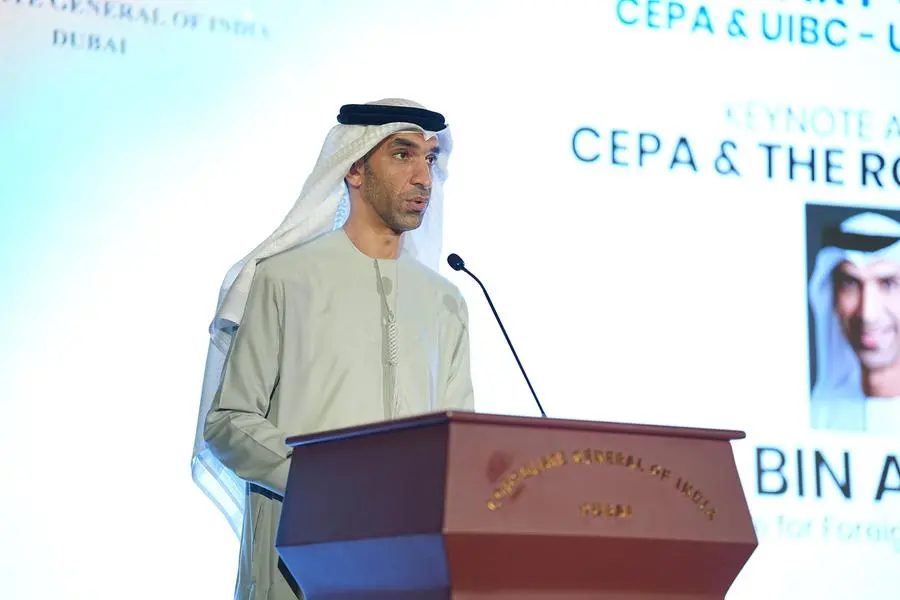
ABU DHABI: Dr. Thani bin Ahmed Al Zeyoudi, Minister of Foreign Trade, said that the signing of the Services Trade & Investment Agreement by the UAE and the Republic of Armenia marks a pivotal milestone in deepening economic integration and broadening bilateral cooperation between the two nations.
In statements to the Emirates News Agency (WAM), Al Zeyoudi highlighted that the agreement is designed to optimise market access for UAE service exports and catalyse reciprocal investment flows, directly supporting the strategic development agendas of both nations.
The minister noted that the framework provides a robust platform for companies within the financial, advisory, education, and healthcare sectors. Furthermore, it paves the way for increased Foreign Direct Investment (FDI) and high-impact public-private partnerships.
Key growth areas identified within the agreement include services such as fintech, professional consultancy, and specialised financial services, alongside investment opportunities in logistics, advanced manufacturing, infrastructure, and renewable energy.
Al Zeyoudi underscored Armenia’s rising status as a premier trade partner, citing a record $4.5 billion in non-oil bilateral trade in 2025.
He added that the UAE has overtaken Russia to become the leading foreign investor in Armenia, a shift that reflects the robustness of investment ties and the mutual confidence between the two nations.
Regarding the synergy between this agreement and the Economic Partnership Agreement (EPA) signed with the Eurasian Economic Union (EAEU), the minister explained that the EPA is a comprehensive, bloc-wide agreement designed to eliminate customs duties, reduce non-tariff barriers, and enhance market access for goods. Conversely, the Services Trade and Investment Agreement with Armenia focuses specifically on investment opportunities and services exports.
He emphasised that both agreements target more than just multinational corporations; they place a particular focus on small and medium-sized enterprises (SMEs). The EPA, for instance, includes a dedicated chapter aimed at easing trade restrictions for SME exporters from both sides. He underscored that trade partnerships have become an essential necessity for sustaining growth and creating opportunities amidst global economic challenges.
He further clarified that while the EPA covers the same sectors typically included in Comprehensive Economic Partnership Agreements (CEPAs), it excludes trade in services and investment. Based on the legal mandate of the EAEU, it has been agreed that services and investment would be negotiated separately on a bilateral "state-to-state" basis.
He noted that services and investment agreements have already been concluded with Armenia and Belarus, while negotiations with other parties remain ongoing, expressing his hope that these will be finalised in the coming period.