PHOTO
MUSCAT - The Sultanate Oman is well placed to strengthen its role as a strategic energy and infrastructure hub as global markets increasingly prioritise security of supply, resilience and diversified trade routes alongside decarbonisation, industry leaders and investors said during the Global Energy Debate at the 2nd Oman Capital Market Conference.
The discussion, which featured executives from Shell Oman, Oman LNG, OQ, BlackRock and Saudi Arabia-based Vision Invest, reflected a growing consensus that the global energy sector is entering a new phase in which reliability and resilience are becoming as important as affordability and sustainability.
Panellists noted that recent geopolitical tensions and supply disruptions have exposed vulnerabilities in global energy systems, prompting governments, investors and consumers to rethink long-standing assumptions about energy security.
Ali Janabi, Country Manager of Shell Oman, said energy markets are undergoing a fundamental shift as customers increasingly seek assurances that supplies will remain available during periods of uncertainty.
“Markets don’t just value energy supply anymore; they value the security of supply,” Janabi said, noting that countries and industries are reassessing supply chains, infrastructure requirements and investment priorities.
He said the traditional “just-in-time” model of energy delivery is becoming increasingly difficult to sustain in a world characterised by geopolitical fragmentation and supply-chain risks.
According to Janabi, future energy systems will require greater redundancy, diversified supply routes and stronger infrastructure networks to ensure uninterrupted flows of oil, gas and electricity.
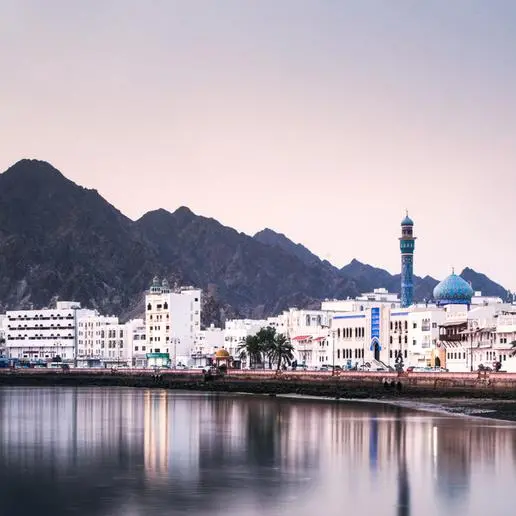
The debate highlighted Oman’s growing strategic importance within this evolving landscape. Speakers pointed to the Sultanate’s location outside the Strait of Hormuz, its extensive port infrastructure, expanding logistics capabilities and ambitions in renewable energy and hydrogen production.
Zaki Sumar, Deputy Chief Investment Officer of Vision Invest, described Oman as one of the region’s most strategically positioned countries from an infrastructure perspective.
“The significance of Oman from an infrastructure and strategic infrastructure perspective is unparalleled,” Sumar said.
He argued that the region’s recent challenges have reinforced the importance of investing in critical infrastructure before crises occur, rather than reacting afterwards.
“Had critical infrastructure such as alternative pipeline systems not existed, the consequences for global energy markets would have been severe,” he said.
Sumar also highlighted Oman’s role in strengthening regional and international connectivity, particularly through ports, terminals and transport corridors linking the GCC with Africa and Asian markets.
He said Oman’s historic ties with East Africa could become increasingly valuable as demand grows for critical minerals and alternative supply-chain routes.
Another major theme emerging from the discussion was the growing role of private capital in financing the next generation of energy and infrastructure projects.
Ehsan Khoman, Senior Portfolio Specialist at BlackRock, said years of underinvestment in traditional energy systems are now colliding with rising demand driven by artificial intelligence, data centres, electrification and industrial growth.
"We need an all-of-the-above approach,” Khoman said. “The sheer scale of investment required means that the private sector will play an increasingly important role in financing future infrastructure and energy projects.”
He argued that investors are beginning to view energy less as a cyclical commodity sector and more as a strategic asset class capable of delivering long-term returns amid persistent supply constraints.
Khoman also suggested that the Gulf region has demonstrated remarkable resilience despite recent geopolitical shocks, noting that GCC economies have maintained investor confidence and continued to attract capital.
The discussion further underscored the importance of innovation in maintaining energy security. Janabi said Shell is increasingly deploying artificial intelligence and advanced data analytics to improve reservoir management, optimise production and enhance operational efficiency.
He noted that AI is helping energy companies unlock greater value from vast datasets while supporting more accurate subsurface modelling and production forecasting.
Panellists also discussed the future role of hydrogen and renewable energy. While reaffirming support for the energy transition, they stressed that policy frameworks, market demand and affordability must develop in parallel if large-scale clean energy projects are to succeed.
The conversation is particularly relevant for Oman, which is pursuing one of the world’s most ambitious green hydrogen programmes while continuing to expand its conventional oil and gas sector.
Participants agreed that future energy systems will require a balanced mix of hydrocarbons, renewables, digital infrastructure and resilient supply chains.
For Oman, they said, the changing global energy landscape presents a significant opportunity to leverage its strategic location, infrastructure assets and growing clean-energy ambitions to strengthen its position as a trusted supplier and regional gateway for energy and trade.
2026 © All right reserved for Oman Establishment for Press, Publication and Advertising (OEPPA) Provided by SyndiGate Media Inc. (Syndigate.info).