PHOTO
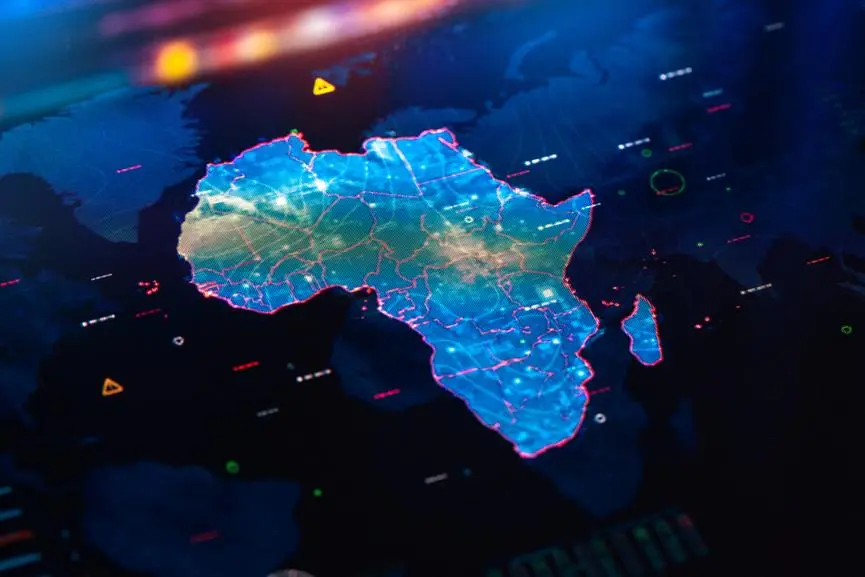
The US still sees Africa as a theatre for competition against China, even though Washington prioritises the Indo-Pacific region and the Middle East over the continent.
The US-China Economic Review Commission said in its 2025 annual report that Beijing’s commercial and technological race especially in Africa where it has spread influence should be tamed or Washington will be dependent on China for the future.
The report presented to the Congress said China’s surging exports of low-cost products like textiles and electronics to Southeast Asia have already led to hundreds of thousands of job losses and contributed to thousands of factory closures. And it added that such economic turmoil was becoming political burden in countries traditionally important to the US.“These distortions are rippling outward, driving price collapses, political instability, and new dependencies across Africa, Latin America, and Eastern Europe,” the report said.“Without concerted efforts to counter China’s unfair trade practices, China’s economic model will continue to cause economic harm to countries around the world for years to come.”
It says Beijing has often accused “the United States of disrupting international order while professing its own commitment to free trade, development assistance, and international law—despite often failing to follow through on such promises.” Earlier in the US, the US imposed tariffs on countries across the world including China. But Beijing, which initially retaliated before negotiations relaxed the fight, sought for alternative markets, including in Africa, to dodge US impositions.
Reva Price, Chair US-China Economic and Security Review Commission said China now poses complex challenges to Washington’s interests around the world and will requires various agencies to build consensus on responses needed to curb Beijing’s influence. But China’s expanding trade with Africa seems to be a bigger and immediate threat to the US.“This massive outpouring of exports, which we call “China Shock 2.0” threatens both advanced and developing economies. A flood of subsidised Chinese Electric Vehicles is undermining export markets for automakers in Germany, Japan, and South Korea. At the same time, China is directing a deluge of low-cost manufactured goods to developing countries, causing factory closures and layoffs.”China’s trade with Africa had already grown over 10 percent of 2024 this year, reaching $250 billion. And the Commission says Beijing leveraged on US supply chain vulnerabilities and monopolies in areas such as critical rare earth mineral refineries and essential manufacturing industries and defence technologies to influence trade and diplomatic relations.
”In October, as Washington ended the Africa Growth Opportunity Act (AGOA) which had allowed African countries duty free access to US markets, China dangled a free trade deal under the Belt and Road Initiative to all African countries with diplomatic relations with Beijing.
Most of the African countries haven’t really signed on the deals, but none of the countries have also rejected the offers, potentially seeing China’s offer as a useful tool to watch US reaction with.
Some observers have also noted that the zero-tariff treatment for 100 percent tariff lines offers by Beijing will also challenge Africans to first learn the Chinese market before benefiting from the offer.
Beijing reacted to the report by listing reasons for being ‘true friend’ of Africa, including easing trade deals, visa conditions and treating African countries with mutual respect.“China has outlined the principle of sincerity, real results, affinity, and good faith, build an all-weather China-Africa community with shared future for the new era,” said a statement circulated by most Chinese embassies in Africa this week. Beijing lists 30 infrastructure connectivity projects it has promised tom complete in Africa by 2027 as well as 1000 economic zones across the continent.
Yet infrastructure is a concern for the US. This is because Beijing has often built critical infrastructure while targeting mineral-rich parts of Africa.
In September, China’s Civil Engineering Construction Corporation signed a $1.4 billion agreement with Tanzania and Zambia to revive the Tazara corridor, a railway that will traverse Tanzania and Zambia, connecting copper mining areas with the Dar es Sa-laam port.
It came just as the US and the EU worked with Angola, the Democratic Republic of Congo, and Zambia to launch the Lobito Corridor project to connect the copper-rich mining region of those countries to the Lobito Port in Angola on the Atlantic Ocean.
The Commission’s report, which could influence Congress legal review on US foreign policy, differs with the UK strategy published earlier in the year. Rather than seeing China solely as a competitor, the UK suggested it will manage relations with both US and China in a multipolar era, even though London also sees Beijing as a “sophisticated challenge.”“Intensifying strategic competition will make it more difficult for the UK and its allies to shape the world and events in their interests. Regional settlements and solutions may be necessary as it becomes harder for states to achieve common goals at the global level,” the UK strategy had observed.
© Copyright 2022 Nation Media Group. All Rights Reserved. Provided by SyndiGate Media Inc. (Syndigate.info).