PHOTO
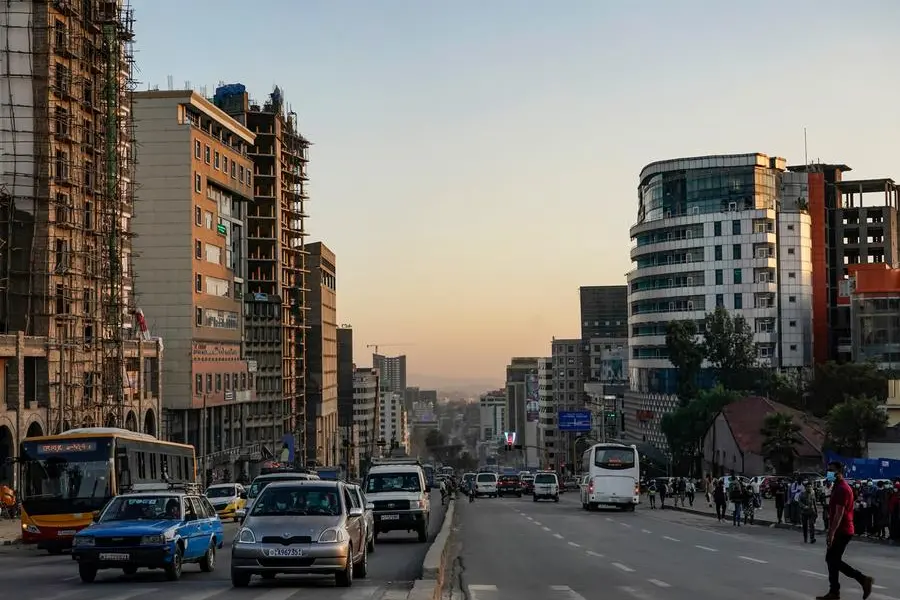
Standard Bank, Africa’s largest lender by assets, is weighing a greenfield entry into Ethiopia as it seeks to navigate the country’s 49 percent cap on foreign ownership in banks.
The group, through its East African subsidiary Stanbic Bank, believes it can build operations from the ground up and draw on the precedent set by Kenyan telecom Safaricom. The lender points to the experience of the telco’s Ethiopian business, whose losses are beginning to narrow.
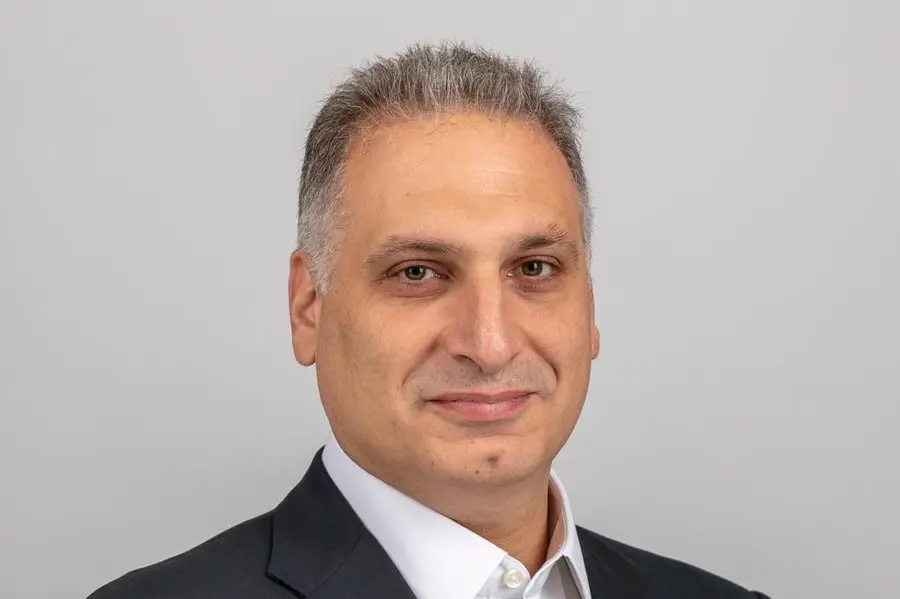
Julians Amboko spoke with Stanbic Bank’s regional CEO Joshua Oigara about the lender’s operations.
Everyone is salivating over Ethiopia, but the 49 percent foreign ownership ceiling prescribed by the banking regulator appears to be a stinker at the party. As Stanbic Bank, how are you weighing your options around this market?We generally enter new markets as a large and significant owner, so a minority position is always going to be a difficult starting point.
It is also important to note that Ethiopia does not stop financial institutions from setting up from scratch if they want to own 100 percent of the entity. We have seen Kenyan enterprises establish greenfield operations in Ethiopia and we remain confident about the market.
One of our biggest clients is the telecommunications business that entered Ethiopia a few years ago. It was a difficult environment. Does it tick all the right boxes now? Maybe not yet. Are we seeing progress? Yes.
Sometimes we take a short-term view and look at things through a one-, two- or three-year lens. Yet when you look at opportunities over 10 years, you are likely to wish you had invested even more.
The prescribed minimum capital requirement of $25 million by the end of June 2026 and $30 million by the end of December 2026 has triggered pushback. Where does Stanbic Bank stand on this?Stanbic Bank has been a partner of South Sudan since 2012, but we have also been open in saying that as the country seeks to raise minimum capital requirements, the business environment has not kept pace and the economy’s fundamentals are not improving accordingly.
Our position is that, at this moment, we do not see any justification for additional capital in the South Sudan market. All of us operating there are struggling because the economy has faced difficulties, whether hyperinflation or challenges in securing foreign currency. We believe this is not the right time. Our conversation with the regulator has been that we do not see a case for injecting additional capital at this stage.
As we continue to build entrepreneurship in our markets, underwriting quality has weakened. We need capital allocated to businesses that generate real economic growth because they create clusters connected to global markets, are more resilient and have much lower loss ratios.
You have been a strong advocate for returning Kenya’s private sector credit growth to double digits and we have certainly seen a recovery. However, inflation is raising fears that the best phase of this recovery may be behind us. Does this concern you?In this environment, one thing I have learned is that you need to separate the signal from the noise. Much of what we are seeing right now is noise.
This market moved from negative private sector credit growth at the end of 2024 to eight percent in the first quarter of 2026. We are likely to see weaker growth in the second quarter of 2026, but the momentum remains intact.
As Stanbic, we see further room for expansion because our loss ratios have been declining. We could easily double our balance sheet within three or four years.
In 2025, Stanbic Bank’s performance was boosted by its involvement in mega-sized transactions, including arranging Kenya’s $1.5 billion sovereign debt refinancing and private sector deals such as the country’s largest corporate bond issuance, which raised $155 million. In 2026, are we likely to see an equally strong deal flow?Are the big deals there? Absolutely. We are seeing opportunities in energy, oil and gas, infrastructure and trade finance. We have consistently enjoyed strong deal flow because of our structuring capabilities and our corporate and investment banking expertise.
Today in Kenya, we are involved in the securitisation of the Roads Maintenance Levy, which has been used in the country over the past year. In Uganda, we are supporting and financing the crude oil pipeline project.
© Copyright 2026 Nation Media Group. All Rights Reserved. Provided by SyndiGate Media Inc. (Syndigate.info).