PHOTO
In this interview with KEHINDE AKINSEHINDE-JAYEOBA, Oluseyi Owoturo, CEO Coronation Registrars Limited, speaks on the role of Registars in meeting the recent SEC directive on unclaimed dividends and Nigeria’s first fully automated bond processing workflow and how fintech innovation is reshaping Africa’s investment landscape. Excerpts:
Nigeria’s insurance recapitalisation programme has quietly become one of the strongest forces shaping the stock market in recent years. What began as a regulatory move to strengthen insurance companies has now reshaped how insurance stocks trade, drawn fresh investor interest, and injected new energy into the Nigerian Exchange (NGX).
In 2025, the NGX Insurance Index delivered a strong full-year return of approximately 65.64 percent, outperforming the broader All Share Index and ranking as the second-best-performing sectoral index on the Nigerian Exchange.
For many years, insurance shares were largely ignored by investors. Most insurers were poorly capitalised, traded in low volumes, and delivered uneven profits. Share prices often remained at very low levels for years, and institutional investors largely avoided the sector. As a result, insurance stocks had little impact on overall market performance, with their small weight in market indices reflecting low confidence.
This began to change with the passage of the Nigerian Insurance Industry Reform Act (NIIRA) 2025. The law introduced stricter capital requirements and set a clear deadline of July 30, 2026, for compliance. Under the new rules, life insurers must hold at least N10 billion in capital, non-life insurers N15 billion, composite insurers N25 billion, and reinsurers N35 billion.
Beyond the size of the capital increase, the certainty of the deadline proved crucial for investors. With firm rules in place, the market could distinguish between companies likely to survive and grow and those at risk of failure or forced mergers.
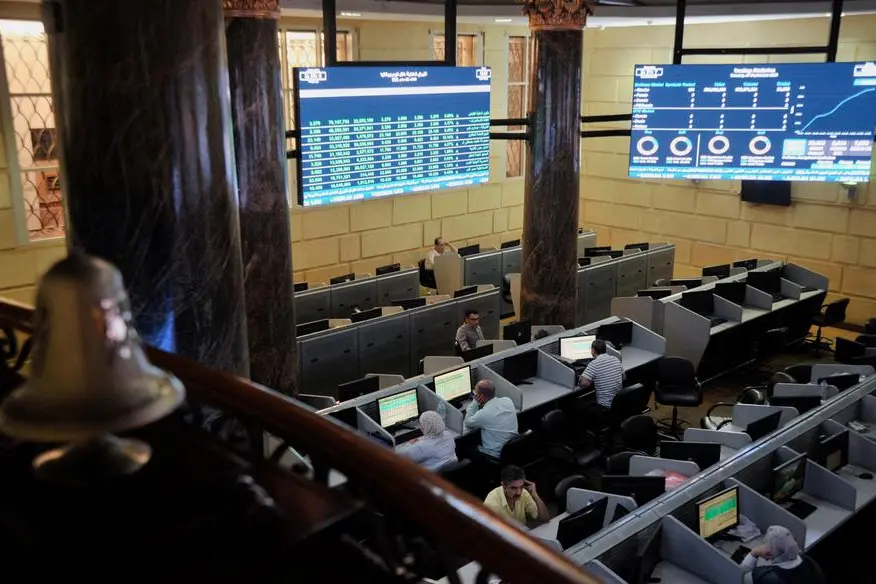
The response on the NGX was swift. Insurance stocks that had traded at just a few kobo for years rallied sharply as investors moved in. The NGX Insurance Index surged and frequently outperformed the broader market. On several trading days, insurance stocks dominated the list of top gainers, signalling a clear shift of investor funds into the sector.
This rally was not driven by speculation alone. Investors increasingly viewed recapitalisation as an opportunity for real transformation, stronger balance sheets, improved claims-paying capacity, better governance, and the ability to underwrite larger risks. In an economy facing currency volatility, infrastructure deficits, and rising business risks, a stronger insurance sector has become more strategically important.
Trading activity increased significantly, with daily volumes running into billions of shares during peak periods. Stocks such as AIICO Insurance, Mutual Benefits Assurance, Universal Insurance, Lasaco Assurance, AXA Mansard, Linkage Assurance, and Cornerstone Insurance recorded strong and sustained trading. Liquidity improved, bid-ask spreads narrowed, and price movements became more meaningful.
Market capitalisation also expanded. Collectively, listed insurance companies added hundreds of billions of naira in value during the rally. While the sector remains smaller than banking or telecommunications, insurance stocks are now firmly on investors’ radar, particularly among local fund managers seeking diversification and reform-driven growth.
Not all insurers benefited equally. The market has clearly favoured companies with stronger capital positions, sound governance, and credible recapitalisation strategies.
Most Nigerian insurers appear on track to meet the new capital requirements, but several still face significant gaps that may require urgent strategic action. Among composite insurers, AIICO Insurance leads with a capital buffer of N40.77 billion, followed by Cornerstone Insurance with a surplus of N36.65 billion. AXA Mansard also comfortably exceeds the minimum threshold, while LASACO Assurance Plc recently raised about N11.10 billion through a private placement, bringing it closer to the N25 billion requirement. In contrast, Fortis Global Insurance has yet to disclose eligible capital and may need strategic recapitalisation to comply.
In the life and non-life segment, Veritas Kapital maintains a modest surplus of N0.79 billion above the N15 billion minimum. However, several firms, including Regency Alliance, Universal Insurance, SUNU Assurances, and Sovereign Trust, fall short, with deficits ranging from N0.94 billion to N5.04 billion. Analysts say these companies may need to pursue rights issues, strategic equity partnerships, or mergers to meet the deadline.
Overall, the sector presents a mixed picture: while leading insurers are well-capitalised, smaller players face mounting pressure to strengthen their balance sheets. Some stocks rallied on merger speculation or fundraising announcements, but many of those gains faded quickly. Investors have become more selective, rewarding tangible progress rather than promises.
The recapitalisation exercise has also altered the behaviour of the NGX Insurance Index itself. Once quiet and slow-moving, the index now responds more sharply to economic news, regulatory developments, and market flows, making it more attractive to traders and fund managers.
Looking ahead, analysts expect the Insurance Index to continue rising toward the 2026 deadline, albeit with increased volatility and more discriminating stock selection. Many project total gains of between 30 and 60 per cent by end-2026, assuming insurers meet regulatory requirements and investor confidence remains intact.
“A more positive outcome could emerge if recapitalisation leads to consolidation and higher insurance penetration,” analysts at CardinalStone Research said in a report.
“Insurance penetration in Nigeria remains below one per cent of GDP. Stronger insurers could underwrite larger risks in energy, transport, agriculture, and housing, boosting premiums and profitability.
If this occurs, insurance stocks could outperform the broader market over the long term.”
Overall, the recapitalisation drive illustrates how clear and consistent regulation can unlock value in previously weak sectors, attract new capital, and deepen the stock market. For investors, it has created a rare opportunity to benefit from long-term reform rather than short-term earnings surprises.
As the July 2026 deadline approaches, insurance stocks will remain under close scrutiny. Future gains will depend less on momentum and more on execution, earnings, and strategy. What is already clear is that insurance shares are no longer on the sidelines of Nigeria’s stock market, they have become an integral part of the investment narrative.
Copyright © 2026 Nigerian Tribune Provided by SyndiGate Media Inc. (Syndigate.info).