PHOTO
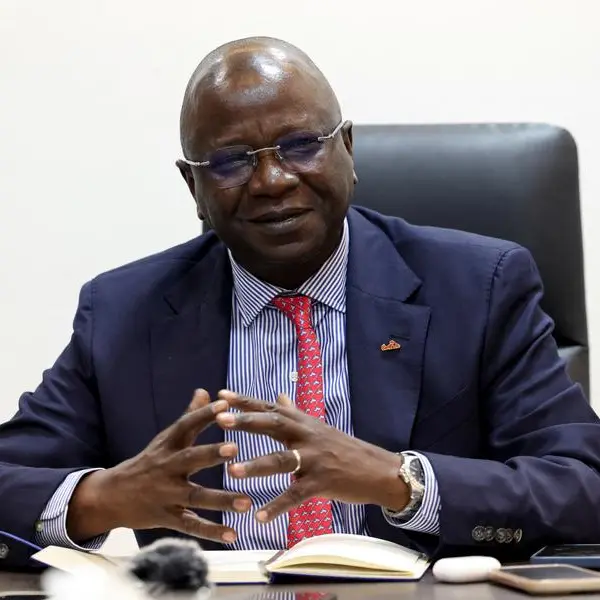
Governor of Central Bank of Nigeria (CBN), Mr. Olayemi Cardoso, has disclosed that the Apex bank has put in place initiatives that are encouraging the commercial banks to consider lending to Small and Medium Enterprises (SMEs)
Speaking in Abuja, Cardoso explained that recently, “we signed an MOU with the Nigerian Communications Commission (NCC). That MOU with NCC was largely driven to make it easier and ensure that the potential bottlenecks that the SMEs had with respect to fraud and inability to connect properly into various systems are things that NCC and the CBN can jointly manage.
‘Then, of course, the Global Standing Instruction (GSI) is another initiative that the Central Bank of Nigeria has brought up. With its toolkit, the initiative is intended to help ensure that creditor institutions can offset against balances wherever they exist of recalcitrant debtors, so these are all issues that the Central Bank of Nigeria is trying very hard to act a part that will ensure that the ecosystem is a lot more enabling for those who are not willing to invest in that sector to do so.
“Of course. The DFIs are another very critical sector. The development financial institutions we have recently upgraded and allowed the singles of the gold limits to go up.
“The reason for this is that for a long time, many of them were hugely constrained in the amount of credits that they could extend to SMEs, and we, of course, are encouraging foreign DFIs in particular, and seeing what tools we can extend to ensure that they too play a part that is increasingly more impactful.
“This is all work in progress. We are not there yet, but all I can say is that the willingness to ensure that more credit is directed at the SMEs sector is certainly increasing,” he stated.
Speaking after the conclusion of the 303rd meeting of the Monetary Policy Committee (MPC), the Governor of the CBN, while answering questions from the media, noted that “let me first and foremost say that the effort to direct more credit in the SMEs sector is not exclusive to the Central Bank.
“It is not an exclusive reserve of the Central Bank, it is something that is done in collaboration with different arms of government, and that is why you have the Ministry of Industry, Trade and Investment, you have Bank of Industry (BOI), and you have the fiscal interventions from time to time in certain sectors.
“In the case of Central Bank, we see ourselves as a catalyst and we use our convening power and we use some of the tools at our disposal to ensure that we make it more palatable for those who previously may have shielded away from dealing with SMEs to want to get encouraged to do so, so that is where we come in”.
He said, “I am very pleased to say that from what we have seen recently, the volume of new credits going to the SMEs sector has increased.
“Now it can be attributed to various things but the fact is that many of the commercial banks, I cannot speak for them, but perhaps they are recalibrating and looking at the future and seeing how to diversify their landing base, and look at the SMEs and see how they can expand their businesses”.
According to the Governor, “I noticed that in April 2026 the amount of new credits went up by about 199 million from 153 million in March, and this was particularly seen at the retail end of the market by number of facilities, also lending remained heavy skewed towards the general category, which accounted for about 94.73% of new credit facilities while general commerce accounted for about 2.46%.
“So it is clear that banks are now willing to diversify their credit exposure at this time, and I am not saying that this will continue from the Central Bank’s perspective,” he stated.
Copyright © 2026 Nigerian Tribune Provided by SyndiGate Media Inc. (Syndigate.info).