PHOTO
Most East African countries have reported a rise in foreign direct investment (FDI) over the past year, with new data showing increasing competition for big‑ticket projects.
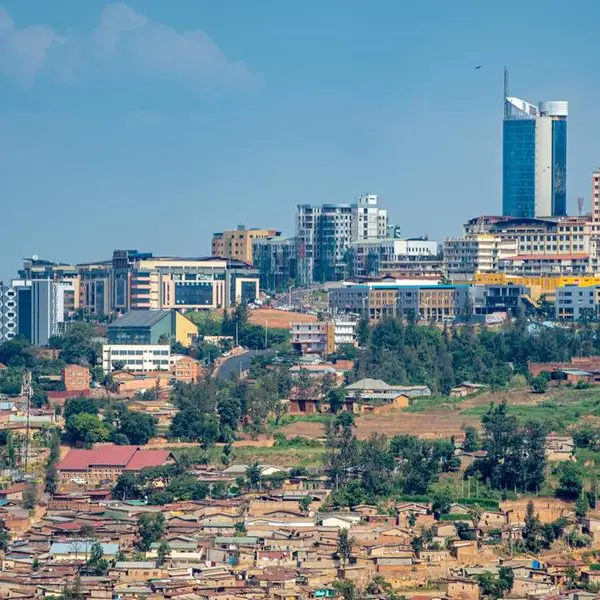
The latest World Investment Report (2026) shows Kenya, Somalia, Rwanda, Burundi, Tanzania and Uganda recorded increases in FDI inflows, while South Sudan, Democratic Republic of Congo and Ethiopia registered declines.
The three countries have in recent years been impacted by conflict and disease outbreaks and have seen investors hesitate to await reforms.
Yet it does not mean investors are walking away. In fact, the report notes that FDI inflows in East Africa were supported by continued investment in large projects and by activity in several less developed countries (LDCs).
It shows that the three East African countries ranked among the continent’s top 10 recipients of greenfield investments in 2025, mainly as a result of multibillion-dollar investments in chemicals, metals and the oil and gas sectors by investors from China, Nigeria and the United Arab Emirates (UAE).
Kampala ranked as the second-biggest recipient of greenfield investments on the continent after Ghana, lifted by its $4 billion oil and gas project being implemented by the UAE-based Alpha MBM Investments.
Ethiopia is ranked fourth after announcing two major greenfield projects. These are a $3 billion investment in chemicals by Nigerian billionaire Aliko Dangote through the Dangote Group, and a $2.5 billion investment in coal, oil and gas by China’s Golden Concord Holdings.
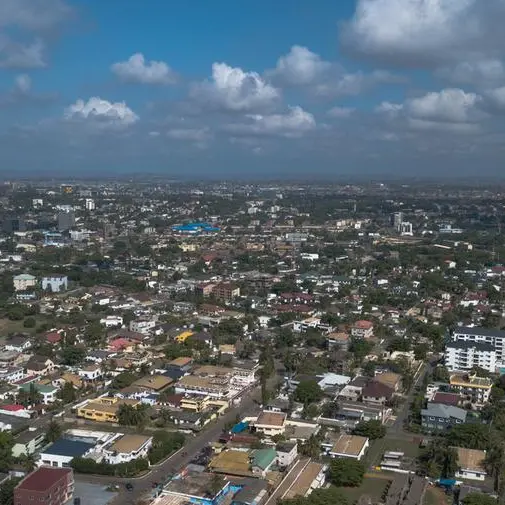
The DRC came in 10th with a $1.1 billion investment in the metals sector by China’s CMOC Group. Ghana topped the list with a $5 billion chemicals project being implemented by Al Jedad Holding from Qatar.
The report, however, notes that FDI inflows to Africa declined by 26 percent to $70 billion from $94 billion in 2024, with greenfield project values declining by almost one third in 2025, even though the number of announced projects increased.
The top 10 greenfield projects nevertheless accounted for roughly 40 percent of total announced value, underscoring the continued concentration of investment in a limited number of large projects and host economies.“In Africa investment remains concentrated in energy and extractive industries. In terms of FDI stock, European investors remain prominent,” the report says, adding that the UAE has been especially visible through recent greenfield megaprojects.
Overall, FDI inflows to East Africa grew by 15.38 percent to $15 billion in 2025 from $13 billion in 2024, with Ethiopia topping the list as the largest destination in the region, having received $3.79 billion worth of FDI, though a slight decline from $3.98 billion in 2024.
According to the report, FDI trends in Southern Africa were mixed, with inflows to Mozambique rising strongly to about $6 billion, largely linked to hydrocarbons and liquefied natural gas projects.
Angola returned to positive inflows of about $1.1 billion, following negative flows in the previous year, supported by renewed activity in oil and gas. By contrast, South Africa recorded negative inflows of about $2.3 billion, primarily as a result of intracompany financial flows, profit repatriation and mergers and acquisitions (M&A). Nevertheless, the country remained an important destination for announced projects in manufacturing, energy and services.
FDI inflows in North Africa declined by 56 per cent, from about $51 billion in 2024 to $22 billion in 2025, mainly because of the high base created by the Ras El-Hekma megaproject in Egypt.
Egypt remained the largest recipient of total FDI in Africa in 2025, with inflows of about $15 billion. Excluding the megaproject transaction in 2024, underlying inflows to Egypt increased by about 25 per cent, supported by the Alam El-Roum deal valued at $3.5 billion.
Morocco recorded FDI inflows of about $3.3 billion, supported by continued diversification into manufacturing and automotive sectors.
According to the report, FDI inflows rose in several West African economies, supported mainly by investment in natural resources and energy. Inflows to Guinea increased more than fivefold to about $8 billion, driven by mining projects in bauxite and iron ore, reinforcing the country’s growing role in global mineral supply chains.
Inflows to Nigeria rose to about $4 billion, supported mainly by oil and gas–related IPF deals, including a major project valued at about $2 billion.
FDI inflows in Central Africa, which remained closely linked to natural resources, particularly hydrocarbons and minerals, declined by 21 percent, from about $6 billion in 2024 to $4.8 billion in 2025. They were dominated by the DRC, where inflows declined from about $3 billion in 2024 to almost $2 billion in 2025.
Globally, FDIs rose by 6 per cent to $1.6 trillion, following declines in two consecutive years, amid fears that the 2026 conflict in the Middle East, extending beyond Iran and affecting the wider West Asia region, is likely to weigh on further investment prospects.“Geopolitical tensions, conflicts and persistent uncertainty about trade policy further complicate investment decisions, encouraging firms to delay or scale back commitments,” the report says.“The escalation of the conflict in the Middle East in 2026 constitutes a major adverse shock to the global investment environment, exerting downward pressure on FDI through higher costs, greater uncertainty and tighter financial conditions.”
© Copyright 2026 Nation Media Group. All Rights Reserved. Provided by SyndiGate Media Inc. (Syndigate.info).