PHOTO
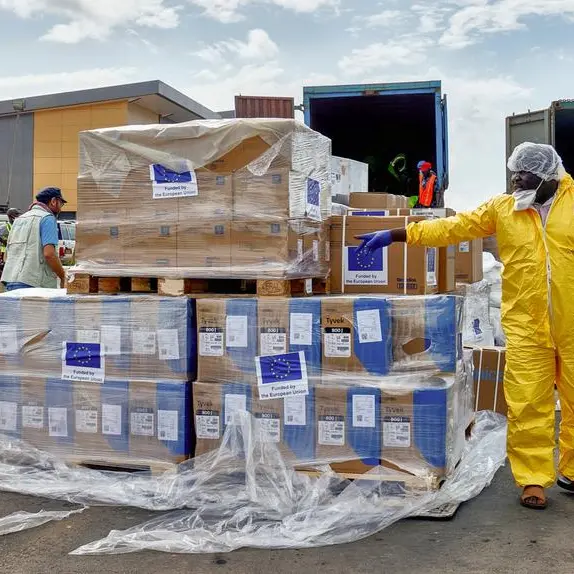
Despite vast agricultural potential, Africa still imports billions of dollars’ worth of food and depends heavily on food aid. Dr Meshack Malo is the Deputy Regional Representative for Africa at the Food and Agriculture Organization of the United Nations (FAO) and explains both the challenges and why technology and youth will determine whether the continent can feed itself. Below are excerpts from that discussion:Food insecurity has been a persistent challenge in parts of Africa. From FAO’s perspective, how serious is the situation currently?The situation we wish to see is Zero Hunger. We want to ensure that every man, every woman, and every child is able to have a decent meal every day—food in sufficient quantity and of the quality they desire. But this is not the situation in the continent currently. Africa continues to absorb one of the highest shares of global food aid.
In East Africa, drought has affected millions of people in recent years. What is the current situation in the region?East Africa is facing a challenging situation, especially with drought. The region already consumes about 20 percent of global food aid due to repeated droughts that affect populations that are already vulnerable.
About 50 million people are affected, with the most impacted countries being Somalia (most severely affected), Ethiopia (especially southern and eastern regions), Kenya (northern and eastern counties), South Sudan, and Sudan. We need early warning systems to be able to curb this challenge.
There have been successive droughts devastating crops and livestock in the Horn of Africa. Have you made any progress in recovery?There has been some progress in Ethiopia with long-term investments averaging more than 10.3 percent and growth in both production and productivity has been impressive but with some slight setbacks. In Kenya, investment in irrigation and climate smart agriculture is emerging as key.
However, when you combine climate change, drought and insecurity, they all conspire to make a bad situation worse. The area has good seasons and weather, so if stability is achieved, a lot of these problems can be resolved.
What are the major food security challenges facing the West African region?With climate change, rising food prices and other pressures coming together, there is a lot of movement of people, which triggers conflict within the region. Conflict is a major driver of food insecurity in this region, with armed groups such as Boko Haram contributing to displacement.
Most displaced people are not able to farm or they are displaced at critical agricultural times. In some areas where there is only one season, if people are displaced during planting time, then they end up in a very dire situation.
The Sahel countries are also vulnerable. Any small shock can easily push the food security situation in the wrong direction.
Southern Africa countries have experienced severe drought linked to climate variability. How has this affected agricultural production and rural livelihoods?In Madagascar, drought can have significant impact. Namibia and Zimbabwe have large livestock populations that are sensitive to drought, which then affects the livelihoods. Parts of Mozambique are also affected by drought.
In Southern Africa, drought can have a direct impact on trade. Climate change has also increased disease outbreaks affecting livestock and crop production. Meanwhile, Tanzania has been able to produce 235 percent of its rice needs and is now exporting. Malawi has also recorded increased productivity following higher investment, which has led to exports.
North African countries are heavily dependent on food imports. How have global price shocks and supply disruptions affected food security in this region?Africa spends between $70 billion and $100 billion on food imports annually, with wheat being number one, followed by rice, maize and then edible oils. You can see how even a small increase in global prices can easily push that number higher, even to $200 billion. Money the continent does not have. Then we are pushed into food assistance.
Countries need to work together to be self-sufficient in these commodities to avoid the frequent foreign exchange pressure during deficit years and inflationary spilloversAre countries in Africa investing enough in technology and mechanisation of agriculture?Not sufficiently. We have not reached levels of countries like Japan. Young people in Africa are not as engaged in agriculture, which means productivity gains are not being achieved.
Success has been registered, for instance, in Ethiopia and Nigeria with tractor hire services and strong uptake of digital extension tools.
Tanzania’s investment in mechanised production has made the country self-sufficient and a major exporter of both rice and maize. Morocco and Egypt are leaders in the region on modern farm machinery, irrigation automation and precision agriculture.
Youth focused mechanisation entrepreneurship will be key to success.
How significant is the role of climate change in shaping Africa's food security landscape today?It is extremely significant. When we compare the impact of climate change on farmers in the US, Australia, Asia and Africa, you find that farmers in Africa are more affected because of lack of technology to shield them. Many African farmers are still rain-dependent and have not moved into irrigation, and there is not enough mechanisation. The systems are therefore not resilient enough to absorb that level of climate shocks.
More importantly, access to climate information, just understanding what weather is coming and how it will affect crops, would significantly improve resilience.
Africa has around 60 percent of the world's uncultivated arable land, yet the continent still imports a large share of its food. Why is that?Unfortunately, one cannot eat potential. This is a story of Africa failing to exploit its potential. The water resources in the Congo Basin alone can help transform agriculture on the continent. South Sudan, for example, has about 80 percent arable land, but because of conflict, people are displaced and not farming.
There is need for proper planning and to view food security as a critical national security issue. Otherwise, in coming years, we may see desperation due to food insecurity. In some countries, for instance in eastern Africa, maize is already a major election issue.
What programmes is FAO implementing to strengthen food security and resilience across Africa?FAO’s work in Africa is divided into four main areas: First is better production. The food production gap is huge, and improving production is necessary for the continent to be self-sufficient and to feed itself.
The second area is better nutrition. We must ensure people eat balanced and diverse foods, including more fruits and vegetables. The third area is better environment. Climate change is a challenge, and we must protect water resources, land resources and forests to maintain a healthy ecosystem. The fourth area is better life. Agriculture can contribute greatly to African economies.
Some countries produce agricultural products for imports. For example, Ghana produces cocoa, Kenya produces tea, Southern Africa produces livestock and Central Africa has fisheries. These are resources that can improve livelihoods across the continent. We are therefore focusing on value chain approach to ensure agriculture contributes more to African economies.
Are there success stories where investments or better policies have improved food security?Under the Hand-in-Hand initiative that supports the implementation of nationally led programmes, we have seen investment in agriculture improve, although the situation has not yet reached where we want it to be. The private sector is also increasingly investing in agriculture, and this has been the missing link. There are now more such investments across Africa, even as they sort out emerging challenges.
Eastern Africa has expanded into avocados and horticulture, increasing production significantly for export markets. Namibia is doing well in livestock production, which accounts for about two-thirds of agricultural production in the country.
Egypt introduced Precision Agriculture and 2025 was a record year it for agricultural export with value of over $11 billion, about 24 percent of Egypt total exports.
Morocco is making major investments in agriculture, under its Generation Green shifting emphasis to Human capital (youth and rural employment), climate-smart and water efficient agriculture, and value-chain integration and agro-industry. Agriculture now contributes more than 13 percent of the national GDP.
Uganda has managed its rain-fed agriculture quite well and is self-sufficient in banana (matooke), maize, and cassava. Food is largely produced domestically. Small-holder farming is at the centre of self-reliance enabling it to became a regional food supplier.
There are many success stories now driven by a new generation of farmers, and we are seeing more greenhouse agriculture and irrigation systems.
Technology and innovation—from digital tools to climate-smart farming—are transforming agriculture. What promising innovations are emerging across Africa?Africa will be the continent with the youngest population, yet many young people are not finding agriculture attractive. When I visit universities, one of the biggest complaints is that they don’t see agriculture as attractive. They associate it with a common old image of women farming with hoes, which made agriculture less attractive.
But now technology and innovation are making a great difference in the African agricultural landscape. You will find tractors running on GPS systems. Rwanda, for example, is leading in use of drones for spraying crops, and this will have a cascading effect in attracting youth into this sector.
Innovation will play a critical role, together with mechanisation, and this take agriculture to the level we want. Africa missed out on the Green Revolution, but we hope that when it comes to technology and innovation, we will not be left behind.
AI systems, even simple ones, can help improve livestock breeds and hence increase milk production. In some countries, cows are still producing I litre or 1.5 litres of milk per day, while with better systems production can reach 15 litres per day.
What role should the youth in Africa play in ensuring food security on the continent?Young people have no option but to join the agriculture sector. One thing we are sure of is that they are eating more, and they will continue to eat for a long time, and they will have children, who will require food too. Governments must identify the barriers that prevent young people from venturing in agriculture and make the sector more attractive, profitable and modern.
What would you like to tell policy makers, leaders, development partners and investors about what is needed now to ensure that Africa can feed itself and its future generations? In the early 1950s and 1960s, Africa fought hard for independence. Now the question is: can we move towards food independence? Can Africa exit from food aid?For the academia and research institutions, there is a need to study more on how to mitigate effects of climate change, and on technologies and innovations that will help Africa adapt to climate variability.
What is your message to the youth in Africa when it comes to agriculture and ensuring Africa can feed itself?To African youth, your contribution will be very important. The food business will be a very profitable business in coming years. The continent still spends over $50 billion annually on food imports, and this presents an opportunity for young people to invest in agriculture and tap into a market that is currently being lost to countries outside the continent.
Youth have great potential to focus on this market and capture even a small part of it. With their innovation and energy, they will be able to find ways to tap into this market.
© Copyright 2026 Nation Media Group. All Rights Reserved. Provided by SyndiGate Media Inc. (Syndigate.info).