PHOTO
Most Gulf equity markets ended higher on Thursday, as hopes for a deal to end the Iran war lifted sentiment, with investors also watching rising U.S. pressure on Tehran ahead of further talks.
U.S. President Donald Trump said the war launched with Israel in late February was nearly over, even as the shipping blockade he announced came into effect and traffic through the Strait of Hormuz remained sharply below normal. Washington, meanwhile, warned it could impose secondary sanctions on buyers of Iranian oil ahead of further negotiations, just weeks after loosening enforcement of some Iran energy sanctions.
U.S. and Iranian officials were considering returning to Pakistan for further talks as early as this weekend, after negotiations on Sunday ended without a breakthrough. Pakistan's army chief arrived in Tehran on Wednesday as part of a mediation effort to keep the conflict from reigniting.
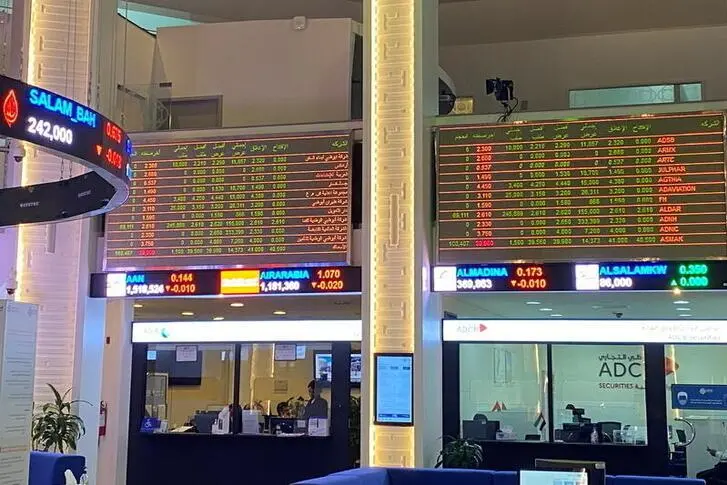
Dubai's main share index advanced 1.1%, led by a 2.6% rise in blue-chip developer Emaar Properties and a 4.1% jump in budget airline Air Arabia. Optimism over a potential resolution has lifted sentiment, but markets remain sensitive to geopolitical headlines, tempering a broader risk-on shift, said Hani Abuagla, senior market analyst at XTB MENA.
Strong domestic fundamentals in the UAE may support a return toward earlier highs, while further diplomatic progress could add momentum. "However, ongoing disruptions in the Strait of Hormuz remain a key overhang, potentially capping near-term upside."
Meanwhile, the luxury hotel Burj Al Arab in the emirate will shut for about 18 months for its first major renovation since opening in 1999, with guests to be moved to nearby hotels, according to a staff member.
The work comes amid pressure on Dubai tourism from the Iran conflict; the hotel also sustained minor facade damage in March from drone debris. In Abu Dhabi, the index finished 0.3% higher.
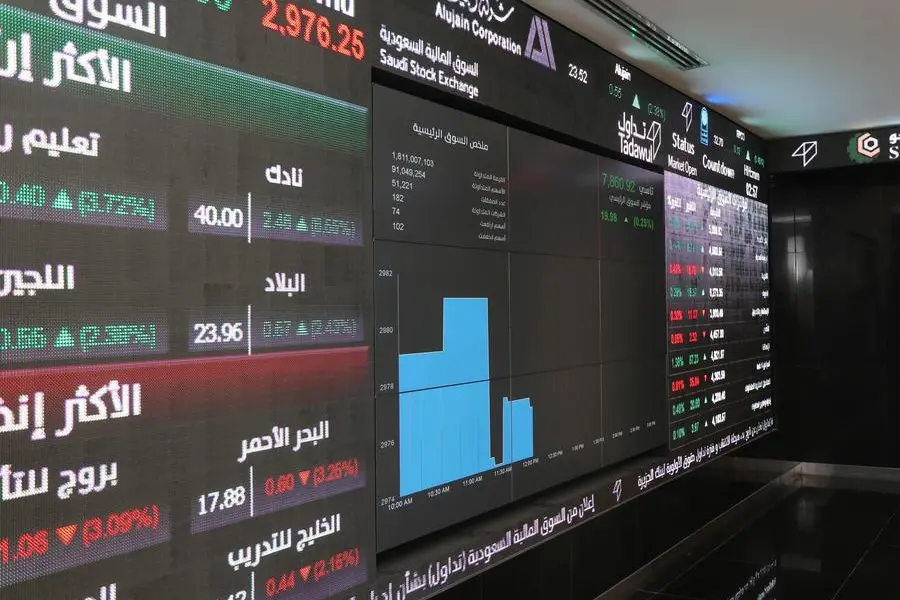
Saudi Arabia's benchmark index lost 0.3%, with Saudi National Bank - the country's biggest lender by assets - down 3.2%. However, the index is up 1.9% for the week, its seventh straight weekly gain, outperforming regional rivals on higher oil prices and the kingdom's ability to reroute exports. Brent crude futures climbed 67 cents, or 0.7%, to $95.60 a barrel.
The Qatari index eased 0.2%, hit by a 1.4% fall in Qatar Islamic Bank. Qatar - the world's second-largest LNG exporter - may extend its force majeure on gas supplies beyond mid-June, Italian importer Edison said, though it expects lost volumes to be replaced by U.S.
LNG rather than Russian gas. QatarEnergy cancelled 10 cargoes for Edison between April and mid-June after the war disrupted supplies. Iran's attacks knocked out 17% of QatarEnergy's LNG export capacity last month, its CEO said.
Outside the Gulf, Egypt's blue-chip index rose 1.4%.
- Saudi Arabia fell 0.3 % to 11,554
- Abu Dhabi added 0.3% to 9,918
- Dubai advanced 1.1% to 5,930
- Qatar eased 0.2% to 10,715
- Egypt rose 1.4% to 51,438
- Bahrain gained 0.7% to 1,939
- Oman was up 0.3% to 8,337
- Kuwait climbed 1.5% to 9,513
(Reporting by Ateeq Shariff in Bengaluru; Editing by Joe Bavier and Emelia Sithole-Matarise)