Anyone depositing a cheque at a US bank today triggers a surprisingly efficient and cheap process whereby the cheques are cleared and money transferred.
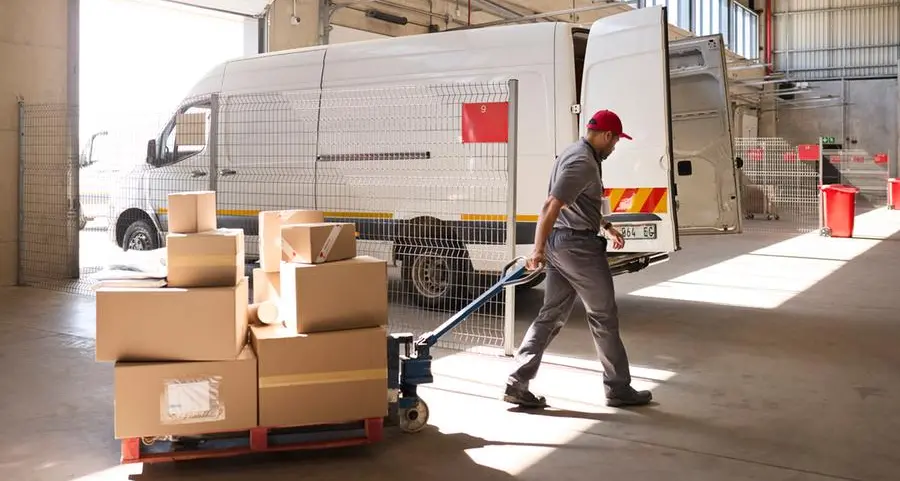
Each piece of paper will be processed, packaged and sent, via truck or aeroplane, to facilities that handle such transactions. The cost for this trip: about a penny a cheque.
But what happens when the roads are blocked and air traffic is grounded, as happened in the days following September 11? Mitch Christensen, executive vice-president of payment strategies at Wells Fargo, says banks rely so heavily on transport that after the attacks they were paralysed.
"We were really handicapped," says Christensen, who lobbied Congress for new rules to avoid similar hardship in the future. Such lobbying led to Check 21, short for the "Check Clearing for the 21st Century Act".
The Act, Check 21, signed into US law last year, takes effect on October 28. It requires banks to be able to receive an image of a cheque, print it out and run the printed copy through the system as if it were the original. It also brings the US closer in line with steps taken by other countries such as the UK and Mexico. In the UK, for instance, HSBC has introduced machines in certain branches that use imaging technology to begin the cheque-clearing process.
A customer inserts a cheque into the machine, where it is scanned and then verified on screen. Optical character recognition technology also allows the machine to read the amount on the cheque and have the customer verify it before it starts the clearing process.
Check 21 highlights the efforts banks are making not only to improve the technology they use to get to know their customers but also to help them live up to new security rules imposed by the government as part of the war on terrorism.
The Federal Reserve Board says the law facilitates what is known as cheque truncation, which involves stopping a cheque during the clearing process and converting it to a digital representation that can be moved electronically. This will allow banks to process cheque information over electronic networks and to deliver an acceptable copy of a cheque to those banks that want to continue receiving cheques in paper form.
Hong Kong is often held up as an example where the process has been most successful, but Wells Fargo has also studied efforts in Norway, Sweden, Finland and Australia, says Christensen.
The system works best, industry experts said, when a country has few financial institutions. It is hard in the US, says Christensen, where there are thousands of such institutions. Still, meeting the requirements of Check 21 should be simple. Gary Cawthorne, vice-president and managing partner for the global banking practice at Unisys, which helps customers solve technology issues, says: "They will be able to live up to the new rules. The actual law is pretty innocuous."
Investments
As for costs, Cawthorne says banks that have made incremental investments in imaging technology have not been hit by excessive costs. A bank with 500 branches might have spent $5 million to$20 million, he says. But if it had made no incremental changes, the bill could be nearer $100 million. One bank he knows might have to spend $270 million.
What is less clear, says Cawthorne, is what else banks will use imaging technology for. A true reorganisation of the infrastructure for cheque cashing in the US would be unlikely to happen before 2007, he adds.
For now, banks are thinking about the point at which they should convert the piece of paper to an electronic image, says Cawthorne. The chance to cut costs is alluring. Capturing an image at the point of sale or with a teller would allow banks to reduce transport networks. Banks could also detect fraud and other security breaches sooner and faster.
But John Feldman, an image transactions and payments executive at Bank of America, said: "This is going to be an evolution, not a revolution."
There are many situations banks such as Bank of America would love to take advantage of, he says, but they need other banks to participate to take the process further. "We are pretty efficient at using images internally but bank to bank we use paper," said James Hicks, of Wachovia, the US bank.
To work together electronically will require collaboration, said Feldman. "The big impact happens when the rest of the industry comes along with the early movers."
The banks at the forefront of imaging technology in the US are the country's largest because the top 50 banks, including Wells Fargo, Bank of America and Wachovia, handle about 90 per cent of US cheques. "Our strategy is not to move the paper any further than when it is first negotiated," said Christensen, whose bank handles one in 10 cheques in the US. Bank of America alone handles about 40 million a day. The subject is important enough for it to have run an advertisement during the Olympics that featured one of its cheque processing centres.
Still, even as banks spend money to adopt ways to handle cheques electronically, cheque usage in the US is declining by as much as 10 per cent a year. There are 42 billion cheques written each year in the US, says Christensen. He predicts that by 2010, and possibly earlier, the figure will drop to 25 billion. Ultimately, the number will fall to 10 billion to 12 billion but will not go away completely, said Christensen. Imaging technology may solve a problem but it also creates problems. One is fraud. Cawthorne, when travelling in Mexico, says he had just received a suspect e-mail on his laptop that said his bank had experienced a computer fault and needed him to verify confidential information. Sending such e-mails known as "phishing" is becoming increasingly popular among internet fraudsters. Had Cawthorne taken the bait, money could have been stolen from his accounts.
As banks adopt new uses for imaging technology other fraud schemes could develop. Cawthorne explains that a hacker who succeeded in accessing his digital archive would know what his cheques looked like, their sequence numbers, the amounts of money he typically spent and would even have a copy of his signature. Armed with that information, the thief could theoretically make and print new cheques that looked just like Cawthorne's and spend money in a way that a bank's security systems would be unable to detect. Feldman says this situation reminds him of the mid- to late 1990s, when banks started taking advantage of the internet. "We're headed down that same path here," he says. "We do anticipate there may be a little bit of a fraud bump but that will improve in the long term."
Banks will also have to monitor legal risks as they adopt imaging technologies. In some circumstances, for example, a bank may make an electronic copy of a cheque its customer has paid to the tax authorities and then destroy the original. Yet the authority may say it never received the cheque and ask for a copy. If the bank goes into the electronic archive and finds the copy is smudged, who takes responsibility? Bankers believe answers to these problems come through collaborative effort. "People dropping out will diminish the overall benefit," said Feldman.
Financial Times
Gulf News