PHOTO
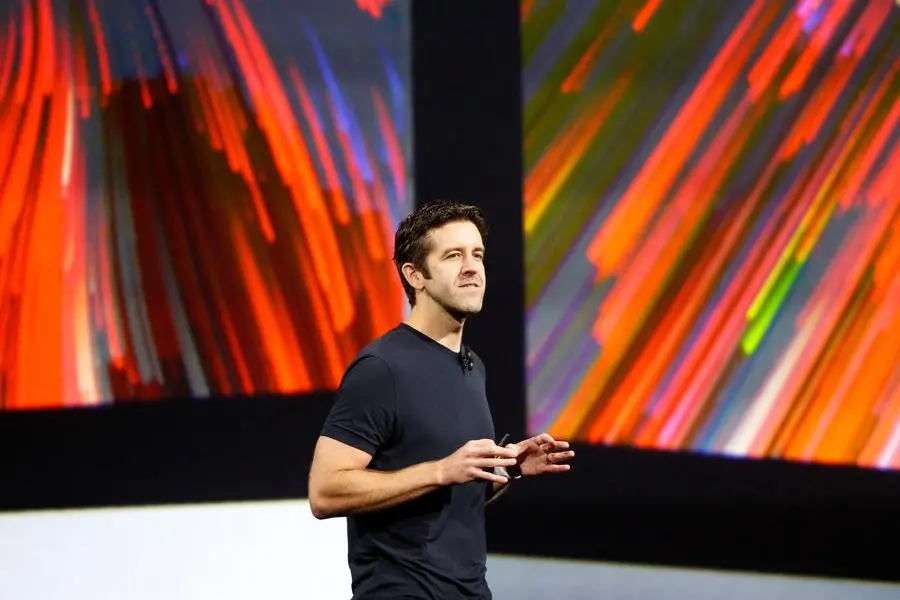
To understand how Apple's new CEO John Ternus will run the company, pay attention to what he refuses to sell. While software rivals at Microsoft and Google are spending hundreds of billions to push artificial intelligence into every corner of their businesses, the man set to lead one of the world's most iconic companies appears to treat AI with a deliberate, almost stubborn pragmatism. "We never think about shipping a technology," Ternus, 50, said in a recent interview about AI with tech review site Tom's Guide. "We always think about how can we leverage technology to ship amazing products."
When he succeeds Tim Cook on September 1, that distinction will matter enormously. Ternus' focus on the product makes him a steward of Apple tradition at a time when the Cupertino-based tech giant has lost its perch as the world's most valuable company to Nvidia.
Apple's delayed roll-out of its revamped Siri assistant, and a reliance on Google for the AI to power it, have led some analysts to question its strategy for the new technology.
That has yet to affect iPhone sales. But technology experts say advances in AI could usher in a once-in-a-generation change that threatens the smartphone's central role in people's lives.
Rivals including Samsung and OpenAI are betting that Apple's stumble is an opening. Meta has also found an early success with its Ray-Ban smartglasses that come with AI features.
"The question is whether he has the appetite for the kind of bold, occasionally uncomfortable decisions that defining a new platform requires," said Francisco Jeronimo, vice president of client devices at research firm IDC.
"Building great hardware is a well-defined problem. Building an AI platform that developers and enterprises genuinely adopt is a different challenge entirely."
'EVERYONE LOVES HIM AT APPLE'
Ternus, a 25-year Apple veteran who started out designing external displays, arrives in the top job with decades of experience as a hardware engineer who has spent his career building the case that the best defense is a better device.
In a 2023 interview with Reuters about new Apple products made with recycled materials, Ternus came across as thoughtful and measured, with a detailed grasp of not only how Apple's new products were built but how their supply chains could be ramped up to include more recycled materials across Apple's lineup.
That style has shown up offstage too. While returning to his alma mater, the University of Pennsylvania, as the engineering school's undergraduate commencement speaker in 2024, he urged graduates to "always assume you're as smart as anyone else in the room, but never assume that you know as much as they do," mixing self-assurance with a dose of humility. He also described his own perfectionism to them, recounting how late one night early in his career, he found himself arguing with a supplier over the grooves on a screw that goes on the back of a monitor. The screw would rarely be seen by customers but Ternus had noticed it had 35 grooves instead of the 25 Apple specified. "If you're going to spend that much time on something, you should put in your very best effort."
Analysts say Ternus is widely respected at Apple and enjoys a strong backing across ranks. "Everyone loves him at Apple. All the execs I know speak very highly of him," said Ben Bajarin, an analyst at Creative Strategies.
By prioritizing devices over pure software, the new CEO has more in common with Apple co-founder Steve Jobs than with his immediate predecessor. Jobs was similarly uninterested in technology for its own sake, famously saying, "You've got to start with the customer experience and work back toward the technology - not the other way around." Ternus, who worked under Jobs early in his Apple career, promised on Monday to keep leading the "values and vision that have come to define this special place for half a century." He has overseen some of Apple's most consequential hardware, from the iPad to AirPods. He more recently introduced the ultra-thin iPhone Air and the MacBook Neo, a laptop that starts at $599, a price made possible by using the same chip as the iPhone 16 Pro. One of Ternus' biggest tests came when he steered the Mac laptop line onto processors Apple designed itself, ending more than a decade of reliance on Intel and marking a big bet by the company often accused of playing it too safe.
The move has boosted Mac performance and battery life, sparking a resurgence in sales in recent years.
Recalling the thinner, faster Macs the new chips made possible, Ternus told CNBC in 2023 that "it was almost like the laws of physics had changed."
(Reporting by Aditya Soni in Bengaluru and Stephen Nellis in San Francisco; Editing by Peter Henderson and Sam Holmes)