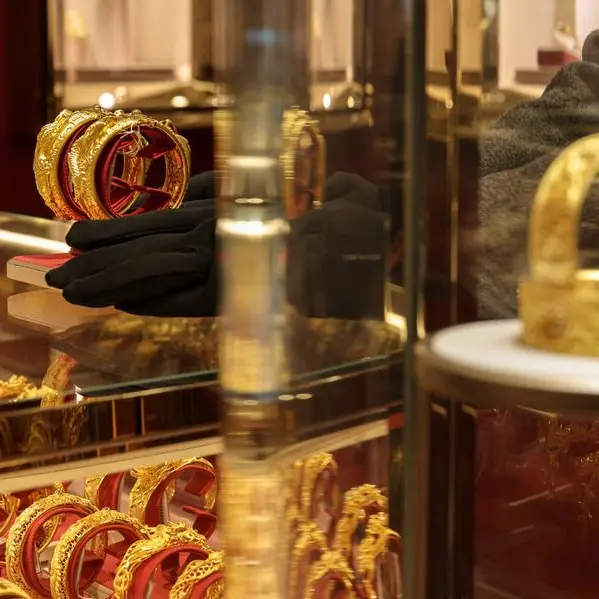
JEDDAH, 10 October 2005 -- Gold and jewelry sales are increasing across Saudi Arabia. Demand for gold increased by 28 percent and jewelry by 18 percent in the second quarter of 2005 compared to the same period in 2004. Official measures, including a reduction in customs duty and the "easing" of Saudization have started to boost the jewelry demand, according to market leaders.
"The relaxation of the Saudization rules has been of particular benefit, easing the restraints many outlets faced in finding adequate numbers of trained Saudi staff," said one of them who has a chain of gold and jewelry outlets in Jeddah.
According to Moaz Barakat, World Gold Council's (WGC) managing director for the Middle East, Turkey and Pakistan, many factors have led to the improve performance in the second quarter. For example, strong oil prices have provided a background of consumer optimism in the Kingdom and the rest of the Gulf. The Kingdom also benefited from an increase in the number of visitors, aside from its booming economy and sustained promotions.
Despite many situations around the globe, the gold market remains healthy and is growing not only in the Kingdom but also in the rest of the Gulf. "While gold sales in the Kingdom increased by 28 percent from SR2.2 billion to SR2.9 billion in the second quarter of 2005 compared to the same period of 2004, other countries in the Gulf witnessed a 17 percent increase," said Barakat.
Saudi Arabia's gold consumption in terms of tonnage experienced a 19 percent increase in the same period. The gold jewelry consumption increased by over 19 percent from 42 tons in 2004 to 50 tons in 2005, while retail investment (bullion coins and bars) consumption increased from 1.2 tons in 2004 to 2 tons in 2005.
In the UAE, the contributory factors are the strong oil price, increase in the number of tourists, booming economy, sustained promotions, and the Dubai Summer Surprises festival, which started late June.
"Early indications for the third quarter throughout the region are for further strong growth," Barakat said.
Referring to the increased jewelry demand in the Kingdom, Usama Alwazir, Gulf manager at the WGC, said that aside from the relaxation of Saudization rules a reduction in customs duty has also contributed to the growth. "Overall, the increase in sales in the Gulf demonstrates the high affinity to consumers toward gold and gold jewelry," he said.
The WGC regional office's quarterly report says that the retail gold sales in the UAE increased by over 19 percent from 1.5 billion dirham to 1.8 billion dirham in the second quarter of 2005 compared to the same period of 2004.
Demand for gold had, in the second quarter of this year, increased by 18 percent to reach $99 million after reaching $84 million in the same period in 2004. A similar increase in demand has also been reported in Kuwait.
India has remained the world's leading consumer of gold.
Gold consumption in India is expected to surge nearly 33 percent in 2005 to 850 tons because of higher incomes and good farm output, Barakat said. Consumption, excluding recycled gold, rose 57 percent to 508 tons in the first half of the year, from 322 tons during the year-ago period.
"Normally the second half is much stronger than the first half. Even if we take the worst case scenario, we're looking at a very high number," said Sanjeev Agarwal, the industry-funded council's managing director for the Indian subcontinent.
Internationally, the average price of gold this year is $431 an ounce. Currently, gold is hovering at about $460 an ounce. "The US dollar surely must weaken further; there is concern about debt and an easier monetary policy; and there is a growing demand for gold," a world economist said.
Pierre Lassonde, Newmont's president and chairman of the WGC, who usually makes price forecasts, has hinted that he might revise his earlier forecast.
In May, Lassonde had forecast that gold prices would reach $525 an ounce sometime early next year. "As chairman of the WGC, I cannot say anything today about gold prices," he said.
In fact, the WGC increased the world demand for gold by an additional 199 tons last year through a range of initiatives. In 2003, the council developed a marketing strategy aimed at curbing recycled gold sales and boosting demand.
About one-third of the global gold supply each year is from gold recycling -- gold that moves in and out of the market.
The council also helped introduce gold-backed exchange-traded funds, which improved the demand for gold as an investment.
By K.S. Ramkumar
© Arab News 2005