Nipa Rao joins the crowds at the UAE's first bachelor mall.
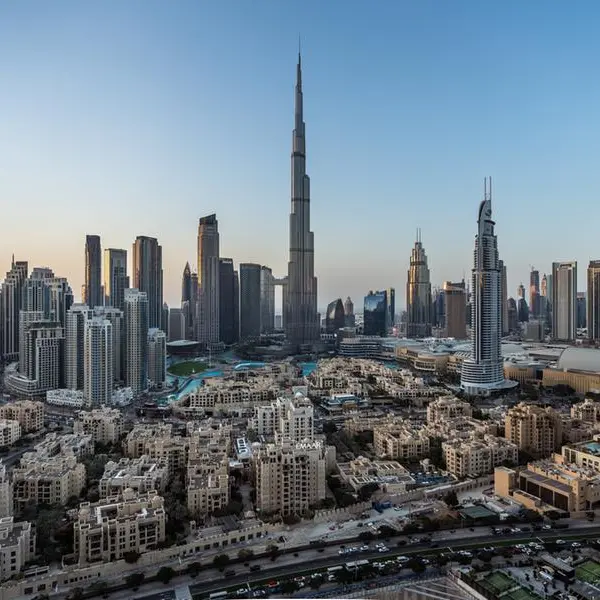
Much has been spoken and volumes have been written about Dubai's glitzy malls and its indisputable position as a shopper's nirvana. The emirate has undoubtedly attained an enviable place on the global shopping and retail scene.
With the first shopping centre launched in the '80s, Dubai today is set to host the largest mall in the world.
Food, fashion, fusion, upscale, premium, luxury, lifestyle, leisure, entertainment, edutainment, retailainment are few of the buzzwords in the shopping and retail arena. It is evident that the mall formats have emerged far from the basic enclosed agglomeration of stores catering to the functional needs of the daily life. Different formats have evolved. Experiential and lifestyle retailing now supersede basic shopping needs.
The city's geography has also changed. A young, vibrant and economically upscale 'New Dubai' has emerged in its pristine glory.
Forgotten, however, among this retail frenzy are the basic needs of a segment of the population, who are working 'hands on' and tirelessly shaping Dubai's ambitious growth plans: the migrant construction workers.
While we are all aware of the glamour of 'New Dubai', the Emirate also has a more basic and unkempt face concentrated in the labor camps in the emerging industrial clusters in Al Quoz and other such pockets.
The Boys in Blue
Dubai is said to have a construction workforce of around 200,000 'bachelors', who work on low salaries and live in equally dismal conditions. Thus, an invitation to audit the Grand City Shopping Mall in Al Quoz, catering to the needs of this segment, was promptly accepted in the midst of raised eyebrows.
A brief chat with the managing director of the centre; Anwar Ameen revealed some interesting facts. Since there were no other shopping facilities around (except for small groceries which could not fulfil all needs and services), these labourers were forced to board their hired buses every Friday and drive into Deira to do their weekly shopping - mainly groceries and toiletries and to fulfil other basic needs such as hair cuts, travel bookings, clinics, photo printing and money transfer. Any additional requirement during the week means another taxi trip to the closest shopping facilities, which would cost around $5-8 besides the cost of the goods/services. All these expenses are eating into their meagre incomes.
Regency Group, owners of the Grand City Mall, was quick to notice this gap, which it promptly plugged with the launch of the mall in Al Quoz in June. With a retail Gross Leasable Area (GLA) of about 100,000 sq ft and around 35 stores, this centre caters to all the daily needs of the labourers under one roof. It also has a clear understanding of its target market, which is adequately reflected in its positioning and in its retail mix.
Now, experts say that the shopping centre is all about location, location, location. Being new to Al Quoz, and despite ample planning and enquiry, I still got lost. However, the popularity of the mall was clearly evident when a truck driver whom I stopped for directions, happily led me to the place 'personally'. Full marks there.
Brands for Less
Conveniently located at a large roundabout, the centre is easily accessible both by road and foot and enjoys prime main road frontage and visibility. A spacious car park (which, mind you, was packed with small cars and pick-ups) leads into the main entrance.
The mall timings are at a convenient 7.00 - 1.00 am, ideal for workers who start early and those who also require such services late at night. The general ambience was, as it would be in all such malls, 'cheap and cheerful' albeit clean and functional.
However, what is key to this centre is its retail mix, which is the predominant reason why it's there and why it is popular. Catering essentially to the male laborers in the vicinity, around 80% of who come from the subcontinent, the centre is a prime example of 'Know Your Customer'.
The ground floor hosts a large grand hypermarket offering day-to-day basics: fresh foods and vegetables, pulses, masalas, detergents and toiletries. We also found a deli counter with fresh Indian snacks, sweets and savories.
What caught my attention, though, was that most branded products were at least 10-20% cheaper than in premium shopping environments. The ground floor also saw a host of other services like a gents' hair salon, driving institute, travel agency, pharmacy, photo studio, jeweler store and an optic wear brand.
Located on the first floor is the Grand Department Store. Targeted mainly at men, the department store also has a ladies' section Saree Palace plus kids' wear; home; bed and bath; men's accessories and footwear.
Also found on the first floor were Karama Medical Centre; an internet caf, money exchange; watches and jeweler kiosks, including a watch repair kiosk.
Enjoying street access only, were, essentially, local restaurants and coffee shops, a laundry and a spare parts shop a fine leasing job which were all busy and popular. Misfits on the food front, however, were the restaurants on the first floor including: Agumone (Japanese) and Big Wok (Chinese Nepalese cuisine), presumably catering to more adventurous palettes.
The fact that the leasing team has addressed all possible needs is reflected in the delivery kiosk 'home delivery anywhere in your home town' strategically located at the entrance of the mall, which interestingly can be accessed from three sides, front and two sides.
Filling a gap
The fact that the centre has achieved what it set out to achieve can be gauged from the busy and purposeful crowds I saw at around 10.00 am. All stores and services were busy and tills were clinging pleasant musical notes. The management estimates an average daily traffic of 20-30,000 people which is significantly higher on weekends reinforcing the fact that the centre is steadily fulfilling the social needs of the customers too. Average daily sales are said to average $68,000 for the hypermarket and department store alone.
My work in the shopping centre and retail industries has introduced me to developers who are seeking to develop new concepts, luxury and lifestyle precincts, and retailers exploring the possibility of locating their brands in these new and unique retail formats. It is a fine balance bridging this gap and many stalwarts, too, are known to have gotten it wrong. An audit of the Grand City Mall is a clear illustration of a success story that rests on a very thorough understanding of a changing market and emerging market needs and the ability to "plug this gap in time". To see a market where no one else sees one.
It illustrates how a clear understanding of the target market and the consumer coupled with the right market positioning, can provide guaranteed success, even if you are not following the 'herd'. A retail ambience based on the principle of KISS (Keep It Simple Silly) and a retail mix married to the consumer needs and preferences make Grand City Shopping Centre a good case study on the fundamental principles of market research and marketing.
Nipa Rao is a consultant of SQ.FT Consulting, a Dubai-based private consulting company, specializing in Shopping Centre & Retail Solutions. nipa@sqft.ae
© Gulf Marketing Review 2006