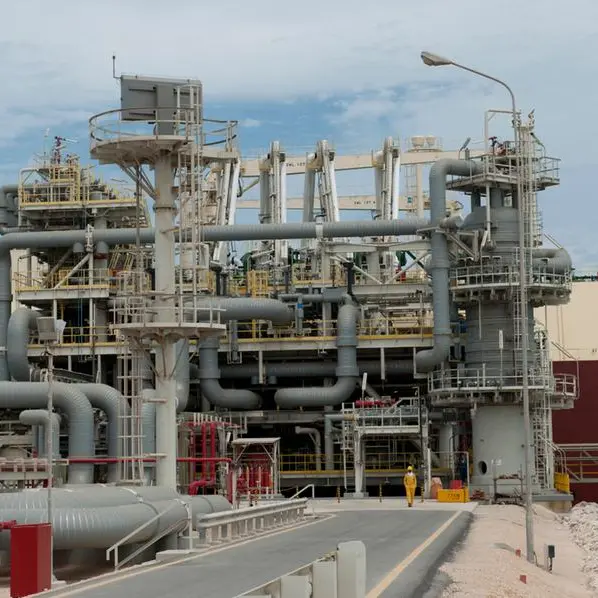
Pearl GTL is a fully integrated project of humongous scale that captures the full value-chain from offshore development through onshore gas process ing to refining of finished products.
Qatar is already the largest exporter of one of the cleanest forms of energy, liquefied natural gas (LNG), so what does having the world's largest Gas to Liquid (GTL) plant mean to the country?
It is about monetising and making the most of the abundant supply of gas that the country is blessed with. An interesting fact is that GTL offers the full upside of accessing the oil market and is also a very strategic diversification process for the country. But everything depends on the size of the resource as well as the capability to build, manage and operate the huge facilities needed. Qatar has the resource and Shell has the technology and has proved its competence to manage a project of that size in partnership with QP In an exclusive interview with Qatar Today, Andy Brown, Executive Vice President, Qatar Shell and Managing Director of Pearl GTL, says: "Pearl GTL demonstrates that GTL technology can be applied in a world-scale project to form the foundation for a safe, reliable and economically attractive business. This is particularly important given that the world's oil reserves are dwindling, while its reserves of gas provide for hundreds of years of continued production."
According to the Minister of Energy and Industry, Dr Mohammed bin Saleh Al-Sada, "the Pearl GTL project will play an important role in enhancing our diversification of North Field gas utilisation and will support the optimisation of Qatar's competitive position in world markets by supplying high quality GTL products."
For Brown this is even more significant, since he was involved in this massive project right from the beginning.
"Personally, my involvement started in 2002. I led the initial negotiations for Shell to enter the country. In 2002, Shell had no presence in Qatar. Today we are the largest foreign investor in the country. It has indeed been a fruitful journey.
"Pearl GTL is one of the main projects for Shell here and it is very important. We have invested around $18-19 billion (QR65.52-69.16 billion) in the project. It is the largest project ever launched in Qatar, and certainly the largest investment by Shell in a single project in its global portfolio.
"Pearl GTL will represent 8% of Shell's global upstream production, once we are at full capacity by mid-2012. It is also a large generator of revenues and shows our capability to deliver the latest technology and deliver on one of the largest projects in the world."
There were speculations of the project cost escalating in 2008-2009, but Brown is quick to clarify: "The budget of the project was set. The project is still within the budget set by the board of Shell in 2006. The cost-performance has been excellent. In 2008-2009 there was a global escalation of prices, both in materials and labour. Despite that we have been able to keep within the set budgets."
Technology breakthroughs
Pearl GTL is immense, not just because of the size of investments but because of the technology used.
"We use proprietary Shell and other cutting- edge technologies that we have brought in especially for the project. Shell has technology for the whole process of converting gas to liquid fuels and other products. It also has technology for the three GTL processes: conversion of natural gas to syngas through the Shell Gasification Process; conversion of syngas to long-chained waxy hydrocarbon molecules through Heavy Paraffin Synthesis; and conversion of long-chained waxy hydrocarbons into finished GTL products through Heavy Paraffin Conversion. Other projects have technologies for one of the processes, but Shell has the technology for all the different stages of production. "The proprietary Shell Middle Distillate Synthesis (SMDS) process is at the heart of the two-train Pearl GTL plant. It is underpinned by more then 3,500 patents and, above all, is proven on a commercial scale for more than 10 years of operational experience at Shell's first GTL plant in Bintulu, Malaysia, with a capacity of 14,700 barrels a day.
"From the start of phase one, we have proof that the technology works. We have high-quality on-spec products; we have started shipping gasoil that is diesel fuel, naphtha which is petro chemical feed-stock and also base oils used for lubricants."
Pearl GTL has also stretched the boundaries in other areas, says Brown.
"We have built both the world's largest oxygen plant and industrial water processing system (with zero liquid discharge). Veolia and Linde are examples of the companies who are helping us develop the technologies here.
"Shell's technology is the result of years of experiments.
"In the early 1970s we started research in a lab in Amsterdam, and in 1983 we built a pilot plant in Amsterdam. In 1993, we started up the first commercial plant in Bintulu, Malaysia. Pearl GTL is based on this technology."
Challenges and milestones
The main characteristic of Pearl GTL is its enormous scale and complexity with the onshore project equivalent to some of the largest integrated oil refineries/petrochemical complexes in the world.
The technology was cutting-edge - and the investment huge - but the main challenge was not that, it was managing resources, says Brown, both people and material resources.
"To manage the labour in a safe and responsible way was the biggest challenge. In terms of my focus, one area which I gave a great deal of attention to was safety. It was for this reason that we built the Pearl Village, a camp for 40,000 workers. It is a community where we have a mayor, excellent recreational facilities, places of worship, basically a home away from home for all the workers at Pearl GTL."
"By demonstrating our care for the safety and welfare of the workers, the quality and productivity of the work improved.
"We broke safety records in the industry. At one point in time the onshore project crossed 77 million hours without a lost-time accident on a project. It is a record for Shell and is also a record for the State of Qatar."
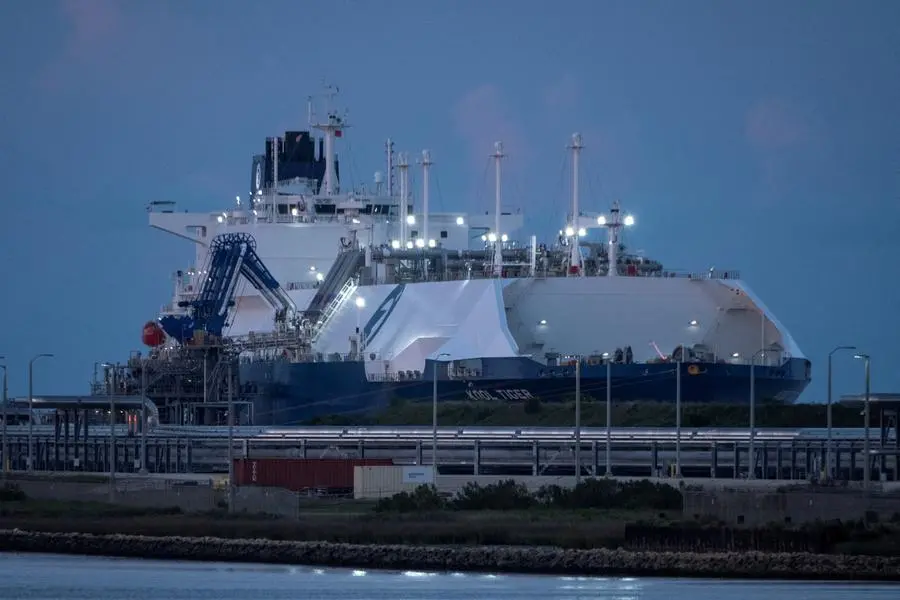
To give a physical sense of scale, the project imported two million freight tonnes of material and equipment during construction, using a dedicated off-loading facility in Ras Laffan Port.
"We built our own dedicated loading facility at Ras Laffan as we did not want to ship all that through Doha Port and congest the roads as we brought it all to our site. All our materials were delivered on time."
Each milestone that the project has clocked seems fresh in Brown's mind. He says: "The project was launched in July 2006. In February 2007 we had the official stone-laying with HH the Heir Apparent Sheikh Tamim bin Hamad bin Khalifa Al- Thani and HRH Prince Charles. The project was designed in 13 different design offices in 10 different countries around the world. Late 2006 we started construction. In 2009, we got to the peak manpower of 52,000 workers. In November of that year, the then Minister of Energy, HE Abdullah bin Hamad Al-Attiyah, came and formally launched the start of commisioning of our activities. That culminated in March 2011, when we opened the off-shore wells and gas started flowing into the plants. The start-up went very well and by July 2011 we had our first cargo of finished product. The time between the first gas wells and the first product was shorter than we anticipated.
"It takes some 2,000 steps to prepare all the systems for production in Phase One, so breathing life into one of the most integrated complexes whilst simultaneously continuing the commissioning work for Phase Two is an Olympic achievement. But this was achieved with the flawless start-up of Phase One in the first half of 2011," says Brown.
Products and outlook
GTL technology provides an alternative route of natural gas monetisation, offering full upside to higher oil prices, but some of the GTL products are also attractive feedstock to other businesses in the petroleum industry.
GTL products represent a pioneering innovation to increase the supply of high-demand liquid hydrocarbons. When fully operational, Pearl GTL will produce 140,000 barrels a day of high-quality GTL products and 120,000 barrels of oil equivalent a day of natural gas liquids.
Brown shows a sample of the diesel GTL gasoil, which looks and smells like water, it's a clear, clean and odourless liquid.
"It has a very high cetane number and hence burns regularly. It has virtually no aromatics, therefore doesn't smell. As a cleaner burning fuel it results in reduced local emissions and keeps the engine clean for a longer period. We will sell GTL fuel to a number of places but the majority to the European market."
Core Pearl GTL products have good margin prospects and a strong long-term market outlook, he says.
"They will cement Qatar's position as a source of high-quality liquid products. Looking ahead to the future there is a robust market outlook for Pearl products. By 2020, the estimate is that the global demand for naphtha, jet kerosene and especially gasoil will grow by some 30%, specifically in the Asia-Pacific region. As the global market share leader in finished lubricants, Shell will leverage its downstream trading and marketing capabilities to distribute the large quantities of baseoils we produce." And will the country opt to sell GTL fuel in the country?
"It may do," says Brown, "but it should first figure out the logistics to distribute the fuel."
GTL projects are being explored in the US and would be pursued since gas prices are quite low there.
"Qatar has an enormous reserve of gas and we are privileged to have access to this gas. This project wouldn't have been possible without the support and the vision of HH the Emir Sheikh Hamad bin Khalifa Al-Thani. The way decisions are made without delay, the way business is done transparently without any form of corruption in the country, and the clear vision in the energy sector, allow us to continue with our projects without many hitches."
© Qatar Today 2011