The blueprint for a fresh approach to the Middle East economy was ratified by the recently created Arab Business Council (ABC) at Davos, where the World Economic Forum is holding its annual congress.
The new blueprint focuses on three key parameters - economic liberalisation and reforms, governance and human resource development - to base all future progress.
The ABC, which comprises over 100 business leaders from the Arab world, was created at the World Economic Forum's extraordinary annual meeting in Jordan last June to take action on the key issues of the region: the enhancement of regional competitiveness, the economic integration of the region in the global economy and a commitment to engage the leaders of the private sector to work in partnership with their governments to carry out needed reforms.
"The new agenda of the ABC calls for an Arab Renaissance and the newly ratified blueprint for action is an excellent instrument for the private sector to engage regional governments and civil society leaders," said M. Shafik Gabr, chairman of the executive committee of the Council.
The blueprint enumerates the following for fast track implementation: Economic liberalisation and reforms* Open the markets through trade liberalisation schemes in both goods and services (while some Arab governments continue to manage macro-economic stability)* Harmonise trade policies across the region, creating an Arab Free Trade Zone.* Remove restrictions on foreign investments to drive Foreign Direct Investment, Intellectual Property Rights, investment, property protection rights.* Boost exports, focus on services and value added products.
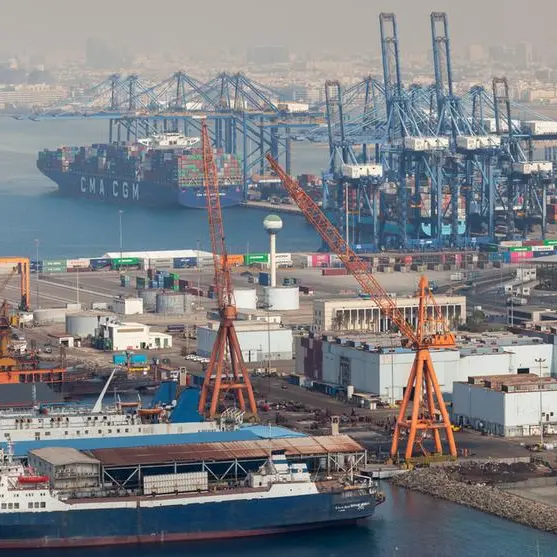
De-emphasise low cost expatriate labour and build a local, skilled labour force through good education systems.* Diversify the economy to encourage entrepre-neurship and a greater role for the private sector through improved access to trade financing.* Build infrastructure - roads, ports, airports, storage and handling facilities.* Eliminate government monopolies.
Governance* Promote respect for the rule of law.* Enhance transparency on economic data and policy-making procedures.* Address corruption and favouritism.* Drive private-public partnerships.* Enhance accountability.* Allow full protection for foreign investments and property rights.* Improve the quality of the public sector.* Strengthen legal mechanisms for commercial arbitration and dispute settlement. * Strengthen the Arab judicial system, including its independence and efficiency.
Human Resource Development* Improve educational systems and align them with the needs of national, regional and, indeed, global markets.* Focus on vocational and technical training in line with the needs of industry.* Improve productivity at the macro and micro levels.* Enhance Research & Development efforts.* Encourage women's empowerment.
The executive committee of the ABC has Mohammed Ali Alabbar from the UAE; Nasser R. Chammaa from Lebanon; Amr A. Al Dabbagh of Saudi Arabia; Ibrahim S. Dabdoub of Kuwait; M. Shafik Gabr from Egypt; Fadi Ghandour of Jordan; Bassim Ja Hokimi of Morocco; and Lubna S. Olayan of Saudi Arabia, as members.
Frederic Sicre, managing director of the World Economic Forum, said: "The ABC aspires to create a systemic, structured and collective effort in the region towards expanding, enriching and building upon the unique legacy of the Arab world.
"The objective of the Council is to gear up the region to rise to the challenge of being at the forefront of contributing to progress and civilisation."
Gulf News