Oil mark at $60
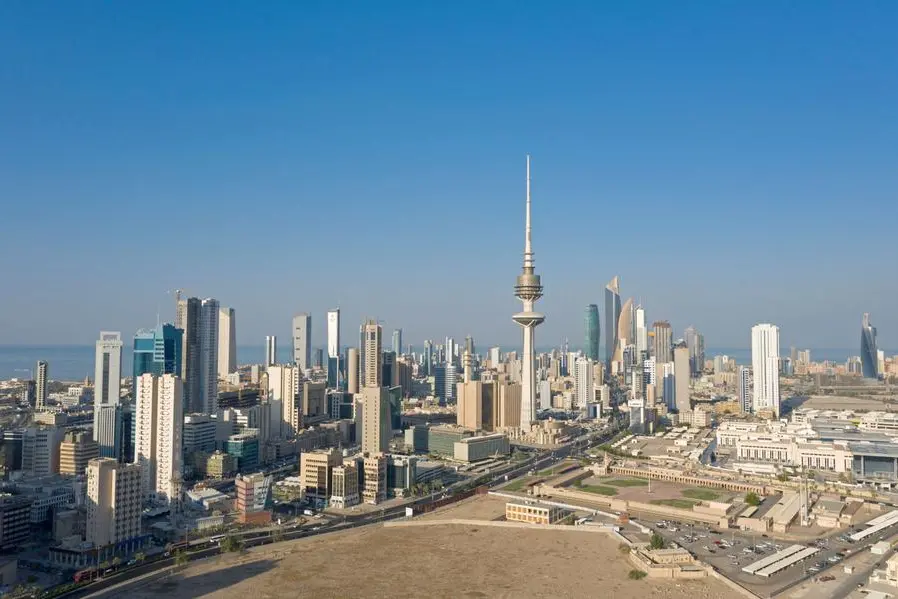
KUWAIT CITY, June 29: Kuwait's parliament on Wednesday passed a deficit budget for the 2011-2012 fiscal year projecting the highest spending in the country's history amid warnings the country's future is at risk.
Thirty-nine MPs voted for the budget while 20 were opposed.
Spending is projected at 19.44 billion dinars ($70.7 billion), an 11-percent rise from the previous budget, mostly to meet a string of pay hikes and grants for Kuwaitis, lawmakers said.
The previous largest spending was 18.7 billion dinars in 2008-2009 when oil prices hit an all-time record above $147 a barrel. That budget included a one-off payment of 5.5 billion dinars for the pension agency.
Revenues are estimated at 13.45 billion dinars, more than 90 percent from oil, a sharp 38 percent increase from last fiscal year after raising the oil price in the budget from $43 to $60 dollars a barrel.
That leaves a deficit of 6.0 billion dinars, but Kuwait has projected a deficit in the past 12 fiscal years and ended up in surplus mainly for underestimating oil income.
During that period, Kuwait has accumulated about $200 billion in budget surpluses and is also expected to end up the current year in the black if oil prices remain high.
Kuwait's fiscal year starts on April 1 and ends on March 31.
But MPs issued a stern warning to the government that spending, which has more that tripled in the past six years, must be curtailed otherwise the country risks withdrawing from assets to pay wages.
Head of the parliamentary budgets committee MP Adnan Abdulsamad described the budget as "crazy" and said the price for oil needed to balance the budget is $85-90 a barrel.
"Ten years ago, we needed oil price to be at $18 a barrel to balance the budget, but now if oil slips below $85-90, we will be forced to withdraw from the assets to pay for wages," Abdulsamad told parliament.
The price of Kuwaiti oil dropped below $100 dollars on Tuesday.
MP Adel al-Saraawi, a member of the budgets panel, said 90 percent of the budget is allocated for subsidies, especially power, and wages.
Kuwait adopts a cradle-to-grave welfare policy where a majority of citizens are employed by the government, receive handsome salaries, pay no taxes and receive services at low charges or free.
Liberal MP Abdulrahman Al-Anjari said the country still almost totally depends on oil income.
"The title of this budget is 'a nation at risk'... the sharp increase in spending is very alarming," he said.
"The government says it wants to transform Kuwait into a trade and financial hub. This is the biggest joke I have ever heard."
State Minister for Cabinet Affairs Ali Al-Rashed said the blame for high spending should be shared by the government and MPs who have passed populist legislation to raise salaries and benefits.
Under Kuwaiti law, 10 percent of revenues are deducted every year in favour of the emirate's sovereign wealth fund, the assets of which are estimated at about $300 billion.
Returns on the fund are not included in the budget.
Kuwait says it holds 10 percent of global crude reserves and is pumping about 2.6 million barrels per day.
"A budget that high ... leads to creating a time bomb in ... the economy. All what we do is sell oil, then reap and distribute the harvest," said Jassim Al-Saadoun, chairman of Kuwait's Alshall economic consultancy.
"We are at (an oil price of) $85 to $90 per barrel to maintain the equilibrium of the state budget. When oil prices fall, will we consume all our reserves and then beg?"
In a dramatic end to a turbulent legislative period the National Assembly on Wednesday concluded its third regular round of the 13th legislative term amidst shouts of condemnation by opposition MPs.
MPs Waleed Al-Tabtabaei, Daifallah Buramiya, Musallam Al-Barrak, Khaled Al-Tahous and Salem al-Namlan walked out of Abdullah Al-Salem Hall as Speaker of Parliament, Jassem Al-Khorafi, gave his closing speech. They protested the speaker's refusal to discuss and vote on Buramiya's renewal of the loan interest cancellation bill as well as bill pertaining to military officer bonuses.
Nevertheless, Al-Khorafi ended the final session and said that the legislative authority will resume its sessions on Tuesday Oct 25, 2011. The speaker addressed the members of parliament and said that the assembly has created 22 investigative committees and received nine grilling requests, four of which were against His Highness the Prime Minister; however, the parliament has approved 27 vital laws that have contributed to solving a number of issues during this legislative round.
Al-Khorafi added that members of parliament have presented 117 proposed laws and the government has drafted 42 laws all of which were discussed in the parliament. He further stated that the assembly debated a total of 662 parliamentary queries, 385 of which were answered by cabinet ministers.
Al-Khorafi said the assembly has noticed the lack of commitment by the government in answering parliamentary questions during this legislative round. The assembly hopes that the Cabinet becomes committed to give quality answers in the future within the legal period, Al-Khorafi stated. He added that government should not deal with the parliament using political tactics, but support the use of parliamentary supervisory tools provided that they are practiced as per the Constitution.
Al-Khorafi said that he regrets the incidents where excesses and misuse of supervisory tools were witnessed, adding that His Highness the Amir Sheikh Sabah Al-Ahmed Al-Jaber Al-Sabah, in his most recent speech, had also expressed his and the Kuwaiti people's concern about these incidents as they hinder the country's path to democracy.
The speaker concluded that democracy is the best solution for stability, progress and development. He said that all parties must work within the democratic framework with mutual respect in order to maintain national interests and overcome differences. Al-Khorafi hoped that the next parliamentary period will witness better democratic practices in order to regain the Kuwaiti people's confidence in the national democracy.
His Highness the Prime Minister, Sheikh Nasser Al-Mohammed Al-Sabah, also addressed the final session and praised the cooperation between the legislative and executive authorities. He said that this legislative period has witnessed a number of achievements in spite of heated debates, deliberations and discussions. The PM promised he will work with his Cabinet on a different approach and sincerely work on defending public freedoms, interest and fund in order to meet the Kuwaiti people's aspirations.
Meanwhile, the government has instructed Minister of Oil and State Minister for National Assembly Affairs Mohammad Al-Busairi to form a fact-finding committee to look into the $800 million contract with Shell, says State Minister for Cabinet Affairs Ali Al-Rashed.
Al-Rashed stressed the government deals with grilling requests according to the Constitution and the law, stressing the authority is open to constructive criticisms. He hopes the next legislative term will usher in a new era of cooperation and achievement. He said it is now time for the concerned authorities to get their acts together in the interest of the citizens, who have been clamoring for development for several years.
Meanwhile, Al-Busairi called on the executive and legislative authorities to learn from the negative and positive developments in the just-concluded legislative round to have a good start in the next round.
Speaking to reporters after the final session of the Parliament for the third round of the 13th legislative term, Al-Busairi stressed, "We experienced a number of difficulties in this round because the supervisory role took precedence over the legislative role. Some bills like the development and annual plans are beneficial but they were not discussed in the previous sessions, although the government marked them urgent."
Asked about the alleged plan of some lawmakers to submit two grilling requests against the premier at the beginning of the next round, Al-Busairi said, "We hope to start the next round in a calm manner with a commitment by the two authorities to work together harmoniously in the interest of the nation."
Al-Busairi pointed out the government is not worried about the big number of interpellation motions but they should be carried out in accordance with the Constitution and the law, not for personal reasons. He said the government is ready to face the inquests provide they are within the constitutional and legal frameworks.
Commenting on speculations that some MPs intend to grill him on issues related to the oil sector, Al-Busairi affirmed his willingness to cooperate with the lawmakers. He reiterated his promise to implement the 26 recommendations of the Budget and Final Audit Committee on the budget of Kuwait Petroleum Corporation (KPC) and its subidiaries. He said the MPs should evaluate his performance a year after approval of the budget.
In another development, a source quoted Al-Rashed as confirming the appointment of Abdul-Wahab Al-Haroun, brother of former Commerce and Industry Minister Ahmed Al-Haroun, as State Minister for Development and Planning in place of former Deputy Premier for Economic Affairs and State Minister for Housing and Development Affairs Sheikh Ahmad Fahd, who resigned earlier this month.
Moreover, Minister of Awqaf and Islamic Affairs Mohammad Al-Numas reportedly took oath in front of HH the Amir Sheikh Sabah Al-Ahmad Al-Sabah as State Minister for Housing Affairs.
In the meantime, MP Dr Maasouma Al-Mubarak, in an attempt to calm the angry teachers who shouted at her and other lawmakers after failing to pass the salary increment draft bill in Tuesday's session, clarified that teaching was her first profession, so she did not hesitate in supporting the bill in its first and second reading. She also signed a request to table the bill for discussion when the government returned it to the Parliament. However, she abstained from voting on Tuesday because she believes the teachers deserve all kinds of support. She also realized the vast difference between the Ministry of Education teachers and those at the Ministry of Awqaf in terms of work load and work hours; hence, they should not be treated equally when it comes to privileges and allowances as stipulated in the bill.
She argued the Ministry of Education teachers, who work from 7:00 am to 1:00 pm or longer, should receive the same privileges given to their counterparts in the Ministry of Awqaf, considering the latter work only for three to four hours.
"I have no intention to belittle the efforts of the Awqaf Ministry teachers but we have to take this fact into consideration. I fully support the proposed special bonus for the teachers, provided it is linked with their work load and performance. I believe it is unjust to grant the same amount to the teachers, so I abstained from voting," Al-Mubarak explained.
On the students allowance bill, Al-Mubarak said she prefers the proposal of the minister education to grant KD 350 to those who are married and KD 100 to the bachelors, as well as additional privileges for those pursuing rare fields of specialization and those with outstanding academic performance.
© Arab Times 2011