The population of Saudi Arabia is its government's greatest headache and also its greatest opportunity. It is also a subject of great debate. Here is a comprehensive look at what the fuss is all about.
The Saudi population is the subject of much debate - and rightly so. It is Saudi authorities' greatest headache and also its greatest opportunity. While the Saudi population is making demands - economic and now increasingly political - on the Saudi authorities, it has also turned the Kingdom into a veritable oasis of opportunities and economic riches.
All eyes are on the Kingdom's monarchy as to how it will harness its population and whether it will live up to its potential of being the world's sixth largest economy by 2050, as Citibank has predicted in a recent report.
Saudi American Bank (SAMBA) expects the Saudi population to rise to 29.7 million by 2013, compared to its 26.2 million in 2009.
With an increase in the domestic population of almost 450,000 annually and the creation of more than 200,000 new households every year over the coming decade, tremendous opportunities will be created for patient investors, although the planning and development challenges for policy makers look to be immense, notes Jeddah-based National Commercial Bank Capital (NCBC) in a recent report on the Kingdom.
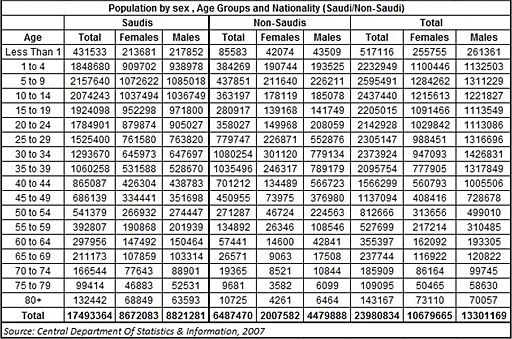
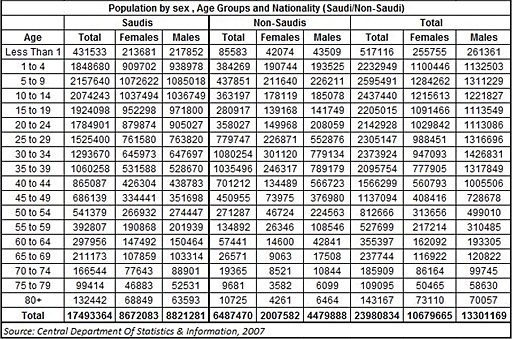
In many ways Saudi Arabia is different from other Gulf countries as it has a population larger than the other five Gulf states combined and the only country in the six-state bloc where nationals make up a majority of the population.
KSA also has one of the youngest populations globally, with 66% of Saudis under the age of 30, with average household of 5.9 people in 2010.
"The average household size has been declining over the past decade and is expected to continue declining in the future. The combination of population growth and a declining average household size is expected to result in the number of households increasing faster than population growth," writes NCBC, estimating the number of households will grow from 4.6 million in 2010 to 7 million in 2020, indicating that 2.4 million new households are expected to be created over the next 10 years.
But this scorching population growth is tapering off which should ease some pressure on the Saudi authorities.
"Lower population growth suggests that the bulge in new labour market participants will lessen in 15-20 years," notes Riyadh-based Jadwa Investment.
"In absolute terms the number of new entrants to the labour force will remain high, with the national population currently growing by almost 400,000 per year, but they will decline as a proportion of the total labour force."
Clearly, getting a handle on population numbers is important for Saudi authorities, planners and the companies that are eyeing investments and business in the country and managing these demographics is what is keeping Saudi authorities awake at night.
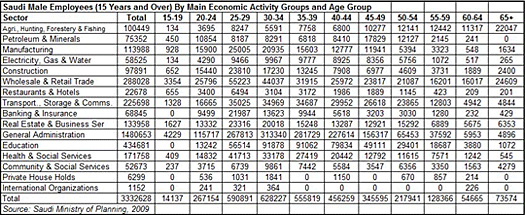
The International Monetary Fund (IMF) notes that providing jobs for a fast growing population through high and sustainable growth in the non-oil sector is the main medium-term challenge: "Achieving this goal will involve a multifaceted approach with structural reforms in various sectors of the economy, including the labour market, continued progress with education reform, training, and improving the business climate."
It is important to note that not everybody is 100% in agreement with some of the figures presented by the Saudi Arabian Central Department of Information and Statistics.
Jadwa Investments, for example, thinks that the census has underestimated the population of non-Saudis, and estimates it to make up 31% of the population, compared to 27% estimated by the Saudi statistics department.
"The jump in the number of expatriates is well above that which had been estimated by the Central Department of Statistics and Information," Jadwa notes.
"Its mid-2009 estimate of 6.8 million was based on an assumed gradual fall in the annual rate of growth of the number of expatriates since the 2004 census, from 2.5 percent to 2.1 percent. Instead, the expatriate population grew by an annual average of 5.4 percent since 2004."
Equally important, Saudi death rates are falling as better the Saudi population has better standards of living and access to better healthcare, as doctor-to-population ratio has risen from 15.7 per 10,000 population in 1999 to 21.5 in 2009.
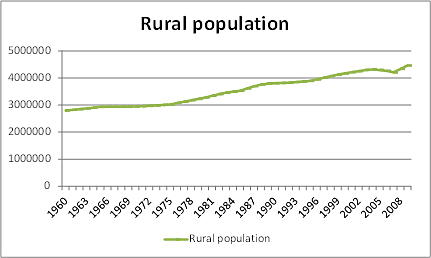
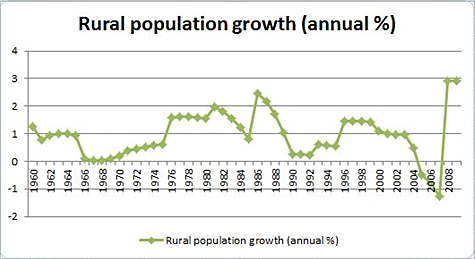
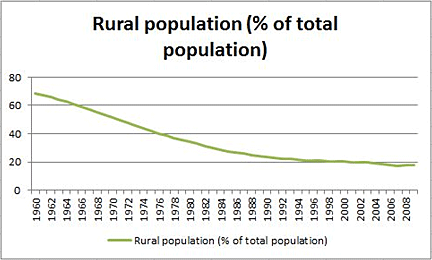
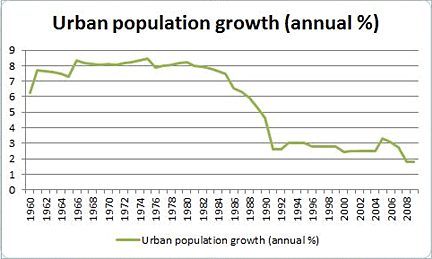
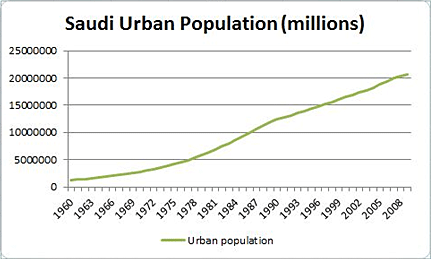
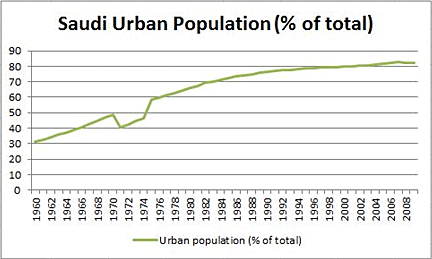
Another key aspect is the rise of urban living. Saudi populations have been moving away from rural areas and virtually shifting lock, stock to the key cities of Riyadh, Jeddah, Eastern province and the holy cities.
The capital city of Riyadh has a population of 5.9 million, or virtually a quarter of the 23.9 million population according to the census. Similarly, Makkah region (which includes Jeddah) has a population of six million, or another quarter of the population. Including the Eastern region, 64% of the population lives in these key centres, adding significant infrastructure pressures on these cities.
The Kingdom had hoped to solve this problem with its four industrial cities - king Abdullah Economic City, Jazan Economic City, Knowledge Economic City and Prince Abdullah Economic City - which are away from the traditional city centres.
However, shockingly, the Saudi Arabian General Investment Authority (Sagia) Amr Al-Dabbagh recently admitted at the recently concluded Jeddah Economic Forum that the authorities may not have picked the right locations.
"Currently issues of contracting and construction are being handled by the Engineering Society of Saudi Arabia but in the past there has been noticed some mistakes in selecting locations for the economic cities," the SAGIA chief said.
With such a public admission, it is unlikely that new 'City' projects or major development will be built away from the traditional centres of Riyadh, Jeddah, Khobar, Dammam or the holy cities rather than the vast desert terrains of the country.
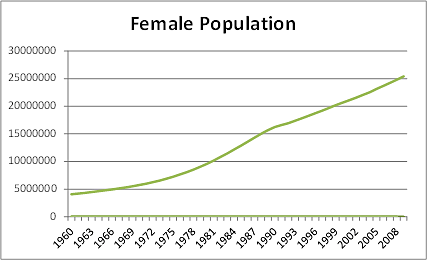
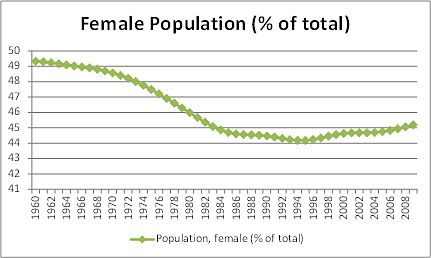
The slew of charts below reveal the clear demographic explosion of rising income, a young restless population and a government opening its coffers to unleash a development bonanza that will lead to economic opportunities not only in real estate but also power, infrastructure, construction and business services.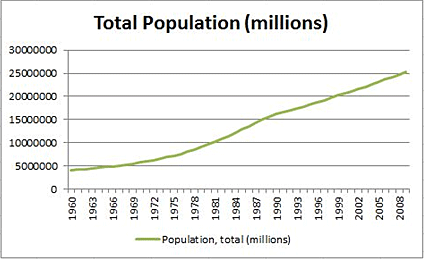
Source: Central Department Of Statistics & Information, 2009
BIRTH & DEATH RATES 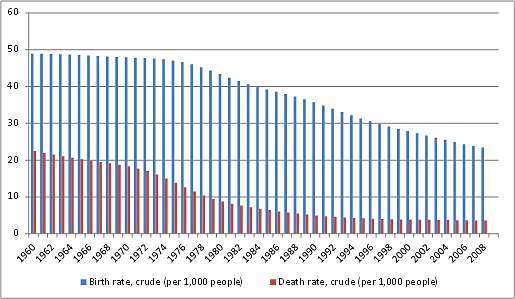
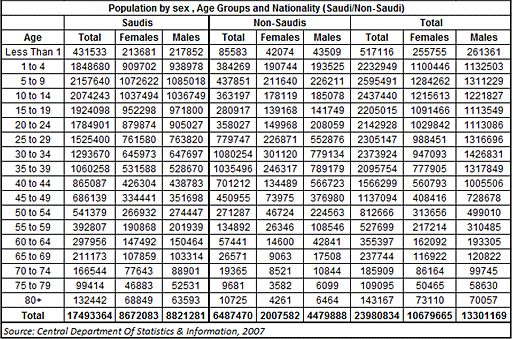
POPULATION BREAKDOWN
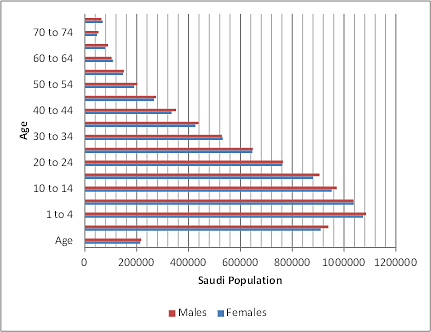
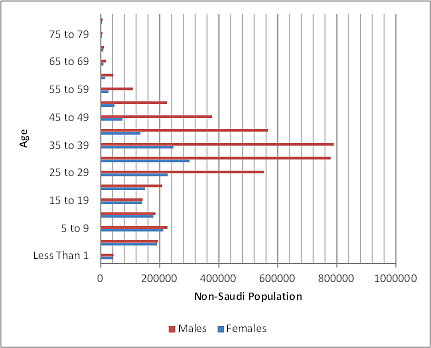
LIFE EXPECTANCY- RISING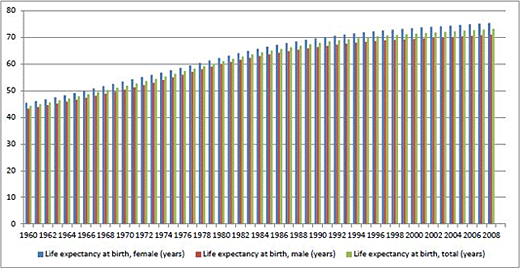
SAUDI FEMALE POPULATION
SAUDI RURAL POPULATION
© alifarabia.com 2011