Thursday, Nov 10, 2011
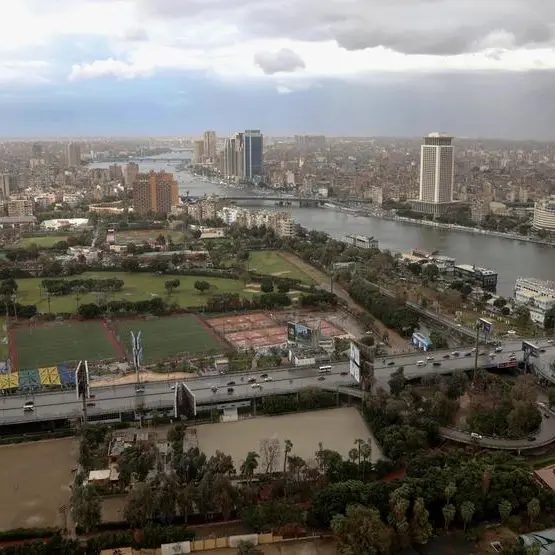
CAIRO (Zawya Dow Jones)--Commercial International Bank (COMI.CI), Egypt's largest listed bank, said it will refrain from purchasing more government securities for the time being, adding that the government has relied too heavily on domestic banks to plug its budget deficit.
CIB chairman and managing director Hisham Ezz Al-Arab said the Egyptian government needs to find a way to encourage foreign investors to resume purchases of its treasury bills and bonds, having turned to domestic institutions since overseas confidence in Egypt was dented by the turbulent aftermath of the toppling of former President Hosni Mubarak in February.
"Domestic banks funding the government is just a temporary phenomenon," Al-Arab told Zawya Dow Jones in a recent interview. "The Ministry of Finance knows it cannot push the domestic market much more, but there is ample amount of capacity in the foreign market," he added.
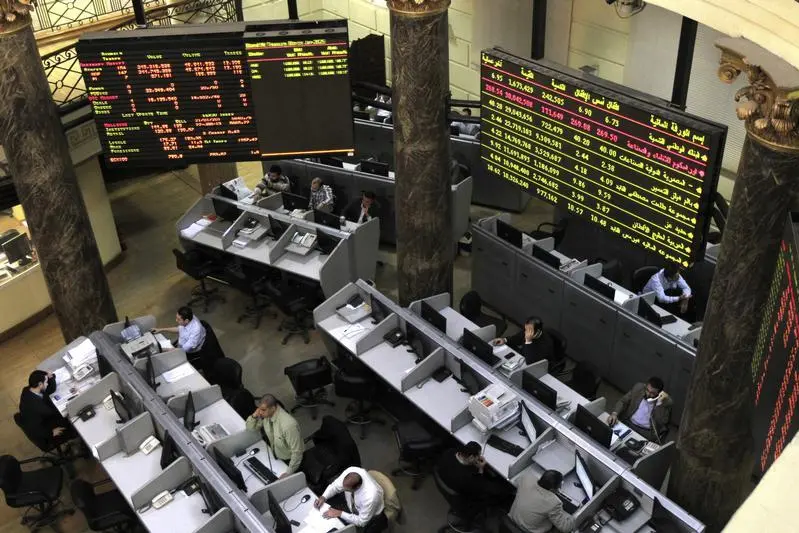
Foreign purchases of Egyptian treasury bills and bonds have plunged this year, leading to sharply higher yields on government debt issues. Meanwhile, the Egyptian stock market is down 38% so far this year, as foreign capital has left Egypt.
Treasury bills held by foreigners fell to only $2.8 billion in August, down 70% from the level in January when the revolution began, while yields have risen from 11 per cent to over 13 per cent, according to central bank data. Net domestic debt, which includes all types of bonds and treasury bills, stood at $153.6 billion at the end of June, up from $130.5 billion at the end of June last year.
Though Egyptian banks have stepped in to fill the gap of a budget deficit equivalent to about 9% of gross domestic product, there are growing questions as to how sustainable the trend is, with increasing pressure on domestic banks as foreign investors stay clear.
Reflecting the drop in foreign investment, Egypt's net international reserves have plunged to $22,1 billion at the end of October, from $36 billion in December 2010.
Al-Arab said that CIB sets a limit on the amount of government securities it holds, which fluctuates according to movements in the yields. "We won't be buying and the decrease [in treasury bill purchases] is because domestic banks shouldn't be financing the budget deficit," Al-Arab said, without specifying a time-scale for how long the bank will stop buying securities.
A CIB spokesman confirmed that the bank won't increase its exposure to Egyptian sovereign risk, though he would not rule out rolling over its existing securities holdings when they mature.
Last week, Moody's Investor Service downgraded CIB and four other large Egyptian banks, citing their high exposure to government securities. The rating agency said the exposure poses greater risks for the banks because of Egypt's deteriorating economic situation.
However, CIB retained a higher rating than the other affected Egyptian banks because its relative exposure to government securities is lower at about 100% of equity, Moody's said. "In the first half of 2011, CIB decreased its exposure to government T-bills and increased its interbank lending to foreign banks, making it less vulnerable to domestic banking-system credit risks," Moody's said in its statement.
The state-owned National Bank of Egypt, Banque Misr and Banque du Caire hold government securities equivalent to between four and seven times their equity bases, Moody's said.
In the interview, Al-Arab criticized Moody's for its downgrade of Egyptian banks, saying they compare favorably with many international counterparts. Capital adequacy levels among Egyptian banks are relatively high at about 13%, while loan to deposit ratios are relatively low at around 50%, Al-Arab said.
-By Farah Halime; contributing to Dow Jones Newswires; Fhalime@gmail.com
Copyright (c) 2011 Dow Jones & Co.
(END) Dow Jones Newswires
10-11-11 0551GMT