Wednesday, Oct 27, 2010
Gulf News
Its not enough just to hire professional talent with the high cost of recruiting workers, keeping them happy is equally important.
Dubai During good times and bad, retaining talented staff is just as important for a business as keeping an eye on costs and delivering an optimum level of service. This is true for any business regardless of size and the nature of the industry it is in.
But it could be argued that the stakes are much higher for a small business operator when it comes to retaining talented people. This requires that they offer incentives to ensure these employees stay with them.
Gradually, in an increasingly competitive labour market, employers in the UAE are realising the benefits of incentive schemes as a means of retaining and motivating staff.
One of the things companies needed to do during the downturn is focus their attention on their key talent pool and lock them in for the longer term, said Alasdair Walls, managing consultant at Hay Group.
Its that sort of high-performing individual that is going to lead the business and support growth.
These schemes have become an established component among a wide spectrum of companies from the large conglomerates to smaller privately owned enterprises. They find the need to offer remunerations and incentives comparable to those offered elsewhere when competing for executive talent.
The prevalence of long-term incentives is a concept that is still in its infancy in the UAE, but is growing in terms of relevance. According to Walls, roughly 18 to 20 per cent of companies in the country operate some form of long-term incentive scheme.
It has been a hot topic across the Gulf in the last two years, he said. Weve seen a huge amount of activity across Dubai; one of the key drivers has been the very recent introduction of banking regulations.
When we step outside the Gulf and look at Western markets, the banking sector has always been a driver of paid trends across general industry. So we expect the same to happen here in the Gulf. Right now we are seeing that theres greater interest in deferred bonus.
Regulations
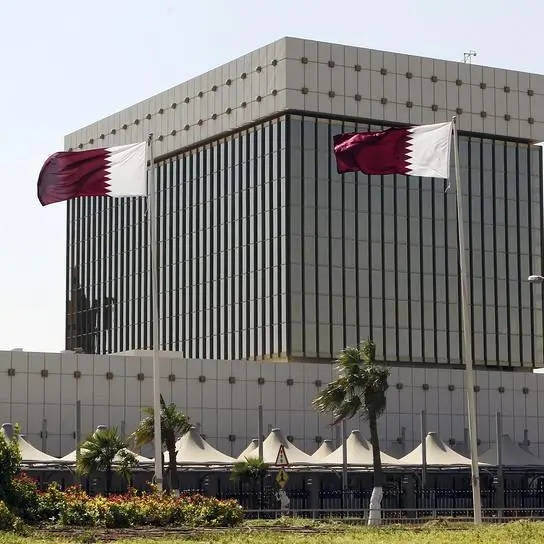
Recently, the Saudi Arabian Monetary Agency (Sama) released regulations on executive and long-term pay, while the Qatar Central Bank recently issued a draft circular that stated their intention of releasing a similar set of regulations.
Internationally, the majority of companies use employee-owned stock option plans where they are granted options to acquire shares at a price determined at the time the option is granted. However, due to ownership restrictions in the UAE including the limit of 50 shareholders in a limited liability company local business are finding alternatives.
Encouraging employees to think like owners can be achieved in a number of ways even given the implications of ownership restrictions in the UAE, said Walls. There is still a cultural focus on dividends as a key indicator of value creation so the use of profit-sharing can be an effective way of encouraging employees to focus on the bottomline.
In the UAE, phantom stock options are common. These are plans that promise to pay cash bonuses measured by reference to the value of a companys shares or the increase in such value over time.
One of the advantages to this is the flexibility as they are simply a contractual arrangement between the company and the employee.
Other alternatives are cash incentives such as cash bonuses which works in exactly the same way as an annual bonus does. But the former is based on performance and conducted over a long period of time.
Incentive plans can be tailored to suit any type of business structure.
To narrow down on the format of the plan, companies need to take a step back and see what they are trying to achieve through employee ownership.
One of the typical reasons would be how businesses like to promote longer term decision making by encouraging employees to think like owners and behave like owners, said Walls.
Business needs
When setting up an incentive scheme the type of business needs to be considered. At the simplest level, when setting up a long-term cash plan as a performance and retention tool, all listed companies in the UAE have to have a remuneration committee. In the context of a listed entity, the best international practice would be for a company to consult shareholders of their intentions in setting up an incentive plan.
While the GCC is not at that stage, there are certain regulations around the use of equity whereby the company would need to seek shareholder approval at an annual general meeting. However, those regulations differ across the Gulf in terms of how you are able to use equity and who can participate in the plan.
Companies need to look at their executive population and their high-potential population, identify exactly what their business contribution should be and then help them identify how theyre rewarded for that contribution, said Walls.
Its an issue a lot of companies are battling through at the moment.
Its important that companies do not rush into something for the sake of it. They need to go about it in a way that takes account of the strategic direction, culture and operating model of the organisation.
Theres a lot regional companies can learn from best practices around the world, but they need to be aware that there are a lot of differences between the international markets and the regional ones. Reward models that work somewhere else need to be adapted before they can suit the local market.
Theres a lot of value in identifying how the best practices in some of those companies pertain to the companies in the region here, and that varies by company to company, said Walls.
A very important point to make is there is no one-size-fits-all. Its very important to customise long-term incentives.
top five tips
1. Stakeholder management is a key element throughout the design process. Ensure inputs from key individuals are sought and stakeholders are consulted.
2. Make sure the solution that is developed is a win-win for both shareholders and participants.
3. Take account of the business strategy and future direction of the company in terms of strategic intent, organisation design and operational framework to ensure the design is tailored and customised to the specific strategic needs of the business.
4. Make sure the performance measures selected are robust and targets associated with each of those are challenging, but realistically achievable. This way you can ensure the perceived value of the plan is meaningful and that youre not just giving away a free reward.
5. Communication to the participants of the scheme is very important so they understand exactly what is expected of them and how they will be rewarded. The best plans can be designed but if its not embedded properly in the organisation, it doesnt reap the full benefit.
By Aya Lowe, Staff Reporter
Gulf News 2010. All rights reserved.