DUBAI: Standard Chartered Bank sees 2012 as a year of a two-speed global economy. The Bank also sees a slowing global economy in 2012, with a fragile West and a resilient Asia, Africa, Middle East and Latin America.
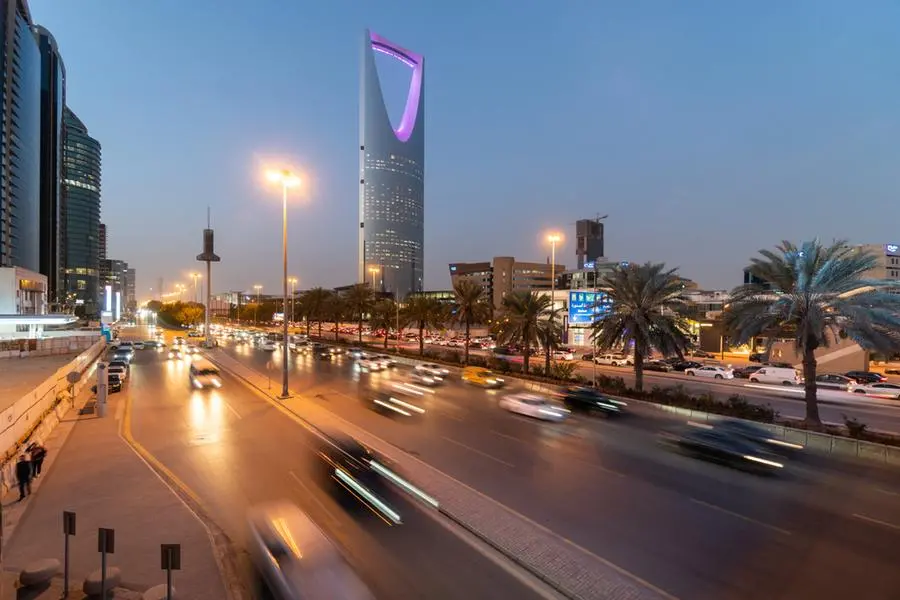
The Middle East and North Africa (MENA) is as economically diverse as a region could be, with the oil-rich Gulf Cooperation Council (GCC) countries facing very different economic dynamics than countries without rich resource endowments, said the Bank in its annual report Global Focus. "The region is also relatively open and is therefore subject, to varying degrees, to global economic trends. But it is local factors that will ultimately determine economic performance in 2012," it said. "The economic and market implications of Europes debt problems bring back memories of 2009. However, parts of MENA are in a significantly stronger position now. This is particularly true for the GCC economies, which we expect to show resilience, with growth decelerating only moderately in 2012. Asset bubbles in the GCC have already burst, and unsustainable credit booms are long over. Base effects have become more favorable. Tight credit conditions are set to persist, with Saudi Arabia perhaps being the main exception. While tighter credit will not help growth, it will not be as big a drag as it was in 2009, when credit growth in the region went from an uncontrollable pace to a complete halt," Marios Maratheftis, Head of Research, Europe, Middle East, Africa and Americas, Standard Chartered said "We expect oil prices to remain elevated in 2012. This bodes well for the government finances of oil-exporting countries, and it should enable counter-cyclical fiscal responses. Fiscal policy in Saudi Arabia is already on an expansionary trajectory and should continue to drive growth in 2012," the report added. The world economy grew strongly in 2010, expanding 4.3%, before cooling in 2011, when it grew by around 3.0%. In 2012, Standard Chartered expects a significant slowdown in the first half of the year because of the crisis in the West, slowing global growth to 2.2% for the full-year. Gerard Lyons, Chief Economist and Group Head of Global Research, said: "This points to the continuation of a two-speed world where a fragile West contrasts with a resilient East. It is a divided and disconnected world economy facing major policy dilemmas. Yet, no region is fully decoupled from events elsewhere. During the first half of 2012, problems in Europe and the West will weigh on global growth. By the second half, stronger growth across China and other emerging economies should pull up worldwide activity. It will be a recovery made in the East and felt in the West. If ever one needed to illustrate the shift in the balance of power, this is it."The Bank forecasts that Asias gross domestic product (GDP) growth will slow to a still-robust 6.5% in 2012 from 7.3% in 2011. China is expected to cool significantly in the first few months of 2012 before rebounding, helped by a major policy boost. As a result, Chinas growth will decelerate from 9.2% to 8.1% in 2012. Growth in India, Asias third-largest economy, is expected to accelerate mildly to 7.4% in the fiscal year starting 1 April, 2012, from 7.0% in 2011. Indonesia, South East Asias largest economy, is forecast to slow to 5.8% from 6.5%. There are significant underlying growth drivers across the emerging world, including a rapidly expanding middle class, rising infrastructure investment and growing business ties along the `New Trade Corridors linking Asia, Africa, the Middle East and Latin America. These factors are likely to become more pronounced as Europe contracts and US consumers deleverage. The Bank sees similar resilience in Africa, where growth in the two largest economies South Africa and Nigeria is likely to slow marginally to 3.1% and 6.9%, respectively, in 2012, from 3.2% and 7.2% this year. In Latin America, Brazils growth is likely to slow to 2.5% from 3.0%. Differentiation remains the key issue in the Middle East, where the resource-rich economies are expected to show resilience, with growth decelerating only moderately in 2012. Asset bubbles in the region have already burst and unsustainable credit booms are long over, providing a stable base for growth. Elevated oil prices bode well for government finances, enabling authorities to adopt counter-cyclical fiscal policies to stimulate growth as the West decelerates. Lyons says, "The outlook depends on the interaction between the fundamentals, policy and confidence. The policy challenges will be very apparent in 2012. Emerging economies will use fiscal and monetary policy to boost growth in the first half of the year. But, by the second half of the year, the combination of further quantitative easing in the West and firm commodity prices may cause inflation risks to re-emerge during the latter part of the year. From an investment standpoint, this also raises the potential for a shift back towards macro-prudential measures, including stricter capital controls."For the foreign exchange markets, this points to a strengthening US dollar (USD) in the very near term as the US currency performs well in an environment of risk aversion. But on a multi-year basis, this implies a weakening USD, reflecting the significant debt overhang for the US economy and continued, gradual diversification away from the USD by governments and other international investors. The euro is also expected to weaken sharply in the first quarter of 2012 and enter a longer-term downtrend as the euro-area authorities fail to deliver a co-ordinated and credible strategy to solve the regions problems. The weaker longer-term outlook for the worlds two largest reserve currencies signals the continuation of the multi-year shift into emerging-market economies and currencies, reflecting both their rising role in the global economy and their significant role in global trade. The broader trend of investing in liquid, investment-grade emerging-market currencies is expected to continue. For commodity markets, although the fragile global backdrop may be similar to that at the start of 2009, tight supply in several raw materials as a result of the sharp drop in investment in new projects during the 2008 financial crisis is likely to put a firm floor under commodity prices, even if global demand declines significantly in the first quarter of 2012. Non-oil-producing countries, which are also dependent on net capital inflows, will face a more challenging 2012. Growth in Jordan and Egypt will be fragile, and both countries will need to attract foreign inflows to boost their reserves and fund their current account and fiscal deficits. Commenting on policies, Maratheftis said:"GCC countries have the fiscal space to shift to more expansionary policy. Policy in Saudi Arabia is already expansionary, and this is set to continue in 2012. We also anticipate higher spending in Qatar and, to some extent, Abu Dhabi. In Egypt and Jordan, fiscal headroom is limited and the focus will be on financing the funding gap rather than on growth"Monetary policy in the GCC will continue to be tied to US policy, as the regions currency pegs face no pressure for either revaluation or devaluation.Copyright Emirates News Agency (WAM) 2012.