GCC sovereign wealth funds (SWFs) hold 27 per cent of the market capitalisation of companies listed on the region's stock exchanges a stake valued at $300 billion (Dh1.1 trillion).
The Kuwait Financial Centre (Markaz) says in its report, "The Golden Portfolio", that 36 SWFs hold shares in 131 listed firms.
And experts say the funds' holdings in the region have risen recently. "SWFs are investing in the region because of the promising opportunities available here," Mary Nicola, an economist at Standard Chartered Bank, told Emirates Business. "The United States economy is falling into recession and the European economy is also not doing very well compared to the GCC economies, which are booming and expanding. SWFs have started investing in Malaysia, Thailand and North Africa - they are going to the better opportunities and economies."
Monica Malik, a senior economist at EFG Hermes, agreed that growing opportunities in the GCC market are attracting the funds.
"The GCC economy is booming and economic activities are also increasing," she said. "This is the reason that most GCC and international companies are setting up businesses in the region."
The report was prepared by Markaz's head of research MR Raghu and analyst Sarah Al Khaled. It says in addition to the large and most frequently mentioned names, such as the Abu Dhabi Investment Authority and Kuwait Investment Authority, the SWFs include a variety of government agencies that manage money either directly or indirectly.
The latter category includes pension funds, ministries and fully owned companies anything that is 100 per cent owned by a state can be classified as a SWF, say the authors. While collectively the holdings include 131 companies, the 25 biggest firms account for 90 per cent of the total. The authors call this the "golden portfolio" as it represents long-term strategic holdings by the most dominant category of institutional investor in the region - governments. The golden portfolio represents a "who's who" of the GCC's stock markets. Saudi Arabia leads the pack with eight companies followed by the UAE with seven. The constituent companies are mostly large caps and index heavyweights. The performance of the golden portfolio very closely mimics that of the general index, albeit with a very low tracking error.
SWFs have attracted much discussion lately because of their forays into international financial markets and global asset classes. However, their hold on the local stock markets has not attracted as much attention due to a lack of information.
The funds' holdings are mostly strategic in nature and are expected to remain long-term given the returns the companies have generated in the past. The stakes are in strategic sectors such a telecommunications, petrochemicals and banking.
Governments have always been dominant investors in this region and will continue to be so. The golden portfolio will be dynamic in nature as new players jostle out old ones for a position at the top. It could be interesting as well as rewarding to keep an eye on the portfolio's composition, say the authors.
Mammoth investment
Saudi Arabia
The Kingdom's five SWFs hold stakes in 27 companies and account for 36 per cent of market capitalisation worth $174bn (Dh639bn). The government is clearly the leader among Saudi SWFs with a mammoth share of nearly 80 per cent of the total holdings. Sabic and STC constitute the bulk of direct holdings by the government. However, GOSI has a reach in 14 listed Saudi stocks, accounting for seven per cent of the total. While the holdings are spread much more than those of the government, Samba and STC account for 40 per cent of total GOSI holdings. Public Investment Fund holds shares in nine companies with Samba accounting for 66 per cent of its total.
UAE
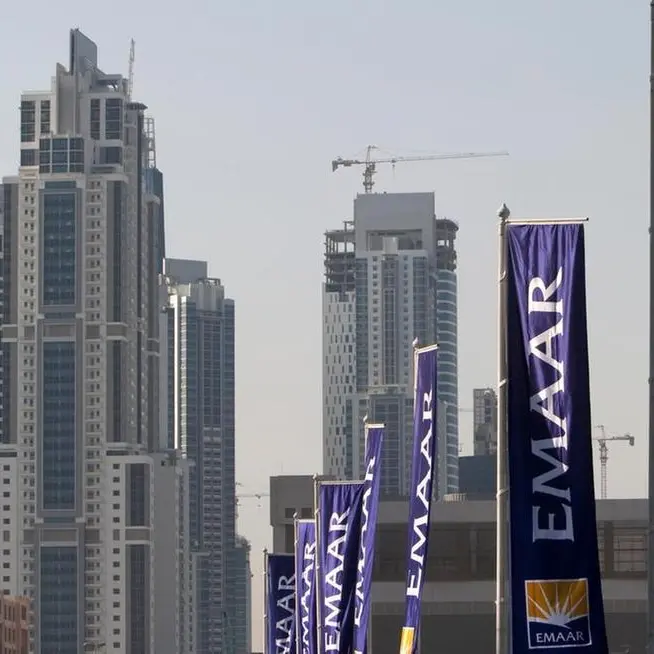
The seven SWFs in the country hold stakes in 27 UAE-listed stocks worth a total of $61bn. The Ministry of Finance and Industry is the country's top SWF thanks to its 60 per cent holding in etisalat. It is closely followed by the Investment Corporation of Dubai, which holds stakes in eight companies. The bulk of its holdings is in Emirates NBD where it holds a 56 per cent stake, followed by 32 per cent in Emaar Properties. The Abu Dhabi Investment Authority, one of the largest SWFs in the world, has insignificant direct exposure to local stocks but has substantial holdings through its 100 per cent owned subsidiary, the Abu Dhabi Investment Council. The latter holds stakes in nine UAE-listed stocks represented to a significant extent by its 73 per cent holding in the National Bank of Abu Dhabi and 65 per cent holding of the Abu Dhabi Commercial Bank. Other SWFs, such as Mubadala Development and the General Pension and the Social Security Authority, have insignificant local holdings.
Qatar
The five SWFs in Qatar have stakes in nine listed companies an investment total of $29bn that account for 21 per cent of the total market capitalisation. Qatar Petroleum emerges as the top SWF through its 70 per cent holding in Industries Qatar, valued at $16bn. This single investment accounts for more than 55 per cent of total investments by SWFs. The Qatar Investment Authority follows with inputs worth $10bn across three companies. Its 50 per cent stake in Qatar National Bank accounts for 62 per cent of its total investments. The Pension Authority has the highest reach in terms of number of companies five. The authority's major investment is in Qatar Telecom, accounting for 62 per cent of all its investments in listed Qatari stocks.
Kuwait
The hold of SWFs here appears the least significant as they have a 12 per cent grip on the stock market. The total investments by SWFs amount to $25bn, mainly represented by the Kuwait Investment Authority (KIA). While KIA has invested in eight listed Kuwaiti companies its investment in Zain and Kuwait Finance House account for nearly 80 per cent of its total investments. PIFSS ranks as the fund with the greatest reach - it has stakes in 21 listed Kuwait companies, a total investment of $3.5bn. Its 15 per cent stake in Agility (previously PWC) counts as its largest investment followed by its 10 per cent stake in Alahli Bank of Kuwait.
Oman
There are nine SWFs in Oman with investments worth $6bn, accounting for 23 per cent of total market capitalisation. The government is the country's largest SWF with a share of 44 per cent and investment value of $2.6bn, all in one company - OmanTel. In terms of reach, the Civil Service Employees Pension Fund has stakes in 10 Omani-listed stocks. However, its share of the pie is nine per cent. Bank Muscat enjoys the support of six SWFs that together hold 33 per cent of its share capital.
Bahrain
The four SWFs in Bahrain have cumulatively invested $5bn, accounting for 18 per cent of total market capitalisation. The share of SWFs in market capitalisation is relatively low compared to other markets such as Saudi Arabia and the UAE. The largest SWF is Bahrain Mumtalakat Holding Co, which has a 45 per cent market share. This is closely followed by the Pension Fund Commission that has invested in 10 Bahrain-listed firms. PIIFS of Kuwait has a 20.5 per cent holding in Ahli United Bank. Batelco, Bahrain's telecoms major, is held by three SWFs to the tune of 55 per cent, making it the largest company in value terms. Bahrain Mumtalakat Holding Co has a 49 per cent stake in the National Bank of Bahrain valued at $1.7bn.
By Muna Ahmad
© Emirates Business 24/7 2008