The deadline for Saudi banks to spin off their different operations into standalone businesses is due at the end of this month. However, reaction to the regulatory changes is patchy. Are Saudi banks cutting off their noses to spite their faces and encouraging, rather than deterring foreign concession takers through their inactivity? John Foster investigates
Time waits for no man' as the saying goes, and the sand is rapidly draining out of the hourglass that is governing the biggest thing that has happened in Saudi banking since the nation was formed. The Saudi banking industry is having its own 'big bang' and all the banks operating in the Kingdom have to have spun off their various operations into different disciplines, such as investment banking, commercial banking and brokerage services by 1 July.
One month and counting, and the fact that the entire Saudi banking system is going to be overhauled is not even causing a flutter of attention. 30 days to go, and what is the stage of play and why has the Saudi banking regulator decided to do this?
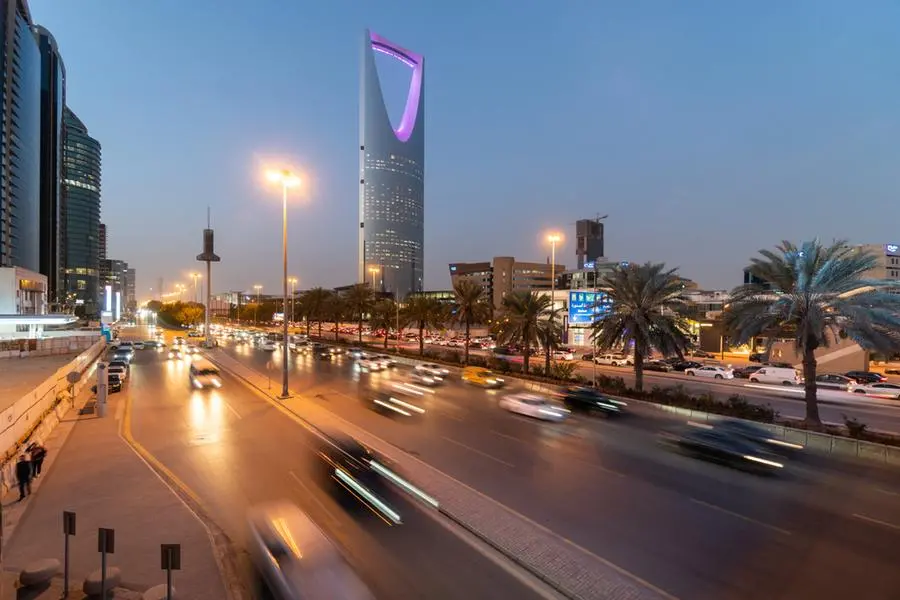
Saudi Arabia is something of a 'forbidden kingdom.' It is hard to access, not easy to do business with, restricted, and some would say paranoid, but it has great wealth, the only significant population base in the Middle East, has masses of oil reserves and is the Arab superpower. Everyone wants to go and do business there, but find hurdles and obstacles strewn in their path.
Once access is granted and a strong local partnership has been formed, the actual business of doing business in Saudi Arabia is very professional, but the bar for entry level is set very high.
Saudi Arabia is a developing economy, and like many developing economies is wary of allowing foreign companies in, for fear that they might pillage local business, which in turn would have a knock on effect upon the employment level of indigenous workers. Saudi Arabia is also the leader of the world's Muslim community, being guardian of the two holiest shrines of Islam, Mecca and Medina.
As custodian of Islamic values, every part of life in Saudi is affected by Islam and this includes the economy. The implementation of western business values and cultural mores is a very difficult subject for the Saudi government.
However for Saudi Arabia's economy and banking system, it must innovate or die. But in a conservative place like Saudi Arabia, innovation is viewed with suspicion. Any time one does something slightly new; the world in small or large measure is on the case. So it is important to believe in what you are doing enough to be able to withstand the heat and keep on trucking.
That is why the Saudi Arabian Monetary Agency (SAMA) and Saudi Capital Markets Authority (CMA) should be warmly congratulated. Saudi Arabia did not have to open its doors up for business. It is the largest Arab market and because of its strategic position in terms of the distribution of hydrocarbons and the sites of Islam, people have to come to it, it does not have to take its begging bowl to the world.
However, it has decided to open up one of its central industrial sectors, banking, and to do this has created a regulatory environment that is more attractive to foreign banks, and also given its own banks notice that they need to shape up.
SAMA is one of the most respected supervisors in the region. It has a strong history of supporting banks, and certainly has the ability and a strong propensity to maintain confidence in the banking system. Its contribution has been recognised internationally, and Fitch, the ratings agency, recently rated some of the local Saudi banks with its highest rating, because of the confidence it holds in SAMA.
Moves to open up the sector have gathered pace, with SAMA authorising more GCC and international banks to operate commercial branches. Ten licences have been issued to date, but only branches of Gulf International Bank, Emirates Bank International, National Bank of Kuwait, Deutsche Bank, BNP Paribas and Bank Muscat are fully operational.
However, these foreign banks focus largely on corporate and private banking and pose very little competition to the local banks, which have developed well-entrenched retail and corporate franchises.
There is a fear of foreign invasion by the Saudis and although they are liberalising, this is at a slow pace. Where in even the most fluid and freebasing economies of the region, such as the UAE, most of the companies and banks are purely or majority owned by the government, conservative Saudi Arabia is never going to open up its economy, fire-sale fashion, and will fight to protect it crown jewels, most notably oil and banking.
Saudi Arabia became a member of the World Trade Organisation (WTO) at the end of 2005 and has had to comply with all the necessities that came with that, namely the liberalisation of its economy and also the necessity to drop its embargo on economic activity with Israel, a fellow WTO member.
However, as always in the Kingdom, this is happening excruciatingly slowly. The path set out by the WTO has made Saudi Arabia think about the liberalisation and deregulation of its banking sector. This has been led by the CMA.
Under new proposals, the responsibility for licensing and regulating investment banking activities was transferred to the CMA. All commercial banks are now required to spin off their investment banking, brokerage and asset management divisions into separate legal entities by end of the second quarter. Saudi British Bank (SBB) was the first local bank to comply when HSBC Saudi Arabia, which is 60 per cent owned by HSBC and 40 per cent owned by SBB, was incorporated in late 2005.
The latest such joint venture is NCB Capital, owned by NCB and Goldman Sachs. The remaining commercial banks are in the process of setting up wholly owned investment banking and capital markets subsidiaries. Additionally, the CMA will issue licences to regional and global foreign investment banks to compete in this segment. It is believed that in total around 40 licences have been issued. This is likely to increase competition and local banks, despite their long experience and relationships, could see transactions and therefore revenues, lost to global banks with larger balance sheets and a wider product range.
The Saudi banking sector is the largest, most profitable and, arguably, the most stable in the GCC. It has only 11 local commercial banks, with 1,283 branches, and six branches of international banks. This is low by comparison with other markets in the region and for a market of this size. Saudi banks fall into three main categories: locally owned banks, joint venture banks and branches of foreign banks.
At the moment the balance of power is stacked in the favour of the local banks, but with the potential seismological changes that the CMA's proposals will bring, that balance of power might change as the external international or regional banks parachute legions of executives into the region to try and grab market share.
The reluctance to see this happen might be a part of the reason why so much is not happening in the Kingdom in terms of the spin-off proposals. Local banks might be thinking that they can withstand the foreign onslaught that is inevitable with all their ammunition in one place.
Colonisers have always wrested control from the indigenous people of a state subject to colonisation through a process of divide and rule. A handful of British soldiers and administrators would not have been able to control the sub-continent of India so comprehensively in the days of the Raj if all the peoples of India were unified under one powerful leader.
To the eyes of a local Saudi bank what the CMA is asking them to do is split off their separate businesses and divided they are open to the predations of foreigner invaders. This is why there might be some foot-dragging from the local banks as to complying with the CMA dictat.
It is unclear how many banks will hit the 1 July deadline, as they would not comment on the issue. One bank, however, who was happy to comment, was SBB. John Coverdale is the chief executive of SBB, one of the few Saudi banks that are well on the way to compliance with the CMA deadline.
He said, "We will hit the deadline, however there is a lot of regulatory work still to be done. We have already carved out an investment banking arm, ahead of the deadline. By 1 July we should have created a separate trading and broking business. Other banks have different degrees of preparedness."
Despite the lack of enthusiasm that the local banks have towards the whole issue of liberalisation and globalisation, the CMA and SAMA must push on. However, there is still a culture of mollycoddling toward local business, and it is not inconceivable that on 1 July, CMA will extend the deadline for the local players. It is also conceivable that late converters will receive no sanction and things will drag on.
Coverdale said, "We can but speculate, what with markets quite lacklustre, that the authorities might relax the deadlines for compliance, as you cannot push a change like this through on an ad hoc basis."
CMA and the local banks would be missing a trick by their tardiness. First come, first served, so the saying goes. There will be an influx of specialists into the market, and boutique operations set up specifically to plunder the new disciplines might quickly take a lot of business. It is always hard to remove an incumbent and if Saudi banks are not ready to fight through their lack of action, all their paranoias might come home to roost.
© Banker Middle East 2007